
Scientists have finally found where our galaxy stops making stars, and the answer came from reading the ages of over 1,00,000 stars like a cosmic timestamp.
For decades, astronomers struggled to define where the Milky Way’s star-forming disc, the flat, spinning region where new stars are born from clouds of gas, actually ends.
Our galaxy does not have a clean, sharp edge. It fades out gradually, like ink bleeding into wet paper.
Now, an international team of researchers has cracked the mystery, and the findings, published in the journal Astronomy and Astrophysics, are reshaping how we understand our galactic home.
WHAT DID THE SCIENTISTS ACTUALLY FIND?
The team discovered a telltale pattern in stellar ages. Galaxies build themselves from the inside out, star formation begins near the centre and slowly spreads outward over billions of years.
So, naturally, stars get younger as you move further from the galactic centre.

But at around 35,000 to 40,000 light-years (the distance travelled by light in vacuum in a year), something surprising happens: the stars start getting older again.
This creates a U-shaped age curve, and the bottom of that U marks the precise edge of the star-forming disc.
WHY ARE THERE STARS BEYOND THE EDGE?
If star formation stops at this boundary, why do stars exist beyond it at all? The answer lies in a process called radial migration.
Stars slowly drift outward by riding gravitational waves created by the galaxy’s spiral arms, much like a surfer catching a wave.
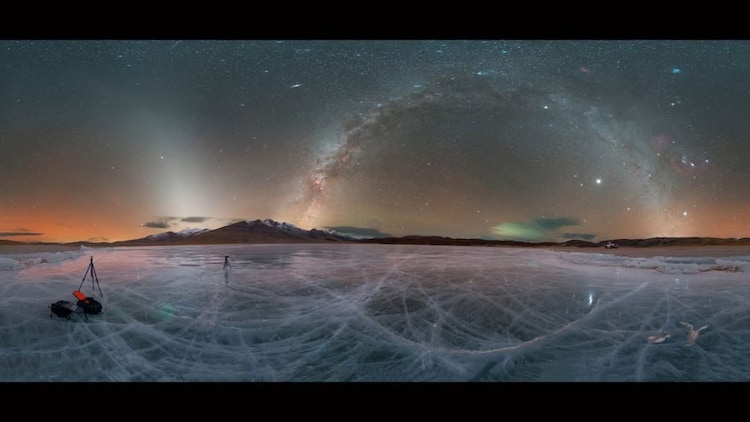
These stars were born inside the boundary and wandered out over billions of years.
Crucially, they move in calm, near-circular orbits, which tells scientists they were not violently flung outward by a collision with another galaxy.
HOW DID SCIENTISTS CONFIRM THIS?
Using data from the Lamost and Apogee sky surveys, combined with precise measurements from the European Space Agency’s Gaia satellite, researchers analysed over 1,00,000 giant stars.
They also ran advanced supercomputer simulations of galaxy evolution, which confirmed that the U-shaped age pattern consistently marks the point where star formation drops sharply.
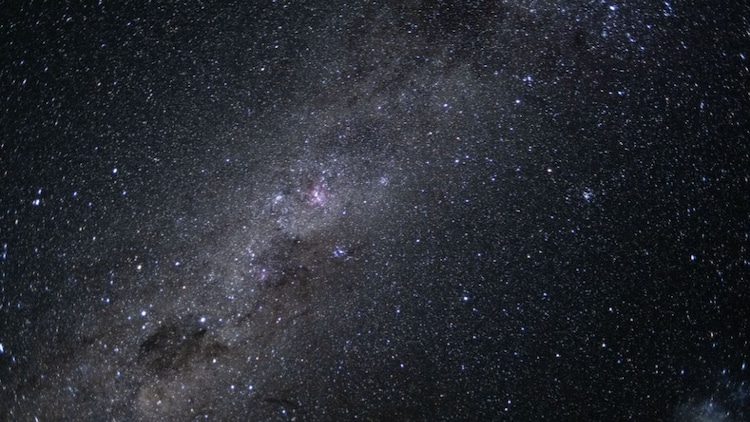
The edge sits at roughly 11 to 12 kiloparsecs, a unit astronomers use for vast distances, where one kiloparsec equals about 3,260 light-years, from the galactic centre.
As for why star formation stops there, scientists suspect it could be the gravitational pull of the Milky Way’s central bar, a warp in the outer disc, or simply gas becoming too warm and stable to collapse into new stars.
The exact answer remains an open question.