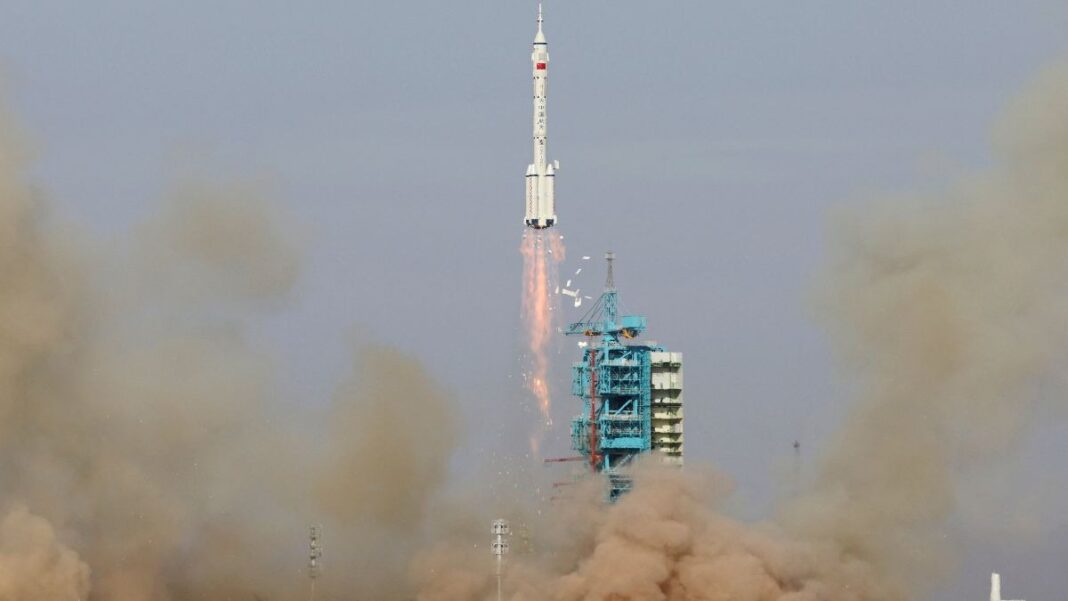
China is building something unlike anything seen before, a dedicated satellite city on the outskirts of Beijing, designed entirely to serve the booming commercial space industry.
The core area of Beijing’s Satellite Town is set to be completed in the second half of 2026, according to state-owned media outlet Beijing Daily.
Think of it as a Silicon Valley, but for spacecraft, a purpose-built hub where satellite manufacturers, operators, and space-tech companies can cluster together, share resources, and grow.
WHY DOES CHINA NEED A SATELLITE CITY?
China’s commercial space industry has been growing at a remarkable pace. More than 60 per cent of all space launches in China are now carried out by commercial companies, not the government, and several of these firms are lining up to go public on stock exchanges.
Gao Yibin, who heads the Strategic Research Department at Future Aerospace, a Beijing-based commercial space industry platform and think-tank, said the conditions are now coming together for an explosion in the sector, according to a Reuters report.
Launch approvals are being fast-tracked, more components are being manufactured within China rather than imported, and industrial funds, or large pools of investment money, are pouring in.
He pointed to several key technologies driving this momentum.

Low-Earth orbit constellation networking refers to large groups of small satellites flying close to the planet’s surface, working together like a team to deliver internet connectivity across the globe.
Satellite internet is exactly what it sounds like, broadband delivered from space. Space computing power refers to processing data on satellites themselves, rather than sending it back to ground stations.
And 6G air-space-ground integration is the next generation of wireless connectivity, seamlessly linking aircraft, satellites, and ground-based networks into one unified system.
All of these, Gao says, point to sustained growth through 2026 and beyond.
WHAT WILL BEIJING SATELLITE TOWN ACTUALLY DO?
The Satellite Town is designed to bring talent, capital, and technology together in one place, making it easier for companies to collaborate, innovate, and scale up.
By clustering the entire aerospace supply chain under one roof, China hopes to turn its commercial space ambitions into something far larger and more structured.
China’s space market is, by some estimates, heading towards the trillion-yuan mark.
This city may well be where that future is built.