
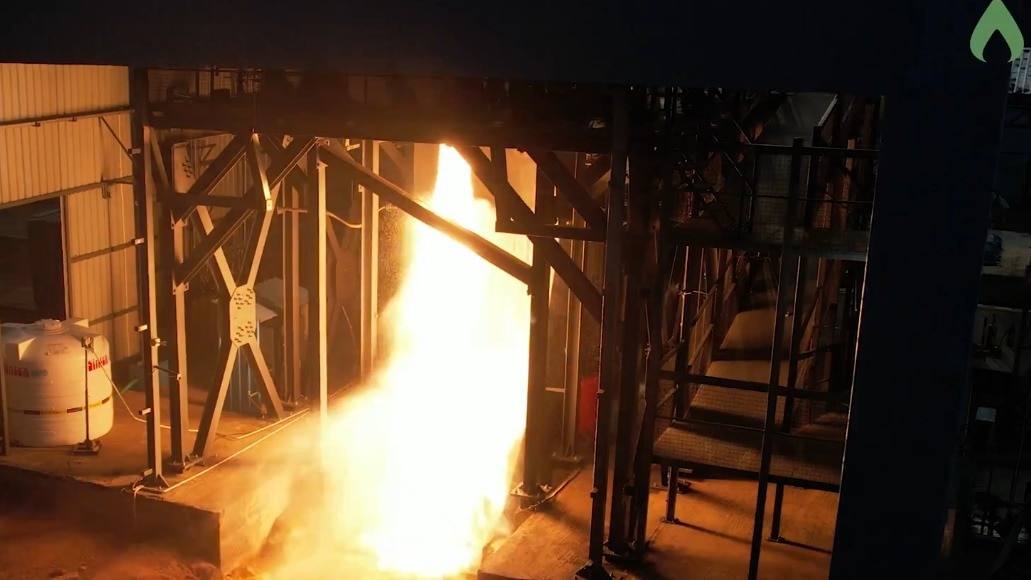
Agnikul Cosmos fires 3D-printed Agnite rocket engine in 77-second test

Agnikul Cosmos has achieved a definitive breakthrough with the successful hot-fire of its Agnite engine during a 77-second test sequence.

The Chennai-based start-up, operating from the IIT Madras ecosystem, has validated that its revolutionary 3D-printed technology is no longer just a prototype but a reliable workhorse ready for flight.

This milestone marks a critical shift for the Indian private space sector, proving that sophisticated, home-grown hardware can meet the rigorous standards required for orbital missions.

A single, seamless piece of 3D-printed metal has just roared to life in Chennai, marking a leap for the Indian private space sector.

HOW DOES A SINGLE PIECE 3D-PRINTED ENGINE WORK?

Agnite is a semi-cryogenic engine, a term that refers to its use of a liquid propellant and a super-cooled oxidiser.

It breathes a refined version of kerosene and liquid oxygen to generate the massive thrust needed to break free from gravity.

Unlike traditional rocket engines that are a mechanical jigsaw of thousands of parts, the Agnite is the first in the world to be 3D-printed as a single unit.

By using a high-strength superalloy called Inconel and additive manufacturing, building the engine layer by layer from a digital blueprint, the engineers have eliminated joints and welds.

This makes the engine significantly lighter and removes the structural weak points where rockets often fail.

WHY WAS THE 77-SECOND TEST SEQUENCE SO IMPORTANT?

During this 77-second test sequence, the primary goal was to achieve repeatability.

In the world of aerospace engineering, this is the ultimate gold standard. It means the engine performed with the exact same efficiency, pressure, and temperature as it did in previous trials.

Such surgical precision is vital as it tells scientists that the engine is not a one-off success but a reliable workhorse.

This consistency is what allows a start-up to move from the laboratory to a legitimate launchpad.
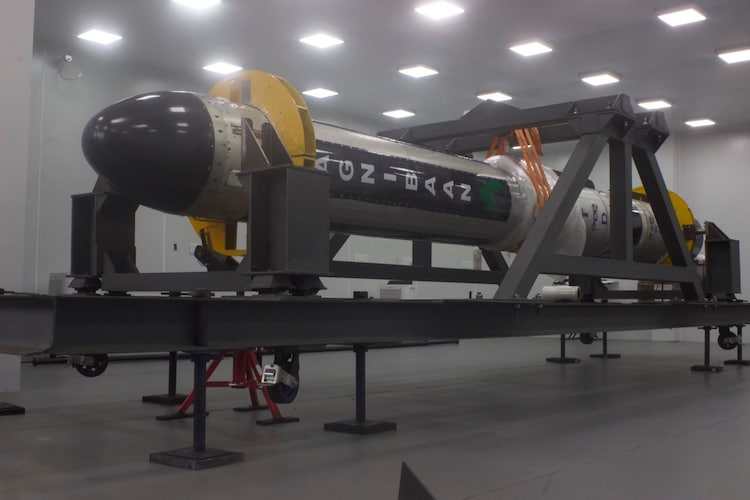
An image of the Agnibaan ricker developed by Agnikul Cosmos. (Photo: X/@AgnikulCosmos)

An image of the Agnibaan ricker developed by Agnikul Cosmos. (Photo: X/@AgnikulCosmos)

CAN WE CONTROL THE POWER OF A ROCKET ENGINE?

The trial also demonstrated the engine’s ability to throttle.

Throttling is the capacity to adjust the engine’s power in real-time, much like pressing the accelerator in a car to change speed.

This flexibility is essential for steering a rocket and ensuring that satellites are placed into their precise orbits with zero margin for error.

With this milestone, Agnikul Cosmos is now on the verge of the debut flight of Agnibaan. Supported by the expertise of Isro and Nasa, this success proves that Indian private innovation is a sophisticated reality.

Latest

Heatwave to tighten grip in plains, IMD warns of storms in northeast for Thursday

Hot and humid conditions are also expected to persist over coastal and eastern regions, including West Bengal, Odisha, Andhra Pradesh, Tamil Nadu and Kerala.

Artemis astronauts mastered photography in 20 hours, snapped stunning Moon shots

The training, led by professional photography instructors Paul Reichert and Katrina Willoughby, was designed to prepare the crew for capturing scientifically va

Ants offer a unique cleaning and grooming service. Here’s what that means

Scientists have discovered first-of-its-kind behaviour in insects. Read to find what it is.

Scientists confirm Moon has been quietly accumulating ice for 1.5 billion years

Scientists have long known that water ice exists at the Moon’s poles, trapped in regions that never receive sunlight.

Newly discovered spider named Pink Floyd can devour animal six times its size

The newly identified spider, measuring just 3 to 4 millimetres in length, gets its unique name from both music and habitat.

Topics

Record 4,654 candidates contest Tamil Nadu polls, regional parties add to surge

Record number of candidates redefine Tamil Nadu's political landscape

CBSE Class 10 Results 2026 out: Check verification, re-evaluation process after 2nd exam

CBSE's new dual-exam system offers structured review for Class 10 results

France bets on Rafale F5: What it means for India’s MRFA fighter jet deal

The Rafale F5 is expected to enter operational service around 2030, after which large-scale production could follow.

Why some currencies beat US dollar; which is number 1 in list of world’s strongest currencies?

US dollar dominates oil trade, imports, exports and foreign reserves across countries. But when it comes to value per unit, not all currencies are weaker than t

US warns of sanctions on Iran oil buyers as blockade tightens

China remains central to the strategy, having accounted for the bulk of Iran’s seaborne oil exports. US officials say the pressure from the blockade could sig

US-Iran talks: Did Pakistan government not pay Serena Hotel bill? Controversy still continues

The Serena Hotel is a five-star property located near the Diplomatic Enclave in Pakistan’s capital. It is known for hosting diplomatic meetings, international

R Vaishali’s Checkmate: From ‘Pragg’s sister’ to World Championship challenger

Long the other Rameshbabu in a house of genius, the elder sibling has finally pulled rank. By conquering the Candidates in Cyprus, R Vaishali secured a World Ch

Energy crisis may continue even after Iran war ends – Know the reasons behind it

An end to hostilities is not expected to bring fuel prices back to earlier levels in the near future.
spot_img

Related Articles

Popular Categories

spot_imgspot_img
