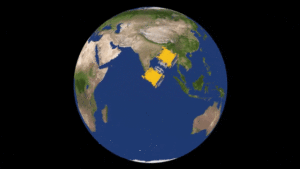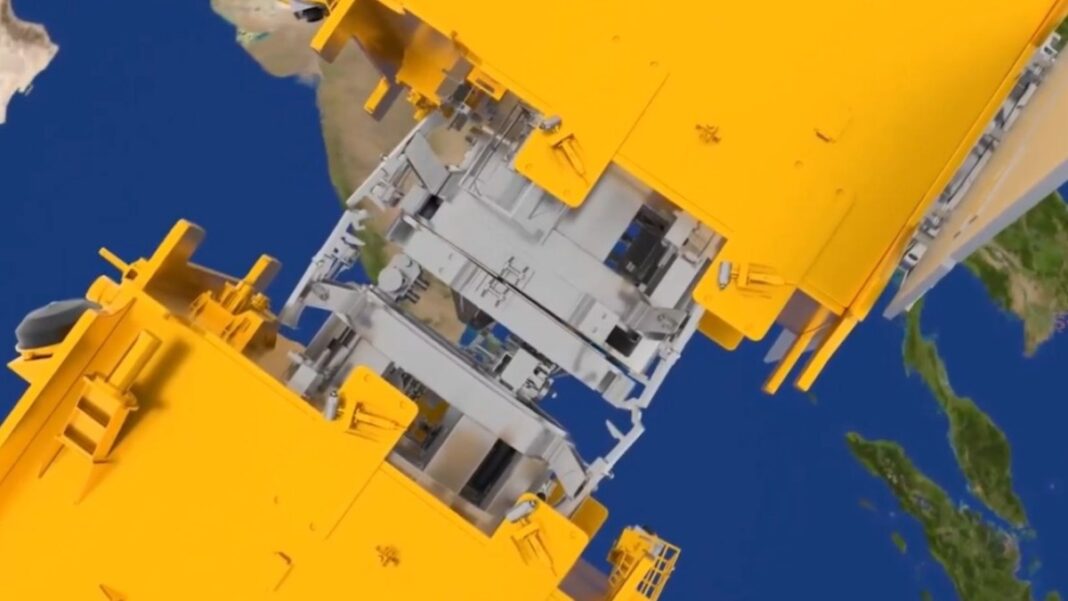
The Indian Space Research Organisation (ISRO) has revealed new details about its Space Docking Experiment (SpaDeX), confirming that the mission successfully carried out a second in-orbit docking on March 20, 2025, followed by an undocking and closed-loop circumnavigation manoeuvre on April 25, 2025.
The SpaDeX mission, launched aboard PSLVC60 on December 30, 2024, involved two small spacecraft designed to demonstrate advanced rendezvous and docking technologies in low-Earth orbit.
The satellites, SDX01, acting as the chaser, and SDX02, serving as the target, performed a series of precision manoeuvres to approach, dock, separate and manoeuvre around each other in space.
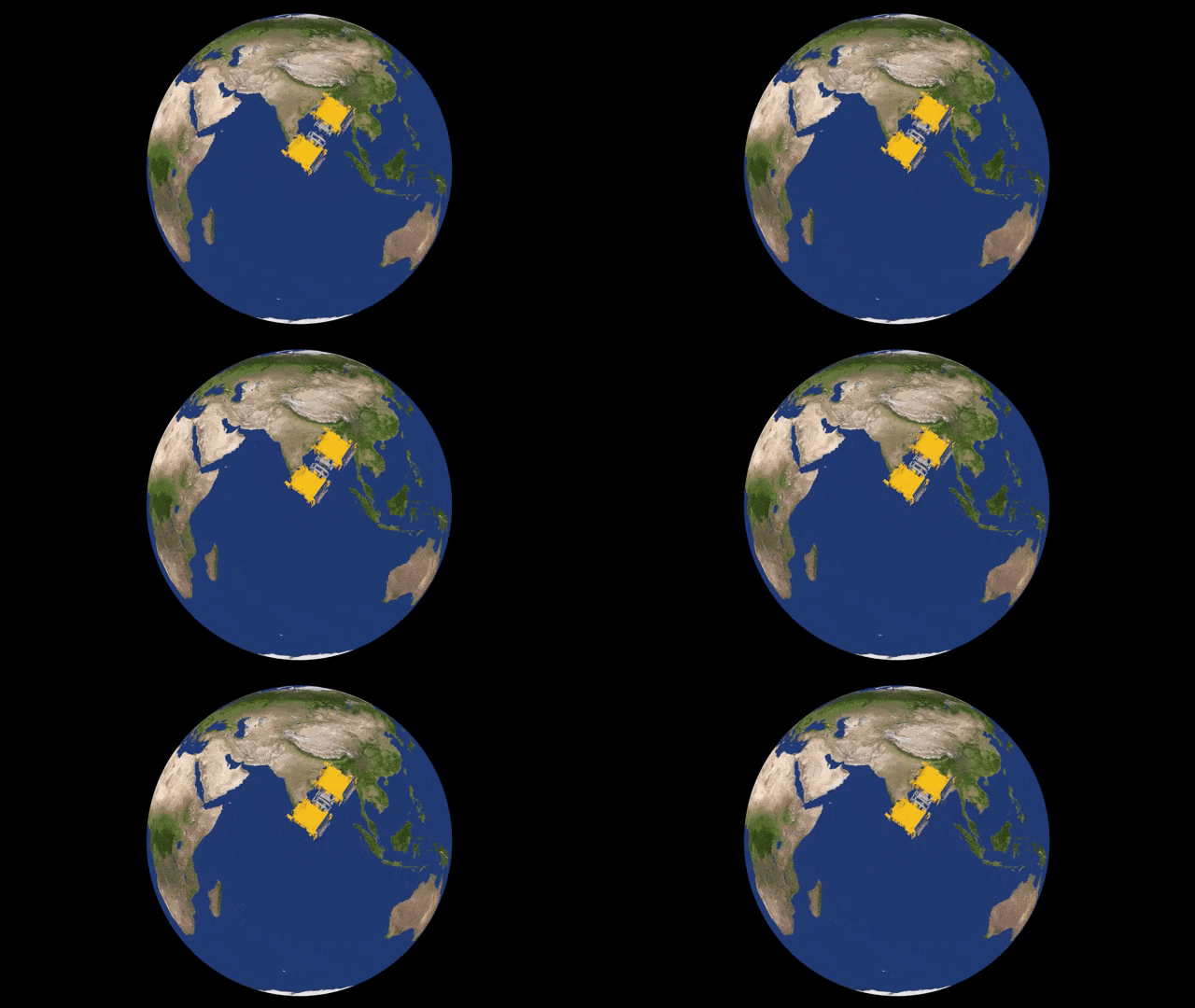
While the first docking was achieved on January 16, 2025, the newly disclosed second docking experiment highlights the mission’s extended operational capabilities. After reconnecting in orbit on March 20, the spacecraft later separated and conducted a closed-loop circumnavigation, in which one satellite autonomously flew around the other in a controlled orbital path before completing the manoeuvre on April 25.
Such operations are considered among the most technically challenging aspects of spacecraft navigation, requiring precise control of distance, velocity and orientation between two moving objects travelling at nearly 28,000 km per hour in orbit.
According to ISRO, the SpaDeX mission is designed as a technology demonstrator, aimed at developing the capabilities required for future complex space operations.
Docking technology is expected to play a critical role in several upcoming Indian space projects, including the Gaganyaan human spaceflight programme and the planned Bharatiya Antariksh Station, India’s proposed space station. It will also support future missions involving satellite servicing, refuelling, in-orbit assembly and deep-space exploration.
The successful second docking and circumnavigation manoeuvre demonstrates that Indian spacecraft can not only rendezvous and connect in orbit but also perform complex proximity operations repeatedly.
With SpaDeX, ISRO has taken an important step toward mastering technologies that are essential for sustained human presence and advanced infrastructure in space.