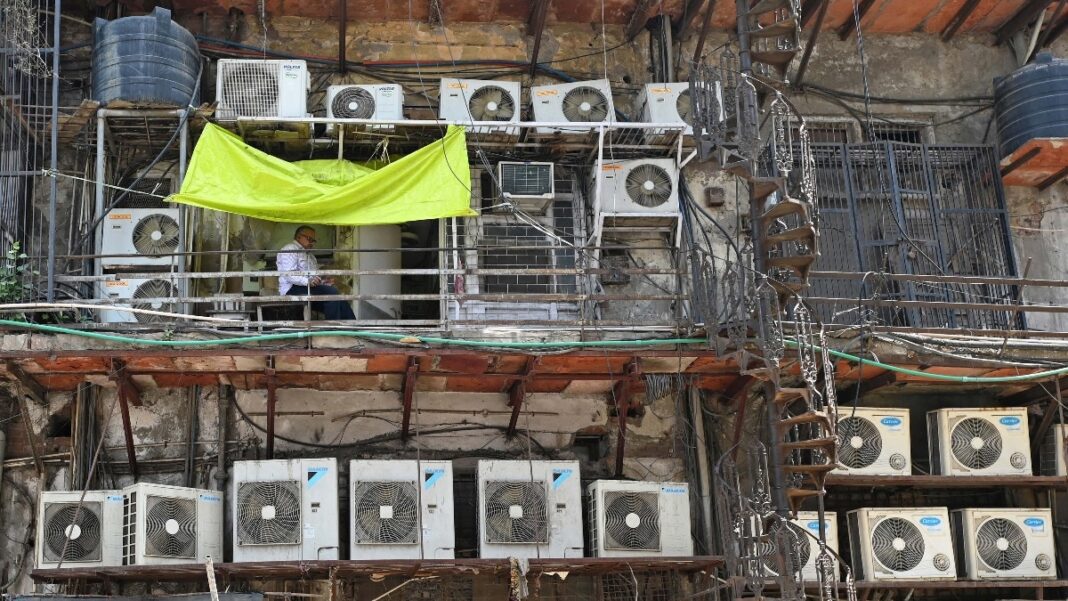
In 2026, the road to summer has just begun, and it already feels more like a furnace.
By mid-April 2026, regions including Madhya Pradesh, Maharashtra, Odisha, and Chhattisgarh had already recorded temperatures between 43°C and 45°C. The India Meteorological Department (IMD) has warned of above-normal heatwave days across east, central, and northwest India through June.

A heatwave is declared when temperatures rise at least 4.5°C above normal, or breach 45°C outright.
But 2026 is not an anomaly. It is the compounding result of a rapidly warming planet. According to the IMD, India’s annual mean temperature has risen by about 0.9°C from 1901 to 2024.
2024 was the hottest year on record both globally and in India. According to the IMD, every single month of 2024 except one was hotter than normal, something that hasn’t happened in over 120 years of recordkeeping.
Over the last decade, nearly 70 per cent of Indian districts experienced at least five additional very warm nights per summer compared to the 1982-2011 baseline. When night temperatures refuse to fall, the body never recovers from the day’s heat, raising the risk of heatstroke and worsening chronic conditions like diabetes and hypertension.

Indian cities are warming twice as fast as the rest of the country, driven by the urban heat island effect, where dense concrete absorbs heat all day and releases it through the night. Mumbai saw 15 more very warm nights per summer in the last decade; Bengaluru, 11; and Delhi saw 6 such additional days.
There’s also a human toll. Over 44,000 heatstroke cases and more than 700 deaths were recorded in 2024 alone. An assessment of 734 districts found that 57% of Indian districts, home to 76% of the population, are at high to very high heat risk.
The International Labour Organisation estimates India could lose the equivalent of 35 million full-time jobs and see a 4.5% GDP reduction by 2030 due to heat stress.

Heat has gradually become the nemesis of the world’s most populous nation.
Hasil Thakur, a 23-year-old network engineer from Himachal Pradesh now living in Noida, knows this well. “This year, temperatures have risen significantly, making daily life exhausting and increasing the risk of heat-related issues,” he said.
Like millions of others, he has turned to the one machine that makes life indoors bearable. The air conditioner.
INDIA’S AC BOOM IS UNLIKE ANYWHERE
India is reaching for cooling at a pace that is reshaping its energy landscape.

In the summer of 2024, a record 14 million air conditioners were sold, marking a 40% spike compared to previous years, according to the Consumer Electronics and Appliances Manufacturers Association.
A 2025 Climate Trends study found that average electricity demand surged 41% during summer 2023, with India’s peak reaching 220 GW. Demand spikes sharply once temperatures cross approximately 24°C, the threshold beyond which cooling appliances kick in at scale.
“India’s peak power demand climbed from 182.5 GW in FY 2019-20 to 250 GW in May 2024, a 67.5 GW jump in five years, driven largely by cooling loads,” said Sumedh Agarwal, Director of Smart and Resilient Power and Mobility at the Alliance for an Energy Efficient Economy (AEEE).

“The government is planning for 270 GW this summer. That means adding nearly 88 GW of peak in six years — Germany’s entire power system, bolted onto India’s grid in the time it takes to build one thermal plant. The real stress isn’t generation; it’s the sharp evening ramp. If we don’t shift load off that peak through battery storage, time-of-day tariffs, and demand response, every household pays through tariffs, taxes, or outages.”
The cost of this increased use of ACs is showing up in household budgets.
“In peak summer, a typical Delhi household running a 3-star AC for eight hours daily can see monthly electricity bills rise to Rs 2,000–3,500, and this escalates with every degree increase in temperature,” said Santosh Kumar Saini, Principal Research Associate at AEEE.

Thakur felt this firsthand. “Last month, our electricity recharge was around Rs 3,000, but this month it has surged to nearly Rs 6,000 — almost double,” he said. “Managing both comfort and rising costs has become a real concern.”
What makes this more alarming is how much further India has to go.
“AC penetration in India is still only 8-10%, and we are already seeing demand surge forecasts for 2026 on the back of a possible El Nino-led summer,” said Prof. Dev Niyogi, founding member of Indian AI Research Organisation (IAIRO) and UNESCO Chair Professor at the University of Texas at Austin. “Imagine what happens when that number doubles.”

THE COST OF COOLING
There lies a painful paradox at the heart of India’s cooling crisis.
The very machines helping people survive extreme heat also contribute to the warming, making that heat worse.
ACs burden the environment in two ways.
The first is electricity: India’s grid still runs overwhelmingly on coal, so every AC that switches on draws power largely from a thermal plant. Fossil fuel-based electricity generation rose by 2,853 million units to meet summer cooling demand in 2023, contributing an additional 2 million tonnes of CO2.

To meet record peak demand during recent heatwaves, India leaned heavily on its coal reserves, even as its solar infrastructure continues to expand. However, the picture has changed in 2026, and solar is taking the load away from thermal plants.
The second problem is refrigerants, the chemical fluids inside AC units. Many belong to a family called hydrofluorocarbons (HFCs). R-410A, a common refrigerant in split ACs, has a global warming potential over 2,000 times that of CO2. The UN Environment Programme estimates refrigerants could account for more than 10% of global greenhouse gas emissions by 2050 as cooling demand rises.
Adel Thomas, Senior Director of Climate Adaptation at the National Research Development Corporation (NRDC), frames it as a cycle that cannot be sustained.
“We cannot continue to just increase ACs. The gases that come from the units contribute to global warming. It’s a vicious cycle. We need to look at other methods like passive cooling and green urban planning.”

Every AC exhausting hot air into a dense city neighbourhood is, in a small but measurable way, making things hotter for everyone, including those who cannot afford to cool themselves at all.
That last point is where the crisis sharpens further.
For outdoor workers, gig delivery riders, agricultural labourers, and slum residents, the question is not which AC to buy or what star rating it carries. It is about how to survive the afternoon.
“It is critical that we have equitable cooling methods, especially for those who cannot afford ACs, informal workers, outdoor workers, older people,” said Thomas. “Heat is always seen as an emergency response thing. We need to recognise that high temperatures are here to stay.”

DOES EQUITABLE SOLUTIONS EXIST?
Solutions exist but implementing them in a timely manner and at scale is the challenge.
In 2024, the Ministry of Home Affairs included heatwaves as a nationally eligible disaster under State Disaster Mitigation Funds, unlocking Rs 32,031 crore for measures like cooling shelters and early warning systems. It was a start, but the scale of need far outpaces the response.

Then there’s the fact that most ACs sold in India were not designed for extreme heat in India but engineered for milder climates in Japan, South Korea, and Europe.
Research in cities like Delhi, Hyderabad, and Jaipur showed that 25–32% of ACs underperform during extreme heat, failing precisely when needed most.
Enters climate technology startup Optimist, working with IIT Delhi. The startup has developed and pilot-tested an AC designed to deliver strong cooling performance even at 50°C ambient temperatures.
“India’s AC ownership will explode in the coming years,” said Prof. Anurag Goel, technical advisor to the startup. “And if we don’t have sustainable solutions for our context of extreme heat, it will be a slippery slope, a solution that will soon become a threat.”

Prof. Niyogi points to the broader toolkit available.
“In Delhi, super-cool broadband surface materials have demonstrated up to 6.3°C reduction in surface temperatures during peak heat, essentially converting rooftops from heat emitters into radiative sinks. The engineering solutions exist. What we lack is the planning intent and access to digital tools to deploy them at scale, across cities, not building by building.”
On the policy front, India’s Bureau of Energy Efficiency has approved tighter efficiency standards for room ACs, effective January 2026. By 2030, CLASP estimates these could reduce India’s peak load by 8-10 GW, save consumers lakhs of crores annually, and cut up to 12 million tonnes of CO2 a year.
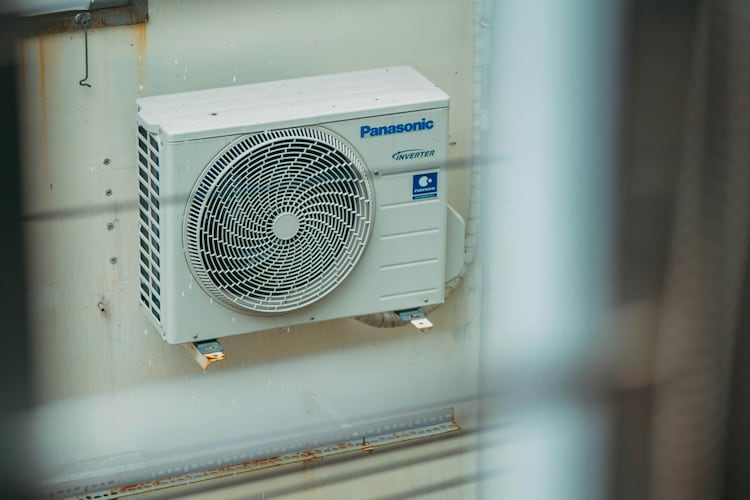
India’s cooling crisis is, at its core, a climate crisis, and one that feeds itself.
The more the planet warms, the more people need ACs. The more ACs run on a coal-heavy grid with leaking refrigerants, the more emissions rise, and the cycle deepens.
Breaking that loop demands better machines, smarter grids, cleaner refrigerants, stricter standards, and above all, a political will to protect those most vulnerable to heat that was never of their making.
The summer of 2026 has barely begun. The hardest months are still ahead.