
Key Takeaways
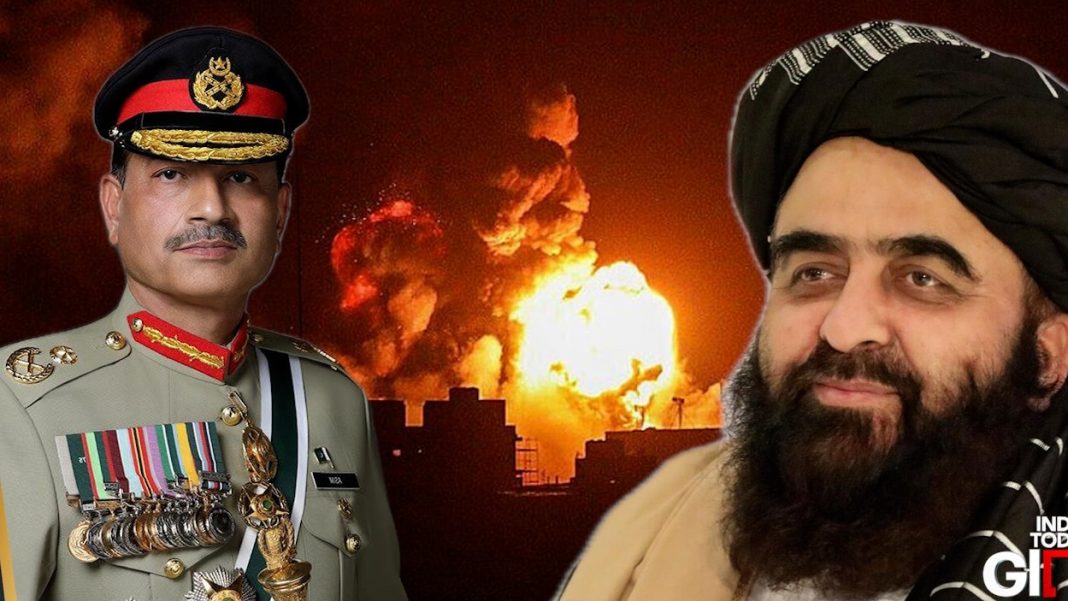
- Pakistan’s October 2025 airstrikes in Afghanistan triggered a major border war, shattering its long-held ‘strategic depth’ policy.
- The Taliban, once Pakistan’s proxy, retaliated fiercely with cross-border raids and drone strikes.
- Pakistan faces internal economic collapse and political turmoil while fighting militants it once supported.
In October 2025, Pakistan’s airstrikes on Afghan territory ignited one of South Asia’s most serious border conflicts in decades. The strikes, targeting Tehreek-i-Taliban Pakistan (TTP) militants but hitting civilian areas, provoked a fierce Taliban response. Hundreds died in subsequent artillery and drone exchanges, completely militarizing the Pakistan-Afghanistan border.
This conflict marks the dramatic collapse of Pakistan’s ‘strategic depth’ doctrine – the belief that a friendly Taliban government in Kabul would secure its western flank against India. Instead, Pakistan’s former proxy has turned into its active adversary.
The Historical Backstory
Pakistan’s Inter-Services Intelligence (ISI) has shaped Afghanistan’s militant landscape since the 1970s. During the Soviet-Afghan War, Islamabad trained and armed Mujahideen fighters with US and Saudi support. These networks eventually evolved into the Taliban.
By the 1990s, Pakistan became the Taliban’s primary backer, recognizing Mullah Omar’s regime and providing substantial military and financial support. However, the Taliban’s return to power in 2021 brought unexpected consequences: they refused to recognize the Durand Line border and began sheltering TTP militants attacking Pakistan.
From Patron to Target: The 2025 Escalation
The immediate trigger came in early October 2025 when a TTP ambush killed eleven Pakistani soldiers in Kurram district. Pakistan responded with airstrikes targeting TTP chief Noor Wali Mehsud, who survived.
The Taliban’s retaliation was swift and humiliating for Islamabad. Their fighters launched cross-border raids, stormed Pakistani outposts, and paraded captured soldiers on social media.
Domestically, Pakistan was already in turmoil with former Prime Minister Imran Khan imprisoned. Army Chief General Asim Munir and Prime Minister Shehbaz Sharif pursued aggressive military action despite calls for restraint, resulting in full-scale border war.
Economic Crisis and Political Distractions
Behind the conflict, Pakistan’s economy faces severe inflation, power shortages, and unemployment. The government has responded by scapegoating Afghan refugees, expelling nearly four million people in what the Taliban calls ‘collective punishment’.
Critics argue these expulsions distract from economic failures. Meanwhile, Pakistani leaders’ strong anti-Israel rhetoric about Gaza contrasts sharply with their bombing of Afghan villages.
Taliban’s Military Evolution
The 2025 Taliban differs significantly from their 1990s predecessors. They now possess modern drones, artillery, and organized command structures that have stunned Pakistan’s military.
In a symbolic diplomatic move, the Taliban announced a ‘pause in operations’ from New Delhi rather than Islamabad, clearly signaling their independence from Pakistani influence.
India’s Strategic Opportunity
For India, this crisis presents a geopolitical opening. New Delhi has cautiously re-engaged the Taliban, hosting Afghan officials and exploring limited cooperation. While Pakistan accuses India of ‘provoking’ the Taliban through diplomacy, the reality is simpler: Afghanistan is asserting sovereignty, and India is responding to that shift.
The Colonial Legacy: Durand Line Dispute
The 1893 Durand Line, drawn by British officials through tribal Pashtun lands, remains a fundamental flashpoint. Pakistan considers it an international border, while Afghanistan views it as an artificial colonial imposition. Every Afghan leadership, including the Taliban, has refused formal recognition.
Pakistan’s Strategic Reckoning
Pakistan now faces the consequences of decades of policy contradictions:
- It fights militants it once trained
- It bombs allies it once funded
- It deports refugees it once welcomed
- It silences leaders it once elected
The border conflict has exposed not just military vulnerability but a deep identity crisis. As the smoke clears over Kurram and Chaman, one truth remains: Pakistan cannot bomb its way to peace when the fire began in its own backyard.


