
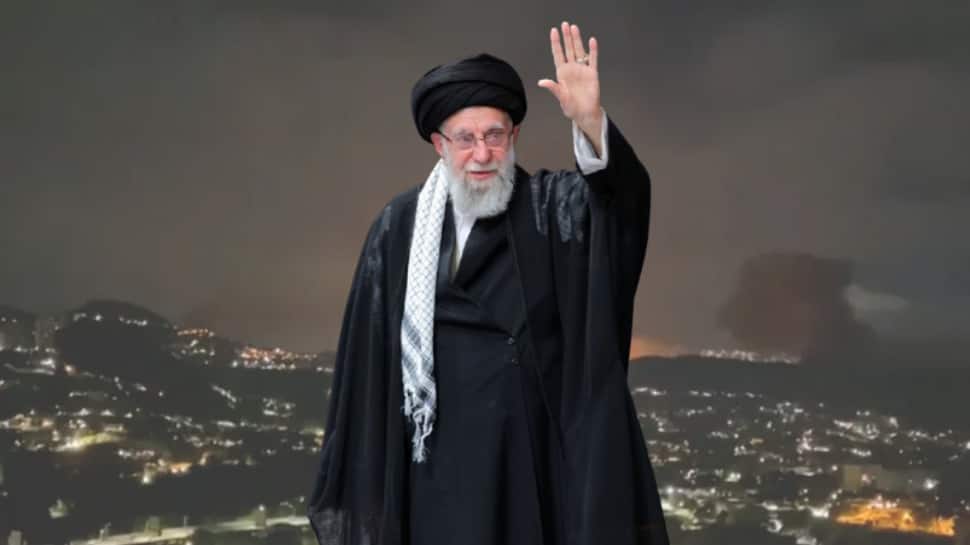
When Ayatollah Ali Khamenei assumed Iran’s highest office in 1989, few believed he would dominate the country’s political and military life for more than three decades. Lacking the charisma and clerical stature of his predecessor, he was widely seen as a compromise choice. Yet over 36 years, Khamenei transformed himself from an underestimated cleric into the unchallenged centre of Iran’s power structure, projecting influence across the Middle East while suppressing dissent at home.
He was killed on Saturday, aged 86, in Israeli and US air strikes that destroyed his compound in central Tehran, according to Iranian state media. His death followed decades of tensions over Iran’s nuclear programme and the collapse of repeated diplomatic efforts to settle the dispute.
An unlikely successor
Khamenei rose to the top after the death of Ruhollah Khomeini, founder of the Islamic Republic. Compared with Khomeini’s commanding religious authority and mass appeal, Khamenei appeared an improbable successor. Karim Sadjadpour of the Carnegie Endowment for International Peace described him to Reuters as “an accident of history” who evolved from “a weak president to an initially weak supreme leader to one of the five most powerful Iranians of the last 100 years”.
Once in office, however, he steadily consolidated control. As supreme leader, his word carried ultimate authority. He commanded the armed forces, appointed heads of the judiciary and state broadcasting, and named senior security officials. Loyalists were placed in key positions, particularly within the Islamic Revolutionary Guard Corps (IRGC), ensuring that no rival faction could threaten his dominance.
Confrontation with the West
Throughout his rule, Khamenei defined Iran in opposition to the United States, frequently referring to it as “the Great Satan”. He maintained that posture even after the 2015 nuclear agreement negotiated under President Hassan Rouhani, which briefly eased sanctions in return for limits on Iran’s nuclear activities.
When Donald Trump withdrew the United States from the deal in 2018 and reinstated sanctions, Khamenei’s distrust hardened. As Washington renewed pressure in 2025 for a fresh accord, he denounced what he called “the rude and arrogant leaders of America” and asked: “Who are you to decide whether Iran should have enrichment?”
He consistently denied that Iran sought nuclear weapons and issued a religious ruling in the 1990s banning their production and use, declaring such arms “against our Islamic thoughts”. Western governments remained unconvinced.
Crushing unrest at home
Khamenei’s grip was tested repeatedly by public anger. Student protests erupted in 1999 and 2002. The 2009 presidential election, which returned Mahmoud Ahmadinejad to office amid allegations of fraud, triggered mass demonstrations that shook the regime’s legitimacy.
In 2022, protests flared again after the death in custody of 22-year-old Mahsa Amini. Faced with widespread unrest, Khamenei blamed foreign enemies and authorised a severe crackdown. Executions followed, with some protesters publicly hanged. The message was unmistakable: dissent would not be tolerated.
Critics and human rights organisations repeatedly accused his government of systematic abuses. Tehran rejected those claims, insisting it upheld strong standards within the Muslim world.
Expanding Iran’s reach
While suppressing challenges at home, Khamenei expanded Iran’s regional influence. He strengthened ties with Shi’ite militias in Iraq and Lebanon and backed Syrian President Bashar al-Assad, deploying forces to support him during Syria’s civil war. Billions were channelled to allied groups described as the “Axis of Resistance”, including Hezbollah, Hamas and Yemen’s Houthis.
This network extended Iran’s reach but also deepened confrontation with Israel. A long-running shadow war escalated after 2023, culminating in open exchanges of missiles and air strikes in 2024 and 2025. The conflict ultimately led to the joint Israeli-US offensive that killed Khamenei.
Personal history and ideology
Born in Mashhad in April 1939, Khamenei became a cleric at 11 and studied in Iraq and in Qom. Unlike his father, a traditional scholar wary of political activism, he embraced revolutionary Islamism. He was imprisoned several times under the Shah and survived an assassination attempt in 1981 that paralysed his right arm.
After the 1979 revolution, he held senior posts including deputy defence minister and later president, becoming the first cleric to occupy that office. His close ties to the Guards proved decisive in cementing his authority after he succeeded Khomeini.
He also presided over a vast financial empire through Setad, whose assets were estimated in the tens of billions of dollars.
Khamenei supported Khomeini’s 1989 fatwa against author Salman Rushdie following the publication of The Satanic Verses, and his website reaffirmed its validity as recently as 2017. In 2022, Rushdie survived a stabbing attack in New York; his assailant was sentenced in 2025.
A divided legacy
For supporters, Khamenei was the guardian of Iran’s revolution and sovereignty, standing firm against Western pressure. For critics, he entrenched isolation, stifled reform and tied the nation’s future to confrontation abroad.
As Israel and the United States intensified strikes and domestic frustration grew, younger Iranians questioned the direction of the state. “I just want to live a peaceful, normal life,” Mina, a 25-year-old from Lorestan province, told Reuters earlier this year. “Those policies may have made sense in 1979, but not today. The world has changed.”
Khamenei leaves behind an Islamic Republic facing external attack and internal uncertainty, shaped, for better or worse, by the authority he forged over more than three decades.


