
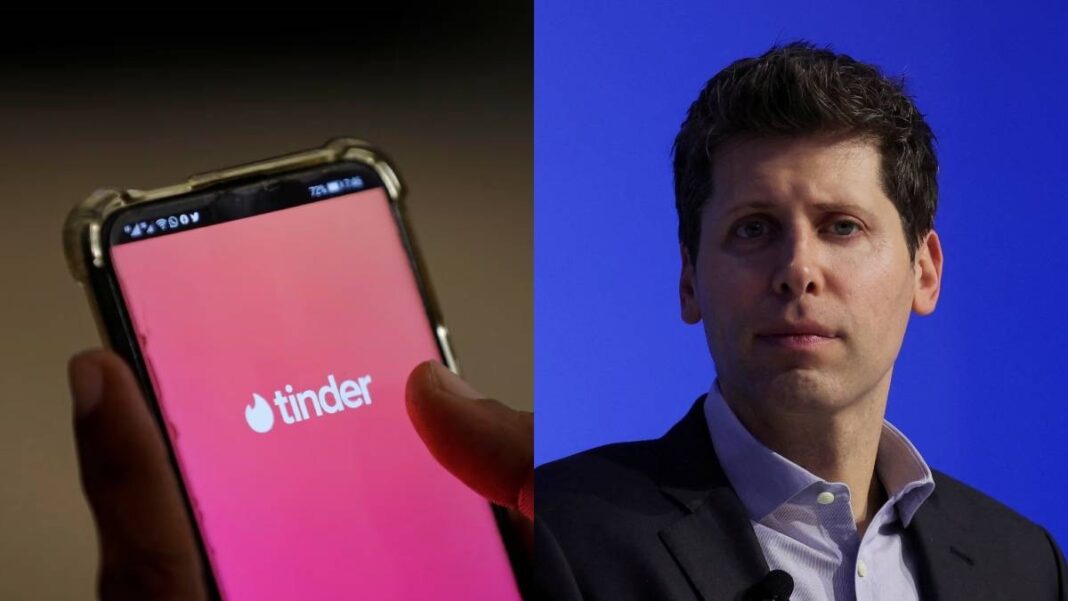
Many people have found the love of their life through Tinder, and there are some who have met scammers. World, a company co-founded by OpenAI CEO Sam Altman, has partnered with Tinder to weed out bots from the dating platform. This collaboration allows Tinder users to prove they are real humans by visiting any one of World’s Orbs. World will also offer five free Boosts to these verified users. The company has already tested the World ID pilot with Tinder in Japan last year, and it is now available globally.
Once verified at a World Orb, Tinder users will get a “verified human” badge. The company claims it will also lead to higher-quality connections for users by showing they are real.
To get verified, a Tinder user can visit any World Orb, where photos of their face and eyes are taken. The data is used to generate an iris code for World ID and is stored on users’ devices in encrypted format.
The platform is also releasing the World ID app, through which users can carry proof of being human across the internet, as per the company’s claim. World ID is also coming to Zoom and DocuSign.
What is World and why it matters
World is operated by Tools for Humanity, a startup Altman co-founded in 2019. The company says its mission is to address a growing issue: how do we know who’s real online, especially as artificial intelligence—including Altman’s own ChatGPT—makes it easier to fake identities?
Tools for Humanity says it does not store personal or biometric data. It claims the iris scans are converted into an encrypted code, and the original images are deleted immediately. The user’s World ID is then stored locally on their phone.
Privacy concerns and global scrutiny
World’s approach has raised red flags around the globe. Privacy regulators in Germany, Argentina, and Kenya have launched investigations. Spain and Hong Kong have banned the project outright, and South Korea fined the company over $800,000 for privacy violations in 2024.
As of April 2025, there are approximately 1,500 active World ID Orbs globally, with over 18 million users verified across 160 countries. These iris-scanning devices, designed to verify human identity, are located in various international locations, including cities in Spain, Brazil, France, and Taiwan.


