
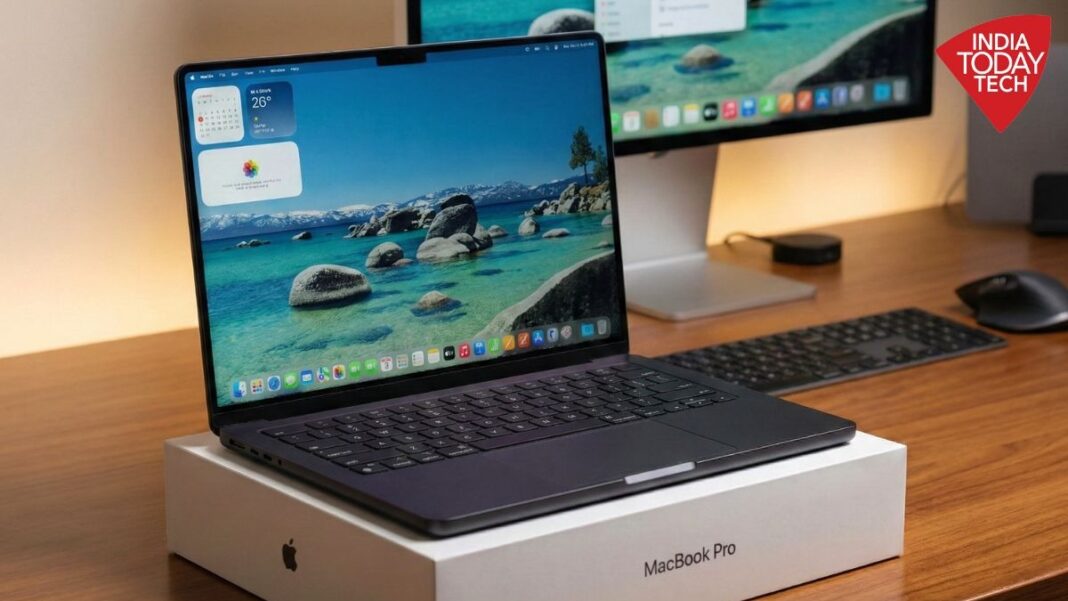
Apple appears to be gearing up for one of its biggest MacBook Pro upgrades in years, but the wait for it could be longer than many expected. Fresh details suggest that while the upcoming model may bring a mix of bold hardware and software changes, global supply issues are now starting to affect the company’s timeline. The next-generation MacBook Pro, which has already created buzz for its possible design and performance jump, is now likely to arrive later than initially planned.
Apple preparing major MacBook Pro overhaul, launch timeline leaked
According to Mark Gurman of Bloomberg, Apple is dealing with ongoing memory shortages across the industry, which is impacting production schedules. This includes key components like RAM and SSD storage, both of which are essential for high-performance laptops like the MacBook Pro. As a result, the launch window has shifted slightly, with the device now expected closer to early 2027 rather than the earlier estimates of late 2026.
Earlier reports had pointed to a possible October or November announcement, a timeline Apple has often followed for Mac launches. However, the latest update suggests that the company is now leaning towards the later part of that window. The delay does not appear to be related to software readiness, which is often a bottleneck for major redesigns. Instead, it is largely tied to supply constraints that are affecting not just Apple, but the wider PC industry.
Despite the delay, the upcoming MacBook Pro is still expected to bring several major upgrades. One of the most talked-about changes is the introduction of an OLED display, which could replace the current mini-LED panels. This shift is likely to improve contrast levels, colours, and overall viewing experience. Reports also suggest that Apple may experiment with a Dynamic Island-style cutout, similar to what has been seen on recent iPhones, although how this will be implemented on a laptop remains unclear.
Another big change could be the addition of touch input. Apple has traditionally resisted bringing touchscreens to Macs, keeping that feature limited to iPads. But this time, the company seems ready to explore a hybrid approach. The new MacBook Pro is expected to support touch interactions, with updates coming as part of macOS 27. These software changes may include contextual menu controls and larger, adaptive buttons in the system menu bar, designed to make touch usage more practical.
On the performance side, the new models are likely to be powered by Apple’s next-generation chips, expected to be called M6 Pro and M6 Max. While details about these processors are still limited, they are expected to deliver improvements in both performance and efficiency, continuing Apple’s push in custom silicon.
There are also hints that Apple could rethink how it positions the MacBook Pro lineup. With so many upgrades arriving together, the OLED touchscreen model might be introduced as a more premium variant, possibly at a higher price. Existing models, likely powered by M5 chips, could continue to be sold alongside it at current pricing. This approach would not only create a clearer product hierarchy but also help Apple manage demand amid constrained supply.
The delays are not limited to the MacBook Pro. The upcoming Mac Studio refresh is also said to be affected by the same memory shortages. That device, which was earlier expected to launch around mid-year, may now arrive closer to October. Apple is reportedly already facing limited stock of its current Mac Studio models, partly due to rising demand from users running local AI workloads.


