Total lunar eclipse to grace skies in March. How is it different from a partial one?

The night sky offers few sights as captivating as the Earth’s shadow falling across the lunar surface. On March 3, skywatchers are in for a treat as a total lunar eclipse takes centre stage.

This event occurs when the Earth moves directly between the Sun and the Moon, casting its shadow across the lunar surface.

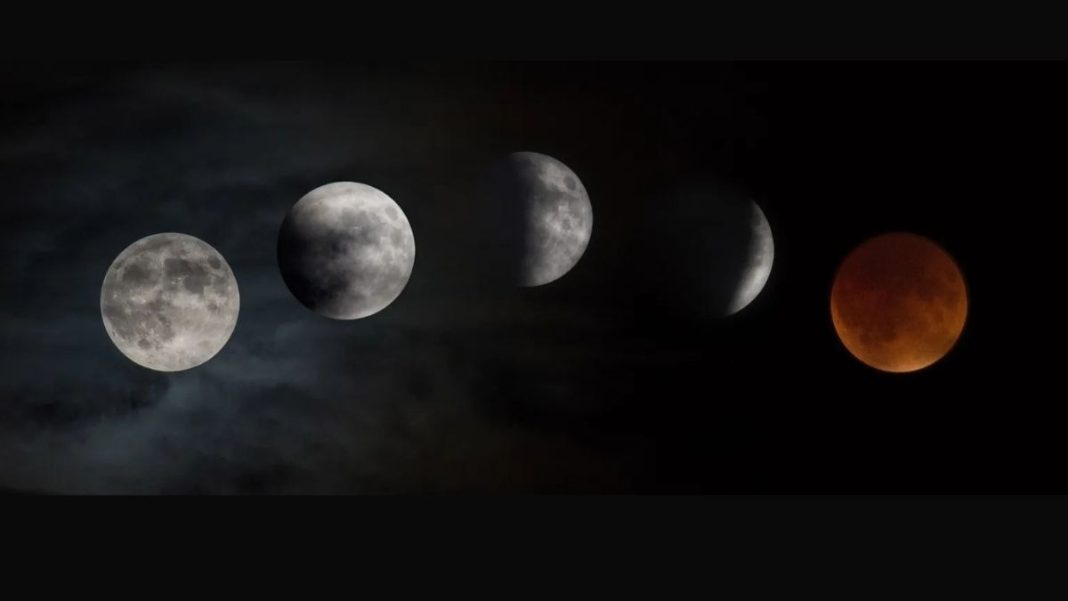
While both partial and total lunar eclipses involve the same celestial mechanics, the visual results are dramatically different.

Understanding these variations depends entirely on how deep the Moon dives into the shadow cast by our planet.
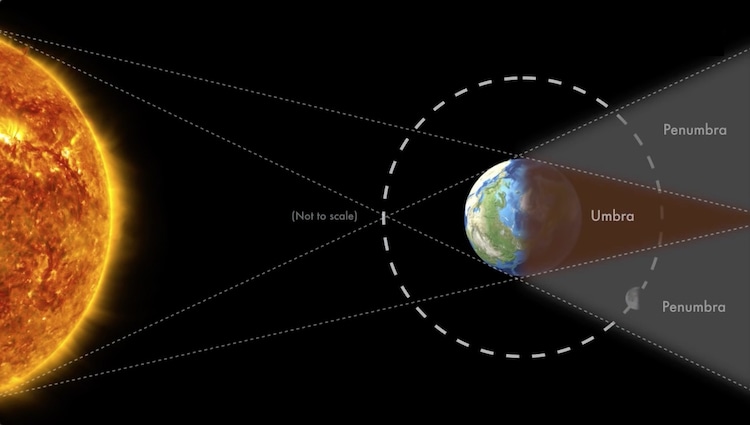
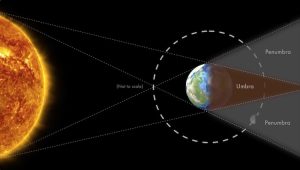
A diagram showing the Moon’s path through the umbra and penumbra. (Photo: Nasa)

A diagram showing the Moon’s path through the umbra and penumbra. (Photo: Nasa)

WHAT HAPPENS DURING A TOTAL LUNAR ECLIPSE?

A total lunar eclipse occurs when the entire Moon enters the innermost part of the Earth’s shadow, known as the umbra.

This is exactly what will happen on March 3. In India, the Moon will rise while already immersed in this shadow.

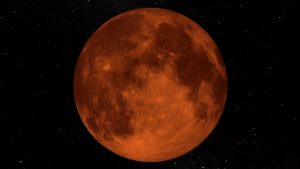
During this event, the Moon does not vanish into darkness. Instead, it often takes on a striking copper or dark red hue. This is why a total lunar eclipse is also known as a Blood Moon.
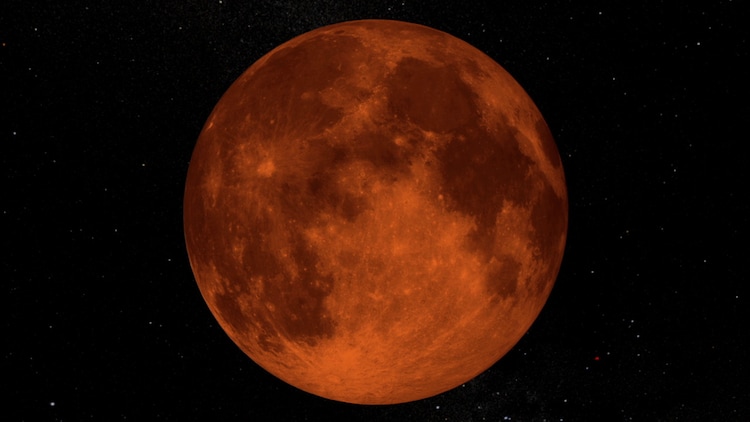
A total lunar eclipse is also known as a Blood Moon. (Photo: Nasa)

A total lunar eclipse is also known as a Blood Moon. (Photo: Nasa)

This phenomenon is caused by Rayleigh scattering, where the Earth’s atmosphere filters out shorter blue light and allows longer red wavelengths to pass through and bend towards the Moon.

The intensity of this red colour can change based on the amount of dust or clouds in the Earth’s atmosphere at that moment.

Because the Earth is significantly larger than the Moon, a total eclipse can last for over an hour, allowing viewers across the night side of the globe to witness the full transformation.

HOW IS A PARTIAL LUNAR ECLIPSE DIFFERENT?

A partial lunar eclipse happens when the Sun, Earth, and Moon are not perfectly aligned.

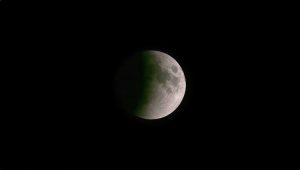
In this scenario, only a fraction of the Moon passes into the dark umbral shadow. To an observer on Earth, it looks as though a giant bite has been taken out of the Moon.
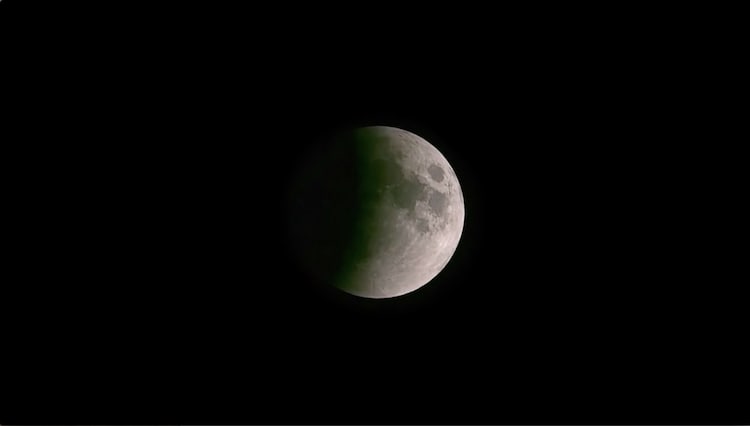
The sharp curve of the earth shadow visible during a partial lunar eclipse. The Moon appears as though a large bite has been taken out of it. (Photo: Nasa)

The sharp curve of the Earth’s shadow visible during a partial lunar eclipse. The Moon appears as though a large bite has been taken out of it. (Photo: Nasa)

The part of the Moon inside the umbra appears very dark, while the rest remains bright or slightly dimmed by the penumbra, which is the outer, lighter part of the shadow.

Unlike the total version, a partial eclipse rarely produces the famous red glow, as enough direct sunlight still reaches the lunar surface to maintain its usual greyish white appearance.

HOW CAN YOU TELL WHICH ECLIPSE IS OCCURRING?

The easiest way to distinguish them is by looking at the coverage of the lunar disk. During a total eclipse, 100 per cent of the Moon will eventually be covered by the dark umbra, leading to the reddening phase. In a partial eclipse, the coverage never reaches 100 per cent.

Regardless of the type, both events are safe to view with the naked eye. While a total eclipse like the one on March 3 is the headline act, a partial eclipse provides a clear view of the Earth’s curved shape as it blocks the Sun’s light.
Latest

Rain hits Delhi amid rising heat: What’s going on with the weather?

Triggered by a weak Western Disturbance, Delhi saw sudden cloud cover, gusty winds and light to moderate rain, bringing a temporary dip in temperatures without

Days after returning from the Moon, Artemis-2 astronauts begin moonwalk training

The timing of the training makes sense as the astronauts’ bodies are still adjusting to Earth’s gravity, their muscles and sense of balance feel off, simila

Satellites to surgery: How Isro’s space tech is entering hospitals’ operating theatre

Nasa began exploring remote surgery for astronauts in the 1970s, but the machines were too bulky, and the idea was shelved. The Moon Man of India, in an exclusi

Rain arrives in Delhi. Other states await similar relief from heat

Around 70% of the region, however, will remain dry and showers will provide only short-lived cooling after a hot afternoon, with temperatures likely to rebound

Indian summers are changing for good. They are getting longer and hotter

For India, where agriculture, water supply, and public health are all dependent on seasonal rhythms, the implications are significant. 

Topics

Bengal elections: AI, body cams and 100-metre ‘Lakshman Rekha’ to guard booths

A sweeping security overhaul, AI surveillance, and a strict no-entry zone promise to transform voting in West Bengal. But how will this unprecedented plan tackl

CBSE 3-language policy push: What happens to foreign languages and teachers now?

CBSE’s three-language rule is not just about adding one more subject. It raises a harder question: in schools that already teach French, Spanish, German and o

Who is Srinivas Narayanan? IIT Madras graduate behind ChatGPT growth exits OpenAI

OpenAI executive Srinivas Narayanan, an IIT Madras alumnus who helped scale ChatGPT and API products, has announced his exit after three years. He said he plans

Bhubaneswar boy scores perfect 100% in CBSE Class 10, now targets NEET

A Bhubaneswar student, Ayusman scored 100% in CBSE Class 10 board results. Starting the preparation from March-April, he says he focused on consistency, concept

KV schools are topping India’s boards. So why are bureaucrats opting out?

How Kendriya Vidyalayas' demographic shift reflects broader educational trends

MVA faces consensus challenge ahead of MLC polls, Mahayuti may secure majority

Can Thackeray's candidacy unify MVA for upcoming MLC elections?

Word of the day: What ‘alacrity’ means and how to use it right

The word of the Day for April 18 is: Alacrity. Learn what it means and how to use it in daily conversation. Add it to your vocabulary and impress everyone aroun

Quote of the day by Ratan Tata: I don’t believe in work-life balance. I believe in…

Powerful words by Ratan Tata inspire millions seeking success, happiness, and purpose in life. Discover his wisdom on work-life integration, leadership, persona
spot_img

Related Articles

Popular Categories

spot_imgspot_img