Kolkata hit by earthquake: Where did the tremors originate? Science explained

A moderate earthquake of 5.3 magnitude struck near the India-Bangladesh border on February 27, sending powerful tremors across Kolkata and several districts of South West Bengal.

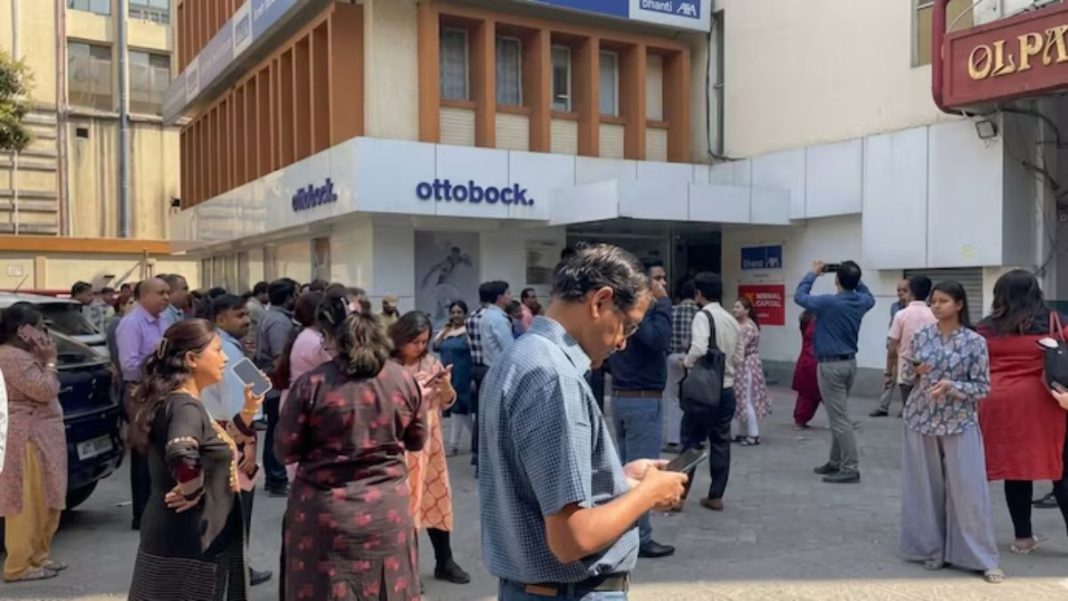
The jolts began at 1:22 pm IST and lasted for several seconds, triggering widespread panic. Residents and office workers in high-rise buildings rushed onto the streets as ceiling fans and furniture began to sway.

While no immediate casualties or major structural damage have been reported, the event has reignited fears about the seismic safety of the Bengal Basin.

WHERE IS THE EPICENTRE?

To understand the shake, we first need to know where it starts. An epicentre is the specific spot on the Earth’s surface directly above the region where the rocks break deep underground during an earthquake.

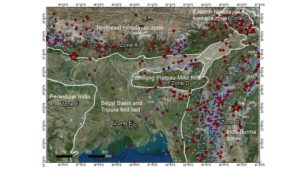
Today’s 5.3 magnitude quake was centred near Satkhira in Bangladesh, just 26 kilometres southeast of Taki in West Bengal. This area sits within the Bengal Basin, a giant bowl filled with kilometres of soft soil.
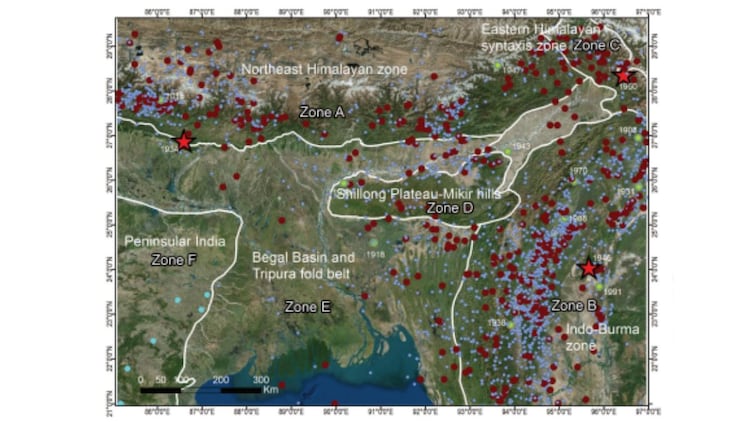
A map of the seismotectonic provinces in the Bengal Basin. (West Bengal Government)

A map of the seismotectonic provinces in the Bengal Basin. (West Bengal Government)

The science behind this is a massive slow-motion collision. The Indian Plate is constantly pushing north into the Eurasian Plate at about five centimetres per year.

This movement creates immense pressure along fault lines. Think of fault lines as giant cracks in the Earth’s crust. When the pressure gets too high, the land on either side of the crack slips suddenly, causing the ground to shake.

HOW DOES SOIL ACT LIKE A SEISMIC MEGAPHONE?

Geologists are currently monitoring the Sylhet Fault and the Eocene Hinge Zone, the main cracks running through the Bengal Basin.

When these faults slip, they release energy called seismic waves. Kolkata has a unique problem because it is built on soft, water-logged soil rather than solid rock.
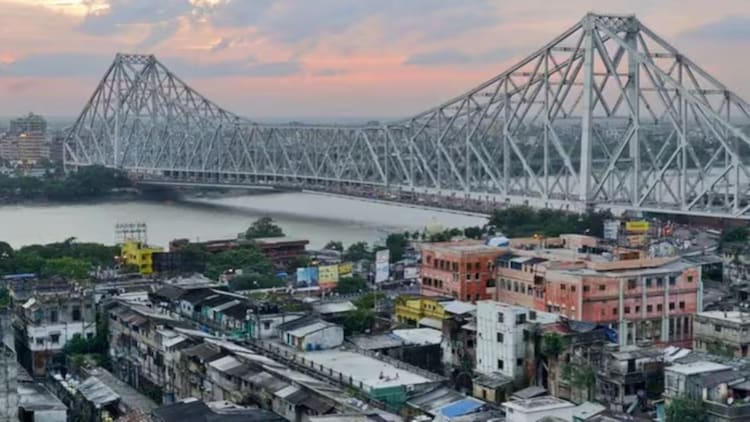
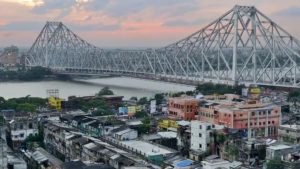
Hooghly river in Kolkata (File Photo)

Hooghly river in Kolkata (File Photo)

This leads to a phenomenon called amplification. In simple terms, the soft soil acts like a megaphone for the earthquake. Just as a megaphone makes a voice much louder, this loose soil catches the seismic waves and makes them much stronger. This is why the shaking feels 50 per cent more intense in the city compared to areas sitting on hard rock.

CAN SATELLITES PREDICT FUTURE RISKS?

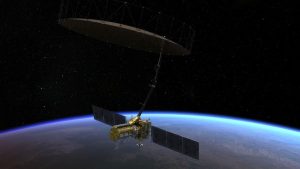
While predicting the exact minute of a strike is impossible, Nasa uses satellite technology like the Nisar radar to track how the Earth’s skin is stretching.

These satellites can measure ground movement with millimetre precision from space.
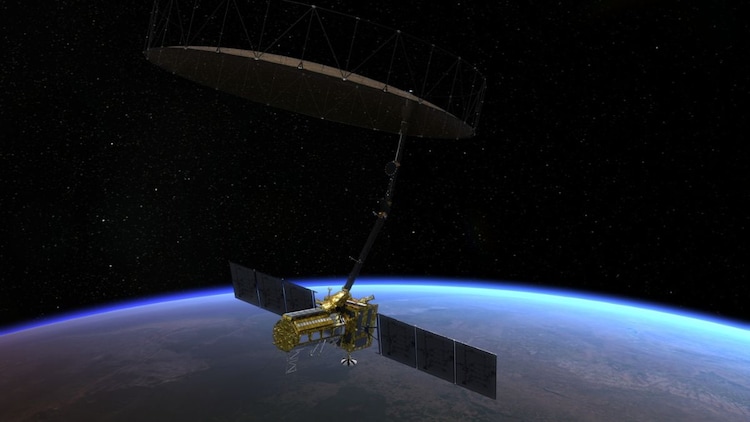
Nisar satellite. (Photo: Isro)

Nisar satellite. (Photo: Isro)

This data helps scientists see which fault lines are under the most stress. For a crowded city like Kolkata, this is vital because of a risk called liquefaction.

This happens when intense shaking causes wet soil to lose its strength and behave like a liquid.

If the ground turns into a jelly-like state, buildings can tilt or sink. Nasa data helps the city plan better for these invisible threats.
Latest

Were US and UAE controlling rain over Iran? Conspiracy theory decoded by science

Multiple social media accounts claimed that after Iran destroyed dozens of US and Israeli radars in the region, it has been raining heavily.

For a perfect espresso shot, the primary ingredient is not coffee. It’s physics

Who would have thought that espressos have so much in common with X-rays and volcanoes?

Critical ocean phase fails to occur in Panama, scientists globally are worried

For the first time in at least 40 years of recorded observation, a critical ocean process failed to occur, and researchers are now asking what it means for the

Gaganyaan: Isro integrating Vyommitra in crew module, key safety tests underway

Isro has begun integrating Vyommitra for the uncrewed HLVM3-G1/OM1 mission. The exercise will test crew systems and ground safety measures before Gaganyatris fl

Alien-like fish discovered in underground well reveals hidden world beneath Assam

Scientists have identified Gitchak nakana, a blind blood-red fish, in an underground aquifer in Assam's Goalpara district. The find highlights the region's hidd

Topics

Oaktree Capital Accuses BJ’s of Reneging on Tariff Refund Trade

Oaktree Capital Management LP sued BJ’s Wholesale Club Inc. for allegedly backing out of a deal to sell its rights to around $29 million in tariff refunds for

OxyContin maker Purdue Pharmas criminal sentence could be the last step before company dissolves

OxyContin maker Purdue Pharma's criminal sentence could be the last step before company dissolves

The Supreme Court seems likely to shut down a lawsuit by Falun Gong over Ciscos aid to China

The Supreme Court seems likely to shut down a lawsuit by Falun Gong over Cisco's aid to China

Earth is Our Only Home

People believe that their life will be wonderful if the stock market soars. No, our life will be wonderful if we eat nutritious food, drink clean water and brea

Which city is called the Denmark of India? The Tamil town with a 400-year-old story

Tharangambadi on Tamil Nadu's Coromandel Coast is still known as the Denmark of India because of its Danish colonial past. The town's surviving fort, churches a

CBSE on-screen marking glitch: Teacher flags delay in checking, result

A senior teacher has flagged glitches in CBSE's new on-screen marking system during Class 12 paper evaluation. The issue has raised concerns over slower checkin

Taylor Swift moves to protect voice and image as AI deepfake threat grows worldwide

Taylor Swift has reportedly filed US trademark applications covering two voice clips and a stage image. The move reflects growing efforts by public figures to g

AI recreates Pompeii man running from volcano, gives his bones flesh and face

AI has helped archaeologists at Pompeii reconstruct the face and final moments of a man killed during the AD 79 eruption of Mount Vesuvius. Using skeletal remai
spot_img

Related Articles

Popular Categories

spot_imgspot_img