India’s urban water crisis is here. What will it take to fix it?

Chennai went thirsty in 2019. Bengaluru grappled with water scarcity that affected thousands in 2024. Delhi fights over its share of the Yamuna every summer.

From Bengaluru to Delhi to Chennai and to other urban regions across India, water is increasingly becoming a dwindling resource. This crisis is unfolding, city by city, putting stress on households and businesses. But the question of possible solutions still remains.
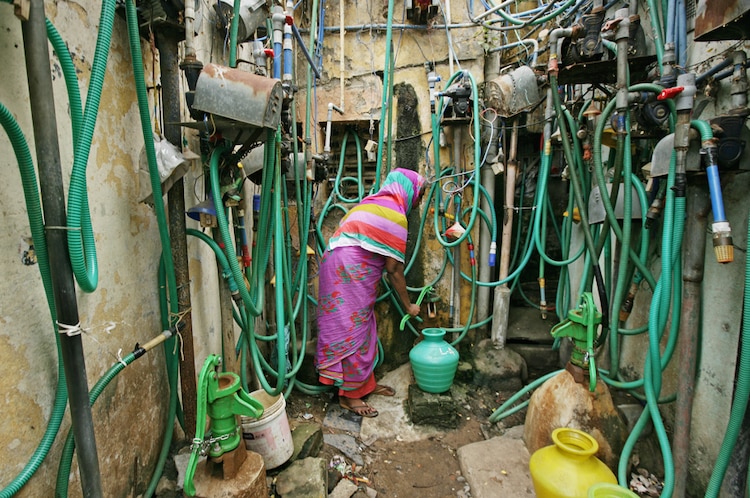
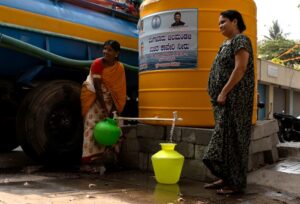
A woman uses a hand pump to fill up a container with drinking water in Chennai. (Photo: Reuters)

A woman uses a hand pump to fill up a container with drinking water in Chennai. (Photo: Reuters)

A new study, published in the journal Earth’s Future, might offer some hope.

Researchers at Stanford University have provided a blueprint for how fast-growing Indian cities can avoid catastrophe. The team behind the study formulated a plan by using Pune as a test case. They built a detailed model of how water supply, demand, and policy choices interact.

But the lessons they draw are meant for every Indian megacity in the making.

“We now have a framework that cities around the world can adapt as urban populations surge, cities expand, and climate pressures intensify,” said senior author Steven Gorelick.

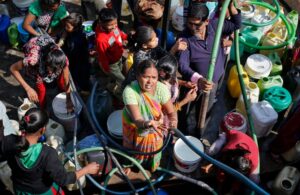
Residents surrounded by empty water containers. (Photo: Reuters)

Residents surrounded by empty water containers. (Photo: Reuters)

WHY IS INDIA FACING WATER SCARCITY?

By 2050, one-third to almost half of the global urban population is projected to face water scarcity, with a significant number living in India.

Five Indian cities, including Delhi, Kolkata, Chennai, Bengaluru, and Hyderabad, are already among the world’s 20 most water-stressed cities.

The reasons are familiar behind the dry state of the urban centres. The blame lies with decades of unregulated groundwater extraction, ageing pipelines, shrinking lakes, erratic monsoons, and rapid urban sprawl.

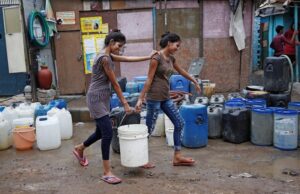
Girls carry a water container after filling it from a municipal tanker in New Delhi. (Photo: Reuters)

Girls carry a water container after filling it from a municipal tanker in New Delhi. (Photo: Reuters)

To not have water to drink or to bathe or wash clothes or water plants, are all a worrying prospect,

A NITI Aayog report had warned a few years back that by 2030, 40 percent of India’s population may not have access to drinking water.

The burden falls the hardest on those who can least afford it.

In cities like Bengaluru, residents in poorer neighbourhoods are entirely dependent on tanker water, which is very expensive.

The Stanford study puts a precise number on this inequality.

It notes that without intervention, low-income residents in fast-growing cities could spend nearly one-fifth of their income just to access water, and still receive less than half of what is needed for basic health and hygiene.

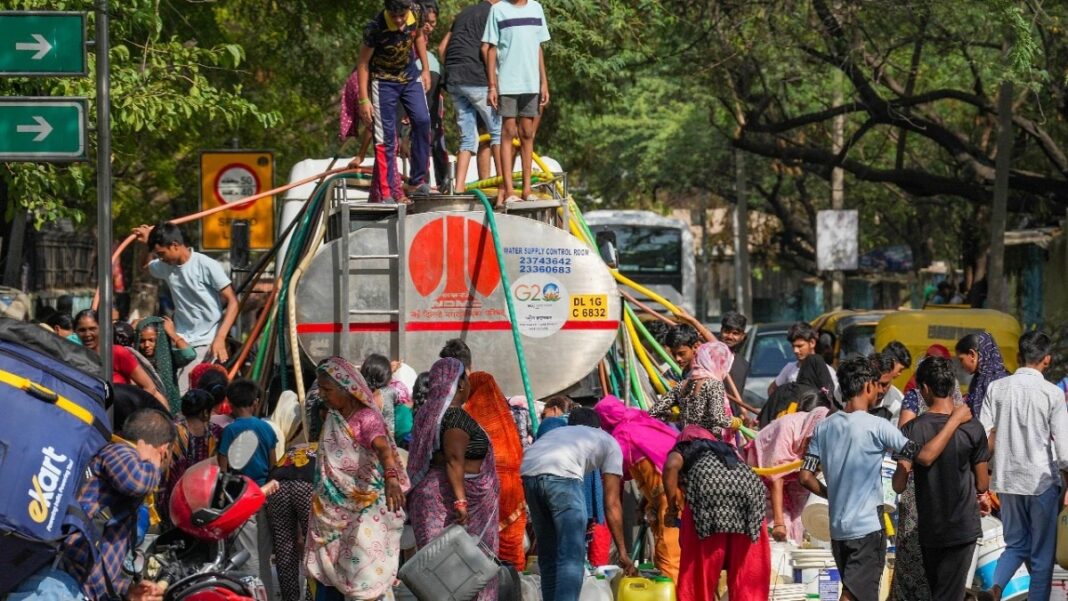
Residents fill their empty containers with water from a municipal tanker in New Delhi. (Photo: Reuters)

Residents fill their empty containers with water from a municipal tanker in New Delhi. (Photo: Reuters)

IS THERE A SOLUTION TO WATER SHORTAGE?

The researchers found that no single fix is enough.

Plugging leaks, cracking down on water theft, raising tariffs for heavy users, capping borewell extraction, all of these solutions help a little, but are not enough alone.

The real gains come from combining interventions.

The most powerful single policy, the study found, would be to allow farmers to legally sell their irrigation water to urban households through regulated tanker networks.

This alone could cut water costs for the urban poor from 18% to just 4% of income.

Residents fill their containers with drinking water from water tanks. (Photo: Reuters)

Residents fill their containers with drinking water from water tanks. (Photo: Reuters)

Crucially, the researchers found that fixing the crisis does not require a dramatic boost in supply. If proper policy interventions are adopted, all residents could gain access to at least 40 litres of water per day with only about a 1% increase in the total water supply.

“We discovered important synergies that identify unseen improvements in equality of water supply and access. This enables planners and policymakers to efficiently achieve their goals,” said lead author Ankun Wang, a PhD student at the Stanford Doerr School of Sustainability.

For India, where city after city is racing toward megacity status with creaking infrastructure and shrinking aquifers, the message is urgent. It says that solutions exist, and that the water is only just enough. But it warns that if policies are not created and enforced urgently, the country could be staring at a crisis that could affect millions.
Latest

Rain and hail on its way: May to grow more erratic, temperatures to drop

Rainfall sweeps across large parts of India, bringing partial relief from heatwave conditions as IMD warns of thunderstorms, hailstorms and gusty winds in multi

Indian startups to launch AI data centres in space. Pixxel, Sarvam join hands

Pixxel and Sarvam AI partner to launch Pathfinder, India’s first orbital data centre satellite, enabling AI-powered Earth observation and real-time insights d

Three dead on cruise ship after virus outbreak: What is Hantavirus?

The suspected hantavirus outbreak occurred aboard the MV Hondius, a cruise ship sailing in the Atlantic Ocean. Authorities are investigating the situation.

Rising heat is fuelling hunger in children, limiting nutrition and stunting growth

The study analysed health data from over 6.5 million children between the ages of one and five across Brazil, collected between 2007 and 2018.

Blackbuck bounce back: IIT Madras reports population rising from brink

Conservation offers hope that with continued protection of their habitats, water access, and safety from disturbances, blackbucks can thrive alongside humans.

Topics

Congress gets a second shot in Tamil Nadu despite missing an opportunity to create history

Congress misread the ground in Tamil Nadu, stayed with the DMK and missed an earlier tie-up with Vijay. The fractured verdict has still left the party's five se

Stalin out, Vijay in: Will Tamil Nadu’s NEET stand remain unchanged?

Political rivals Stalin and Vijay have converged in opposing NEET in Tamil Nadu. The overlap highlights how the state’s debate is rooted in fairness, access a

BJP’s Bengal roots traced to the Nehru–Liaquat Pact of 1950

The 2026 West Bengal verdict has renewed attention on Syama Prasad Mookerjee’s political journey from the Nehru Cabinet to the Jana Sangh. His 1950 resignatio

From college dropout to Tamil Nadu CM: Educational qualifications of Vijay

TVK Chief-turned Tamil Nadu CM Vijay’s education journey, from a college dropout to a political leader, is gaining attention as his party performs strongly in

Two Indian women just won the ‘Green Oscars’. Here’s who they’re fighting to save

Parveen Shaikh and Barkha Subba have won the 2026 Whitley Awards for their conservation work in India. The honour brings funding and global attention to communi

How one coder hacked science paywalls and made millions of research papers free

Born in Kazakhstan, Alexandra Elbakyan went from teenage hacker to founder of Sci-Hub, the website that gave millions free access to academic papers. Sued by ma

CBSE cracks down on schools, sets May 31 deadline to finalise Class 6 third language

CBSE has asked affiliated schools to finalise and upload the Class 6 third language (R3) on the OASIS portal by May 31, 2026, and fix any non-compliant entries

IIT Roorkee extends JEE Advanced registration deadline to May 5. Details here

With just days left before the JEE Advanced 2026 exam on May 17, IIT Roorkee has given aspirants a final opportunity by extending the registration deadline to M
spot_img

Related Articles

Popular Categories

spot_imgspot_img