
China achieved a $1.19 trillion trade surplus in 2025 — 20% higher than in 2024 — helping meet its 5% growth target. It needs a large trade surplus for sustained economic growth because other sectors of the economy cannot meaningfully contribute to economic growth in 2026 and beyond.
There is broad agreement within China’s leadership that the “old economy” or the traditional investment and export-driven growth model/strategy is no longer politically and economically viable. Non-productive investment in infrastructure and manufacturing and rising government spending have fuelled high debt levels, while declining returns on capital since 2008 have prompted further capital injections, deepening financial pressures.
The capital required to drive economic growth in China has nearly doubled since the Covid-19 outbreak in 2020, reflecting the increasingly debt-dependent nature of GDP expansion.
Increasing debt levels tend to suppress economic growth by introducing uncertainty about the allocation of future servicing costs. While this can culminate in a debt crisis, China is more likely to encounter extended periods of low growth, comparable to the stagnation seen in the erstwhile Soviet Union after the early 1960s and in Japan following the early 1990s.
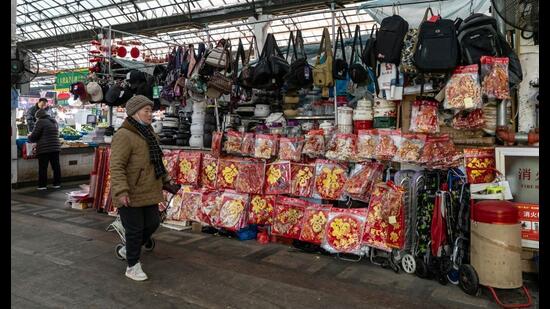
China needs higher domestic consumption, but growth in spending has remained limited despite government measures. Retail sales recorded a modest 0.9% rise in December 2025 — the slowest pace since 2022. While the government has committed to proactive measures in 2026 to restore confidence, structural weaknesses in the economy persist.
The contraction in consumption stems not only from the property downturn and falling housing prices but also from wider economic fragility and high youth unemployment of around 20%. The real estate sector, contributing about 15% of GDP, remains in prolonged downturn, with large volumes of unsold property depressing prices. As household wealth declines due to falling property prices, consumers have become increasingly cautious, and continued weakness in the sector is likely to further dampen confidence and spending.
After Covid-19, confidence in government policy has eroded and consumer spending has weakened as people grow more pessimistic about the economy. China is experiencing price stagnation, while employers are reducing wages as workers accept lower pay in an increasingly competitive labour market. Consumers are delaying purchases in anticipation of better deals, which in turn encourages firms to further cut prices. This dynamic raises the risk of a deflationary cycle that could force business closures and slow economic growth.
The “new economy” focused on high-tech innovation, green energy, and digital services under the aegis of President Xi Jinping’s Made in China 2025 initiative — launched in 2015 — is also not going to lead to higher economic growth. While high-technology industries are expanding, they are suffering from low profitability due to intense competition and heavy reliance on local/provincial government support. Declining profits, a “race to the bottom,” and excess capacity — where supply outpaces demand — have pushed many Chinese firms to rely on exports for survival. At the same time, excessive competition is forcing companies to scale back or shut down operations, contributing to rising unemployment. Government subsidies and financial assistance are also increasing local debt burdens, which are likely to weigh on future economic growth.
According to data from China’s National Bureau of Statistics, the “new economy” remains too small to offset the slowdown in the “old economy”, contributing only about 20% of GDP growth. Rhodium Group estimates suggest that during 2023–2025, the contraction in output from the “old economy” was roughly six times greater than the gains generated by the “new economy”.
China’s economy will continue to expand at a lower rate because of the problems in the old economy and the inability of the new economy to compensate for the former’s slowdown. This necessitates increasing exports and trade surplus. The size of China’s trade surplus plays a crucial role in determining debt accumulation, as it offsets the need for non-productive investment to sustain GDP growth. Higher trade surplus reduces the share of inefficient spending in the economy, whereas a lower surplus intensifies reliance on debt-driven investment.
However, burgeoning exports and a massive trade surplus are not sustainable in an increasingly uncertain trade environment. Rising protectionism globally and push back by countries against China’s distorted mercantilist trade policies will also hinder exports. Beijing should accept lower economic growth and fix lower annual growth targets, more in line with the growth capacity of the economy.
Raj Verma is non-resident scholar, Sigur Center for Asian Studies, Elliott School of International Affairs, George Washington University. The views expressed are personal


