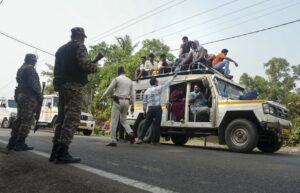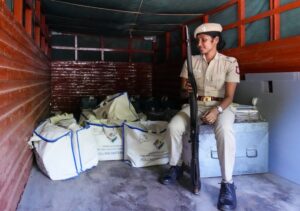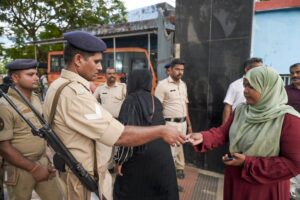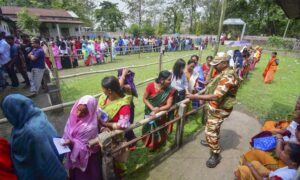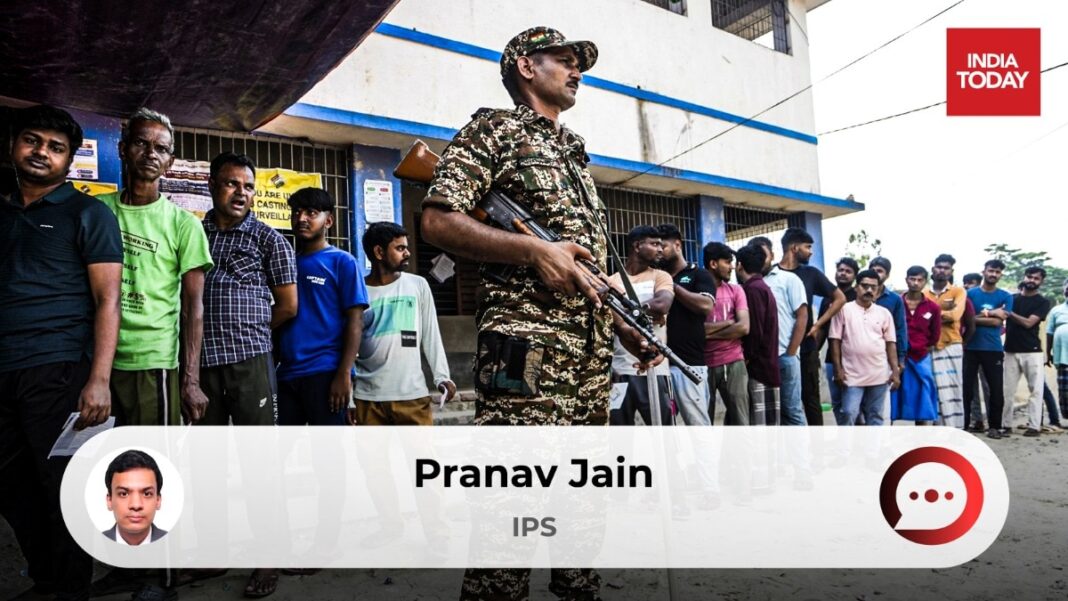
The election season in India is loud, charged, vituperative, and unforgiving. It is the most visible manifestation of the theatre of democracy: rallies swelling with slogans, candidates trading accusations, and a citizenry pulled into the gravitational force of politics. And alongside this spectacle, almost as a shadow that moves but is seldom seen, stands the police. And, unfortunately, almost predictably, the police become the easiest target. It is, as many of our seniors say, “open season” on the police.
We are accused of bias before we act, of excess when we act, and of failure when we choose restraint. We are scrutinised both for what we do and for what others perceive we might do. The police must be visible enough to deter violence, yet invisible enough not to intimidate the voter. We must be firm without being forceful, neutral without appearing inert.
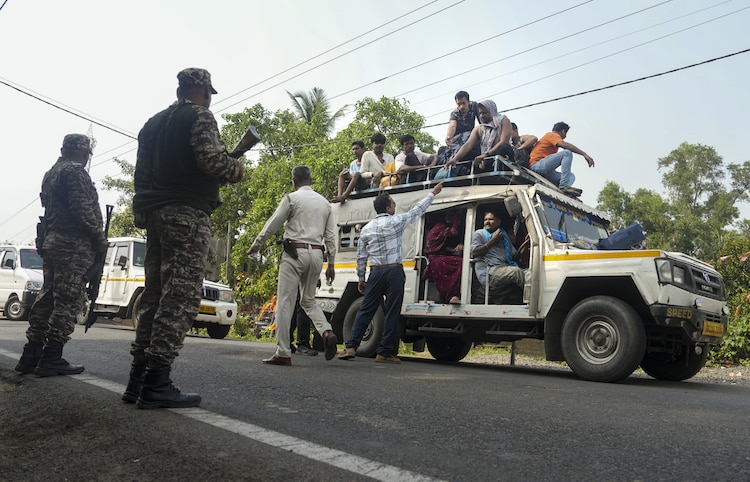
Election policing is unlike any other law-and-order duty. It is about maintaining peace, but more than that, it is about upholding the trust the citizenry has placed in us. So, in a very real sense, the police are the custodians of the democratic process.
Consider the complexity of what is expected.
Months before a single vote is cast, the groundwork begins. Advanced security liaison (ASL) meetings are conducted with central forces, intelligence agencies, and the civil administration. Vulnerability mapping is carried out down to the level of individual booths. History sheets are revisited, local tensions analysed, and preventive actions initiated. Every decision is layered with consequences. A misjudged deployment can escalate tensions. A delayed response can erode confidence. A perceived bias, real or imagined, can ripple across an entire constituency.
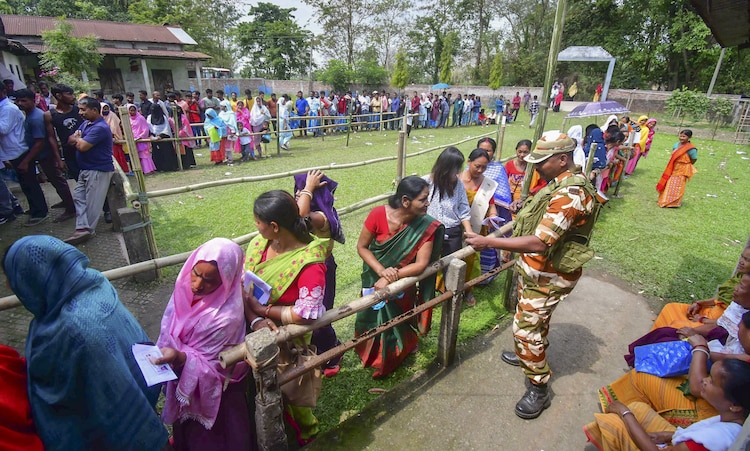
The term ‘Bandobast’ is often used casually in public discourse. In reality, it is one of the most complex operational deployments undertaken in peacetime India. Consider a single polling day: thousands of polling stations, many in geographically remote or conflict-prone areas; multi-layered security made up of static guards, sector officers, flying squads, and reserve platoons; real-time monitoring through control rooms operating 24/7; and rapid response protocols designed to neutralise disturbances within minutes. In states like West Bengal and Assam, where electoral violence has historical precedent, the margin for error is razor-thin.
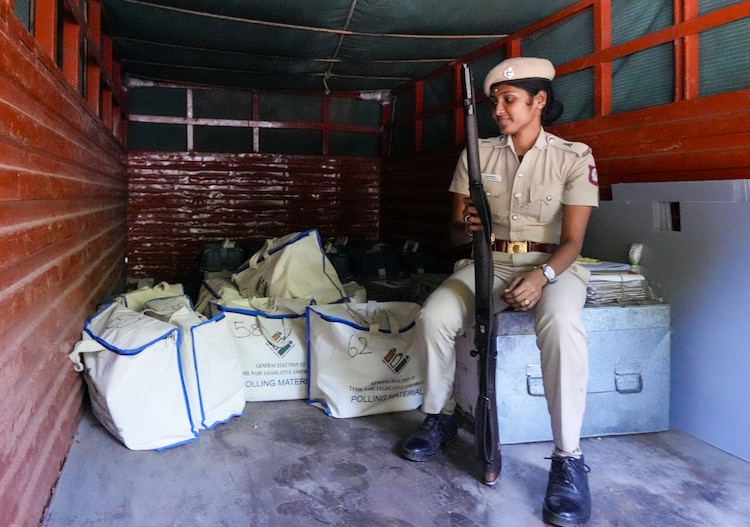
And then there is the human dimension. No one sheds a tear for the constable who has not gone home in ten days, manning the outer cordon of a polling booth under the harsh sun, ensuring that a line of voters, each with a different political belief, can cast their vote without fear. No one realises the anxiety that a sub-inspector goes through when he is coordinating last-minute changes in route plans of a VIP because intelligence inputs suggest potential clashes. No one cares for the Superintendent of Police (SP), awake through the night, juggling calls between the Election Commission, district administration, and field units, trying to anticipate problems before they erupt.
The policeman operates in what can only be described as a zone of permanent contestation. Acting against ruling party workers when they violate the law. Protecting opposition rallies even in hostile environments. Enforcing the Model Code of Conduct (MCC) without fear or favour. Withstanding pressure – political, social, and sometimes internal. Paradoxically, the more evenly the police act, the more likely they are to be accused by all sides. Political actors, seeking advantage, question our neutrality. Commentators, seeking narratives, amplify isolated incidents. Social media, seeking outrage, circulate half-truths with full conviction.
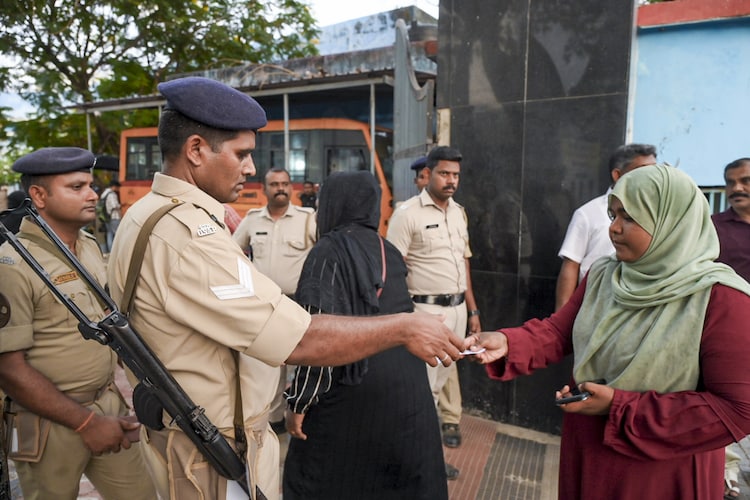
To be constantly doubted is not easy. To be vilified in public discourse, sometimes without evidence, can be disheartening. But the uniform demands something more than validation. It demands resilience. And so, the police continue. We continue to stand between rival groups when tempers flare. We continue to escort ballot boxes through difficult terrain. We continue to ensure that the elderly woman who has waited five years for this day can vote without intimidation. We continue, even when appreciation is scarce.
This is not to suggest that the police are beyond criticism. Accountability is essential in a democracy, and no institution can claim perfection. There have been instances where the conduct of individuals has fallen short of the ideals the uniform represents. These must be acknowledged, investigated, and addressed.
But to paint the entire force with a broad brush of suspicion is to ignore the complexity and scale of what is undertaken during elections. India conducts elections on a scale unmatched globally – hundreds of millions of voters, millions of polling personnel, and vast geographical diversity. Despite this, the overwhelming majority of polling stations report peaceful voting. Incidents of violence, while serious, are statistically limited relative to the scale. Voter turnout often remains high, indicating sustained public confidence in the process. These outcomes are not accidental. They are the result of meticulous planning and execution, of which policing is the central pillar.
Perhaps what is needed is a more balanced understanding. To recognise that neutrality is not passivity but an active, often difficult, choice. To understand that restraint, in a volatile situation, can be as significant as action. To see the human being behind the uniform – the fatigue, the pressure, the quiet determination to get it right.
As a probationer in the Indian Police Service (IPS), I am still at the beginning of my journey. And if there is one lesson that election duty teaches us, then it is: the legitimacy of the police comes from adherence to duty, even when it is unpopular. The incalculable service of the police lies not in what happens, but in what does not. The riot that never breaks out. The intimidation that never materialises. These absences are the true measure of success. In the theatre of democracy, where passions run high and stakes run higher, the police is the one institution that will always continue to hold the line.
(Views expressed in the piece are those of the author)