
Dubai: The men’s tour barely pauses for breath. From the first serves struck in early January to the final trophies lifted in late November, the calendar stretches across continents, allowing players little margin for recovery.
With the Masters 1000s going from week-long affairs to 12-day events in recent years, the mandatory quota has tightened visibly. It resonates in a physical toll on the pros. In 2025, young players like Holger Rune and the gifted Arthur Fils were among those sidelined for months at a time.
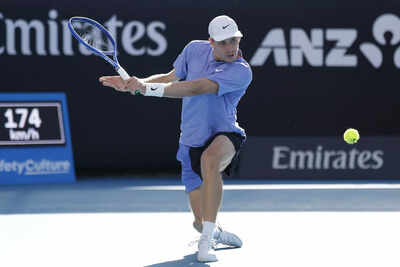
The left-handed Denis Shapovalov, 26, who was ranked No. 10 in 2020 before a knee injury put him out of the Tour for six months, advocates constant breaks for players.
“There’s really no time to rest, to be home, and to just take time and not think about the next competition,” Shapovalov told TOI at the Dubai Duty Free Tennis Championships. “There should be some breaks in the season where there are no tournaments, where players have the chance to regroup.”
Fils, the 21-year-old Frenchman who suffered a stress fracture in his lower back last June and only returned to the Tour earlier this month after a false start in Montreal in July, said recovery was a long process.
“I was in so much pain. In the mornings, I could barely walk,” he said.
Fils, ranked a career-best No. 14 when he was forced to press the pause button on his season in June, lost about seven kilos during recovery.
“When you look back at it, six months in a lifetime is not a lot, but…,” he said, without adding that six months in tennis is almost a season.
Fils argued that while it wasn’t the job of players to come up with a solution, the situation needed attention. “You go to the physio and you see everyone,” he said of the player community.
The top players are bound by a strict set of mandatory commitments that shape the entire season.
Players who finished the previous year inside the Top 30 must count results from all four Grand Slams and eight of the nine ATP Masters events in their ranking breakdown, unless they are unable to compete for medical reasons. In addition, they are required to compete in a minimum of four ATP 500 tournaments over the course of the year.
Daniil Medvedev, 30, a former No. 1, called to shrink the Tour.
“Last year when Holger got injured in Stockholm, everybody was like, you don’t have to play Stockholm,” Medvedev said. “If he wants to be in Turin (for the season finale), he has to, even if it’s not a mandatory tournament.”
“Last year I played seven tournaments in a row. Did I have to? No,” Medvedev said. “I played badly in the beginning of the year, so I was thinking that maybe I can get 100 points here, 200 points there, be higher seeded next year.”
Shapovalov burnished the point the Russian made.
“Unless you’re a Top-10 player, it’s tough not to play because you do need the points,” the Canadian said. “If you’re not playing, another guy is; it’s a constant battle.”
Stan Wawrinka, who will turn 41 in a couple of weeks, is the voice of reason.
“I always sacrifice a few tournaments during the year to make sure I don’t overplay, mentally and physically,” he said. “I always tried to play a schedule that was the best for the long term. I tried to do a few blocks of practice during the year to make sure I stay in shape and fresh for the year.”
The season doesn’t stop in tennis, save for a month in December, and for players struggling to set boundaries, the physical toll never truly stops.
Get the latest ICC Men’s T20 World Cup 2026 updates, including the full schedule, teams, live scores, points table, and key series stats such as top run-scorers and wicket-takers.


