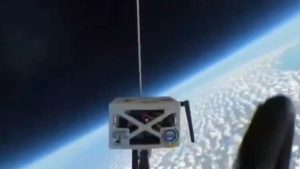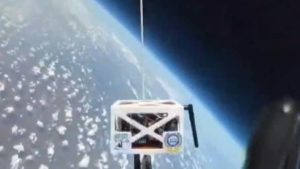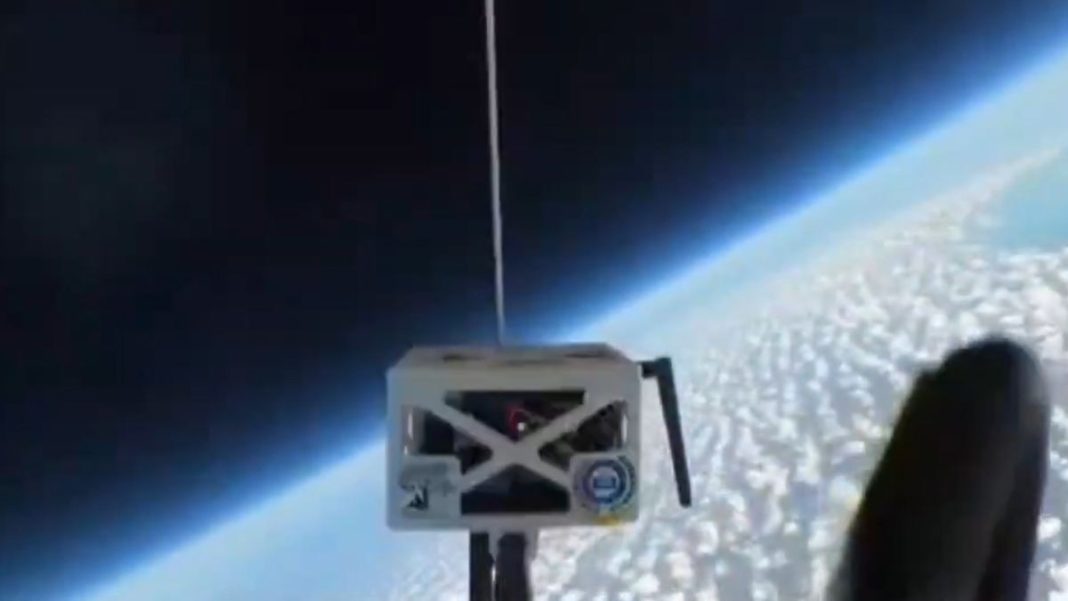
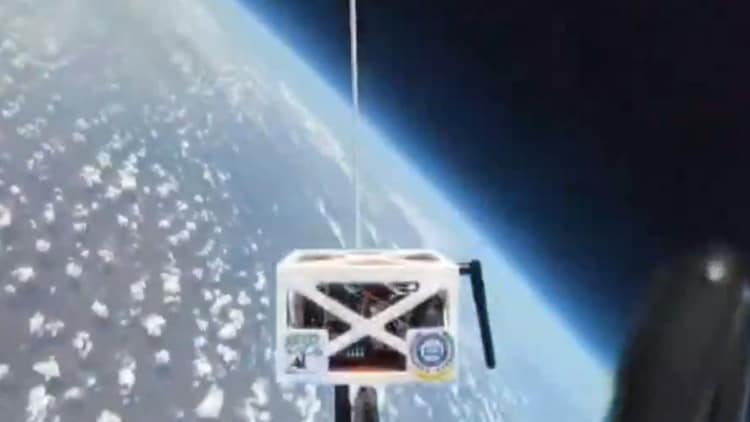
In an impressive display of scientific skill, 13 students from the Class XI batch of Ariyakudi Government Higher Secondary School in Tamil Nadu’s Sivagangai district have successfully launched a 600 gram mini satellite.
As first reported by The Hindu, the device reached an altitude of 22 km on February 13 before it was safely recovered.
The mission, named Vikko Sat-1, was specifically designed to detect fungal spores in the stratosphere using five specialised sensors, marking a major milestone for student researchers in Tamil Nadu.
WHAT WAS THE MISSION OF THE MINI SATELLITE?
The primary goal of this launch was to study the concentration of fungal spores at high altitudes.
These biological particles play a crucial role in agricultural health and environmental cycles, and their presence in the upper atmosphere can impact crops if they descend.
By sending a compact 600 gram device into the stratosphere via a helium balloon, the students aimed to collect real-time data that is often difficult to obtain through ground-based observations.
The students developed the mini satellite themselves over a period of six months, equipping it with specialised adhesive surfaces to capture the samples.
HOW HIGH DID THE STUDENT SATELLITE TRAVEL?
The mini satellite ascended to a height of 22 km, entering the stratosphere, which is the second layer of the atmosphere.
At this altitude, the onboard sensors worked to identify how fungal spores behave in thinner air and lower temperatures. This layer is a critical zone for scientific research, and reaching it with a student-built device is a remarkable technical achievement.
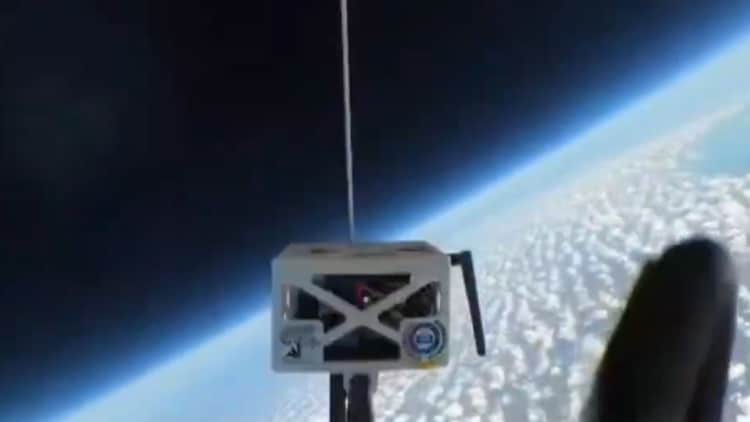
The payload was recovered intact after its descent, ensuring the air samples remained safe for analysis in the school’s control room.
WHY IS THIS SCHOOL PROJECT SIGNIFICANT?
This project proves that high-level science is not limited to elite laboratories. These Class XI students managed the entire process from design to recovery.
Using affordable technology and precise engineering, they demonstrated how 80 per cent of scientific success comes from innovative thinking rather than just massive budgets.
The success of Vikko Sat-1 even earned a congratulatory message from renowned scientist Mylswamy Annadurai. This initiative is expected to inspire more rural schools to explore the wonders of space science and agricultural research.