Key Takeaways
- US Navy’s Boeing E-6B Mercury ‘Doomsday plane’ vanished from public tracking systems over the Atlantic
- The aircraft disappeared east of Virginia Beach during a sensitive transatlantic mission
- This specialized plane serves as nuclear command center for the President and military leadership
- Transponder shutdown is normal procedure during classified operations
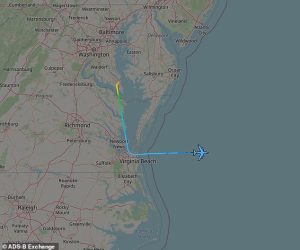
A US Navy Boeing E-6B Mercury, one of America’s crucial ‘Doomsday planes,’ has vanished from public flight tracking systems during a mysterious transatlantic mission. The aircraft was last detected east of Virginia Beach on Friday morning before going completely dark.
Mission Details and Disappearance
The specialized command aircraft departed from Naval Air Station Patuxent River in Maryland, following a routine southeast path over the Chesapeake Bay. After skirting the Norfolk naval complex, the plane headed offshore before its public transponder stopped transmitting approximately 60 miles east of Virginia Capes.
This disappearance is standard procedure during sensitive military operations. When over the ocean, the Mercury typically enters classified warning zones and deploys a multi-mile trailing wire antenna to communicate with submarines and ground stations.
Doomsday Plane’s Critical Role
The Boeing E-6B Mercury operates as a mobile command center for US Strategic Command, the Secretary of War, and the President. One of only 16 such aircraft in existence, it can transmit nuclear strike orders if necessary.
Operating under callsign AFD FE2, the plane was conducting a TACAMO (Take Charge and Move Out) mission. These operations maintain communication links between national command authorities and strategic forces, including ballistic missile submarines, even during nuclear conflict.
Technical Capabilities and Design
Built between 1989 and 1992, the E-6B fleet forms part of Operation Looking Glass – the Airborne Command Post system designed to coordinate American nuclear forces if ground command centers are destroyed.
The aircraft features dual trailing wire antennas that transmit in the very low frequency spectrum. Crucially, it uses older analogue technology resistant to electromagnetic pulses from nuclear explosions, unlike modern digital systems that would be disabled.
Recent Activity Patterns
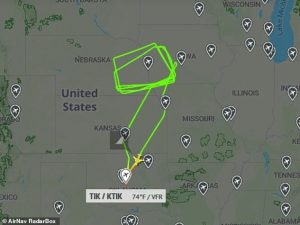
This incident follows similar mysterious flights in March when five Mercury planes were tracked conducting unusual maneuvers. One aircraft circled Omaha, Nebraska, near Offutt Air Force Base – a key nuclear command facility.
Other flights included shorter missions around Tulsa, a trip toward Dallas, and another departure from Maryland. The purposes of these operations remain classified, highlighting the ongoing strategic importance of these unique aircraft.