
Two days before the election results, in a private conversation, the right-hand man of a key Congress strategist insisted the DMK-led alliance was returning to power in Tamil Nadu. On Monday, even as the election results pointed to a Vijay wave in Tamil Nadu, a senior Congress functionary wondered aloud why no element of anti-incumbency was visible on the ground. It can be reasonably concluded that at least a section of the party did not have its ear to the ground and was blind to the wave that was building up.
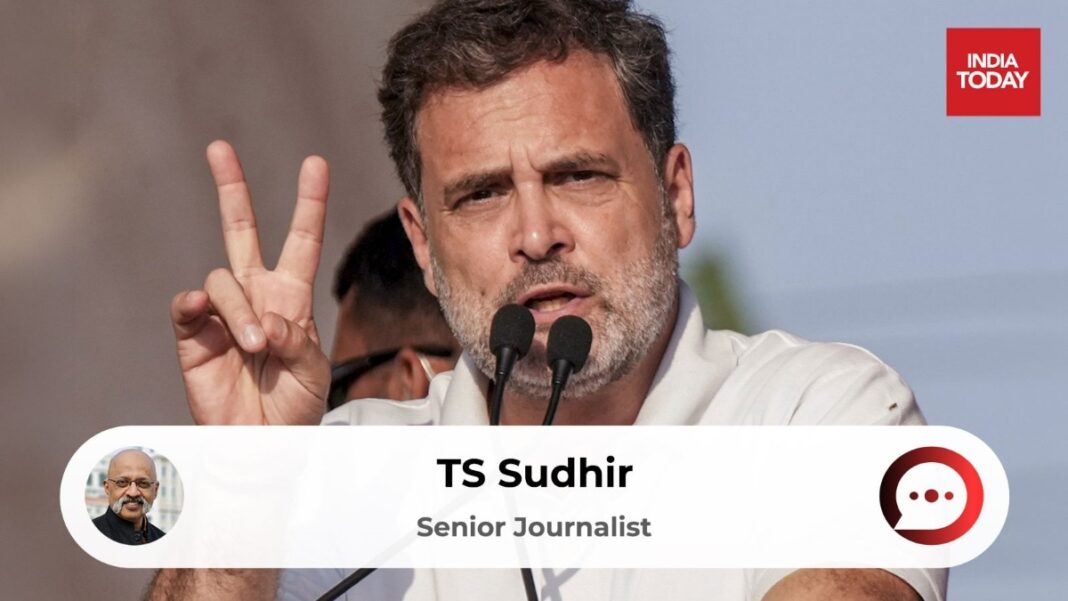
All the more strange because one man seemed to have gauged much earlier that the DMK was not a winning horse in 2026. His name, Rahul Gandhi. The Leader of Opposition made sure he addressed no meetings in the company of MK Stalin, a far cry from 2024 when he went out of his way to display bonhomie with the Tamil Nadu chief minister, even gifting him a box of Mysore Pak sweets to him to convey his ”brotherly” affection. A significant section of the Tamil Nadu Congress, particularly the cadre, wanted to back Tamilaga Vettri Kazhagam (TVK) as they saw a momentum building in favour of Vijay. MP Manickam Tagore publicly pushed for an alliance as he was convinced the TVK would hit a century. Praveen Chakravarty, Chairman of the Data Analytics and Professionals Wing of the Congress, met Vijay to explore the possibility of a pre-poll arrangement. All this was apparently done, keeping Gandhi in the loop. In fact, after the Karur stampede tragedy, Gandhi reportedly spoke to Vijay.
The alliance dharma was under strain for some time. In December last year, Chakravarty threw a data-driven hand grenade at the DMK when he said Tamil Nadu had overtaken Uttar Pradesh to become the state with the highest outstanding debt in India. That touched a raw nerve as it gave the BJP ammunition to allege that contrary to the DMK’s claim that this was ”productive debt”, borrowed to fund infrastructure and social welfare schemes, the DMK was ”bankrupting” Tamil Nadu. There was pressure on the Congress to distance itself from its own functionary’s remark and Tamil Nadu Congress president Selvaperunthagai held an emergency press conference to rubbish Chakravarty, saying his voice was not the voice of the TNCC.
The Tamil Nadu Congress clearly was a house divided on the issue of an alliance with the TVK. On one hand, the AICC incharge Girish Chodankar communicated to the leadership that the cadre felt if Rahul Gandhi and Vijay had campaigned together, the alliance would have swept the election with 190 seats, an opinion he now articulates openly.
But the section opposed to being cast alongside Vijay blocked this pivot. Among them, Selvaperunthagai, who himself suffered a humiliating defeat by over 54000 votes in Sriperumbudur. This section convinced the High command that Vijay was an untested electoral commodity and that a bird in hand would be better than two in the TVK bush.
So instead of actively pursuing Vijay, the Congress think tank in Delhi decided to make the DMK insecure by making it apparent that it had the TVK as its Plan B. It was conveyed that the DMK would have to sweeten the alliance offer by allotting 41 seats to the Congress, apart from two Rajya Sabha seats. The demand was rebuffed with indifference by the DMK.
In fact, when senior leader KC Venugopal armed with a dossier of high potential seats, arrived in February at Anna Arivalayam, the DMK headquarters in Chennai, the Dravidian major’s negotiation team instead showed him the map of seats the DMK had already allotted to itself. The Congress was told to take 28 seats or leave it. The national party blinked. It showed zero risk appetite when it had nothing to lose and everything to gain. The DMK had never allowed the Congress a share in the power structure and treated its local functionaries with disdain. Delhi, however, put up with it because it was more interested in the seats in the Upper House. Moreover, there was a fear that if the leadership went the Vijay way, the party could split in the state and that would not be good optics on the eve of an election.
The fissures showed on the ground. The absence of a Stalin-Gandhi tango was proof that all was not well. On the election campaign, Vijay set the cat among the pigeons by alleging that ”Stalin Sir has pulled the Tamil Nadu Congress to his side by giving a few crores. But the real Congress is standing with us.” What’s more, Vijay had already hijacked K Kamaraj, one of the Congress icons from Tamil Nadu, with the former chief minister’s face prominently displayed in the backdrop on the TVK stage.
There was a lack of chemistry which resulted in the poor transfer of votes between the DMK and the Congress cadre. The result was an abysmal strike rate – 5/28, a big comedown from the 18/25 the Congress managed five years ago. The suspicion that the Congress cadre, miffed with the refusal to join hands with Vijay, would vote for the TVK had come true. So had the suspicion that the DMK cadre felt the Congress could no longer be trusted with its votes.
Fate has now given the Congress a lifeline, to correct the mistakes, the likes of Mallikarjun Kharge, P Chidambaran and Selvaperunthagai made. With the TVK short of numbers, the five seats that the Congress has won would be needed to make up the numbers for a simple majority in the House.
The Congress has three options – status quo which means sticking with the DMK, provide outside support to Vijay’s government and work on rebuilding the party away from the DMK’s influence or join the government and become a junior partner to the TVK. The group that supports the first option is now likely to have lost its decibel levels so the second and third options of a handshake with Vijay would be on the table. But unlike before the elections, when the Congress could have had bargaining power with the TVK, this time Vijay will dictate terms. After all, he has the Left parties, AMMK and the VCK to choose from as well.
Next year, it will be 60 years since the Congress has been out of power in Tamil Nadu. The party’s decision will tell if it decides to retire its period of exile.


