
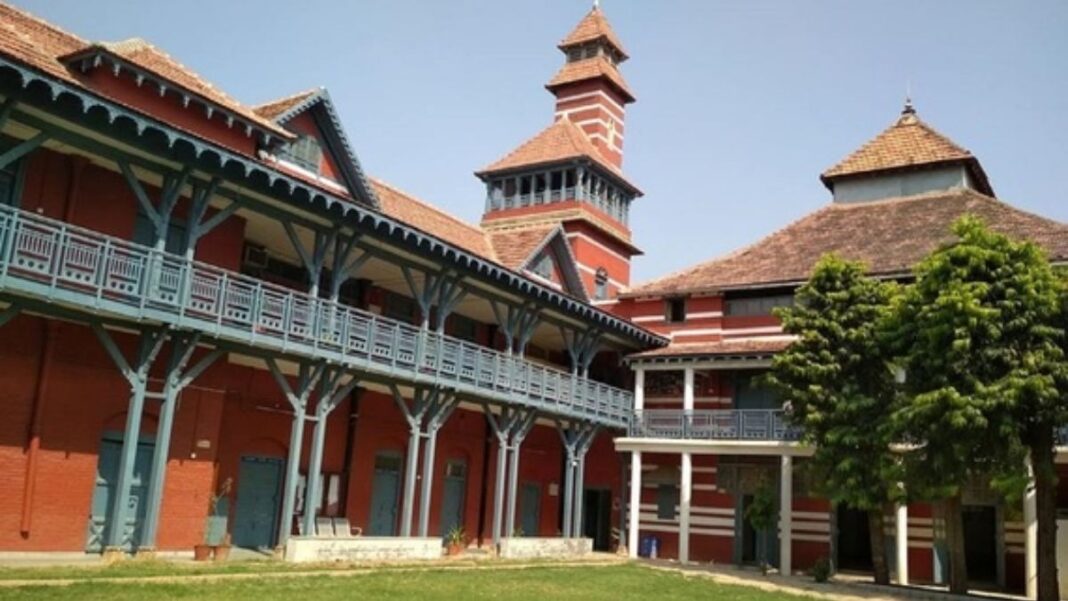
In a significant academic development, the Faculty of Arts at Maharaja Sayajirao University of Baroda has introduced new subjects in its Sociology curriculum. The Board of Studies has approved a set of courses that will bring contemporary socio-political themes directly into the classroom.
Among the most talked-about additions are modules on “Modi-tattva” and the ideology of the Rashtriya Swayamsevak Sangh, marking a notable shift in how sociology is being taught at the university.
INSIDE ‘MODI-TATTVA’: STUDYING LEADERSHIP
The newly introduced “Modi-tattva” course focusses on the personality, leadership style, and governance approach of Prime Minister Narendra Modi.
Students will explore his working methods, communication style, and policy impact through a sociological lens.
The course also examines large-scale initiatives such as “Make in India” and their influence on society, offering students a contemporary case study of leadership and development.
RSS IDEOLOGY IN THE CLASSROOM
Another key component of the revised curriculum is a detailed study of the RSS. Students will learn about its origin, history, and contributions to socio-cultural development.
Special sessions will focus on themes such as cultural nationalism, environmental conservation, and the organisation’s role during India’s freedom struggle.
The curriculum also highlights the importance of understanding the RSS’s operational structure, especially in the context of non-profit organisation management.
FOUR NEW COURSES, ONE BROADER VISION
The Board of Studies has approved four new courses in total, each designed to deepen students’ understanding of India’s social and intellectual traditions.
One section titled “Leading Personalities” includes the philosophies of figures such as Vinayak Damodar Savarkar, Sri Aurobindo, and B. R. Ambedkar. It also explores the governance and reforms of Chhatrapati Shivaji Maharaj and Sayajirao Gaekwad III.
Another module focusses on “Nationalism”, aiming to build a clear understanding of the concepts of nation and state, along with perspectives from Indian sociologists.
WHAT THE UNIVERSITY SAYS
According to Dr Virendrasinh, Head of the Department of Sociology, the new curriculum is designed to help students better understand the current socio-political environment.
He noted that recent research engagement with policy institutions such as NITI Aayog has already encouraged students to explore governance-related themes. Formalising these topics within the curriculum, he said, is a natural next step.
A STEP TOWARDS CONTEMPORARY SOCIOLOGY
The university administration believes this transformation will make sociology more relevant to present-day realities.
By combining historical thought with modern political analysis, the new courses aim to prepare students for a deeper engagement with India’s evolving social landscape.
Whether viewed as a bold academic experiment or a reflection of changing educational priorities, the move is certain to spark discussion both inside and outside classrooms.
(With inputs from Trushar Patel)


