
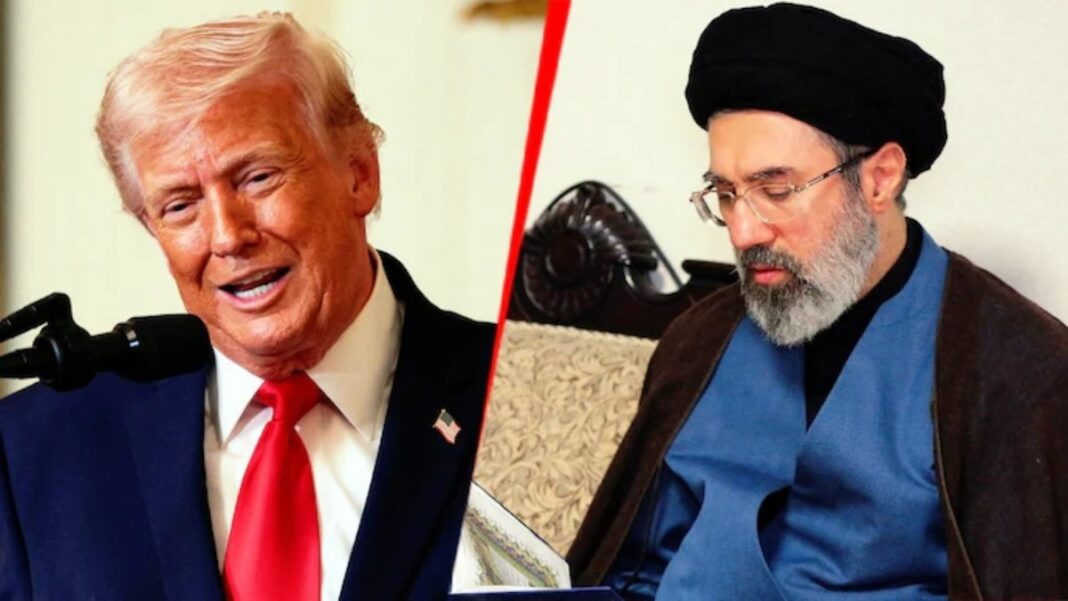
An Iranian proposal, so far rejected by US President Donald Trump, would reopen shipping in the Strait of Hormuz and lift the US blockade on Iran while leaving discussions on Tehran’s nuclear program at a later stage, a senior Iranian official said.
The proposal represents what Tehran sees as a significant shift, with nuclear talks deliberately pushed to a later stage to make an initial agreement easier to reach.
According to the Iranian proposal, the war would end with guarantees from the United States and Israel that they would not launch further attacks. Iran would reopen the strait, a critical route for global energy supplies, while Washington would lift its blockade on Iranian trade.
Negotiations on Iran’s nuclear programme would follow in a later phase, focusing on curbs in exchange for sanctions relief. Tehran is also seeking recognition of its right to enrich uranium for peaceful purposes, even if it agrees to suspend such activities as part of a deal.
“Under this framework, negotiations over the more complicated nuclear issue have been moved to the final stage to create a more conducive atmosphere,” Reuters quoted the Iranian official as saying.
Trump, who has repeatedly insisted that Iran must never obtain a nuclear weapon, said on Friday he was dissatisfied with the latest proposal. Iran’s foreign minister, however, signalled that Tehran remains open to diplomacy if Washington changes its approach.
Trump also said on Friday that, “on a human basis,” he favored avoiding military action against Iran, and told US congressional leaders he did not require their approval to continue the conflict past that day’s legal deadline, arguing that a ceasefire had already “terminated” hostilities.
“Do we want to go and just blast the hell out of them and finish them forever? Or do we want to try and make a deal?” he told reporters at the White House when asked about his options.
Later, during a speech in Florida, Trump said the United States would not end its confrontation with Iran prematurely, warning that doing so could allow the issue to resurface within a few years. He also said that the US is in a war with Iran because “lunatics can’t have a nuclear weapon.”
“You know, we’re in a war because I think you would agree we cannot let lunatics have a nuclear weapon. Do you agree?” Trump said.
Despite saying he is in no hurry, Trump faces growing domestic pressure to restore normal shipping through the strait, which carries around a fifth of the world’s oil and gas. The disruption has driven up US fuel prices, raising the risk of political fallout for his Republican Party ahead of November’s midterm elections.
Although the United States and Israel halted their bombing campaign against Iran four weeks ago, there has been little progress towards ending a conflict that has severely disrupted global energy markets and heightened fears of a broader economic slowdown.
Iran has restricted most shipping in the Gulf for more than two months, allowing primarily its own vessels to pass. In response, the United States imposed its own blockade on ships linked to Iranian ports last month.
Washington has repeatedly said it will not end the war without guarantees that Iran cannot develop nuclear weapons—the core objective cited by Trump when he ordered strikes in February during ongoing nuclear talks. Tehran, however, maintains that its nuclear programme is entirely peaceful.
With inputs from Reuters


