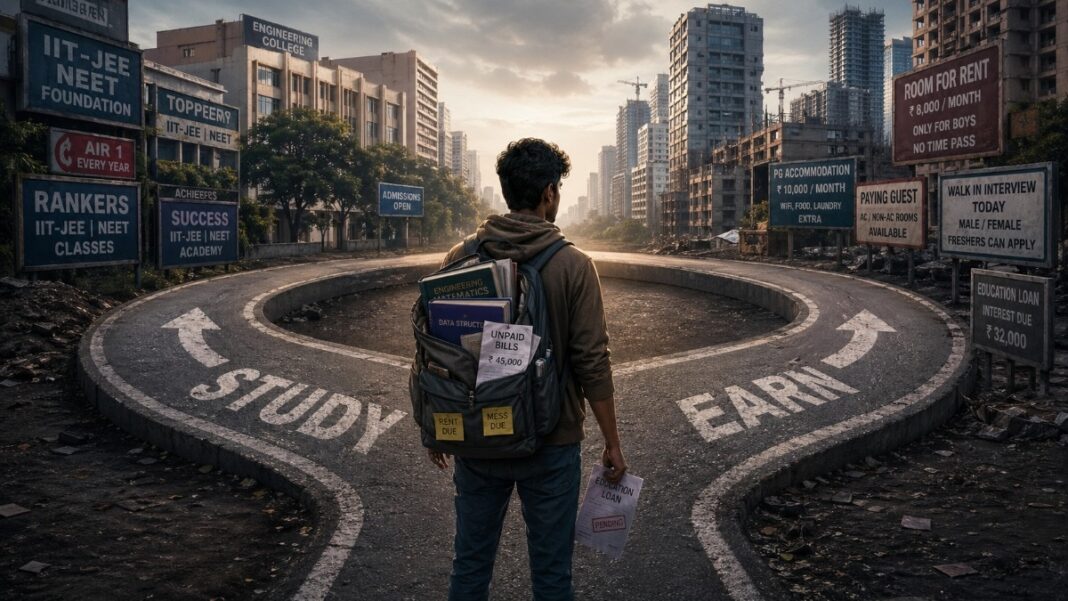
Even before a teenager has finished school, there is this one line they get to hear again and again: study hard now, or life will become difficult later.
But for millions of families, there is a problem before college even begins.
Money.
Good colleges cost money. Coaching costs money. Entrance exam forms cost money. Hostels cost money. Laptops cost money. Moving cities costs money. Even competing has become expensive.
So many students are trapped in a painful paradox — you need education to earn, but you often need money first to access that education.
India’s per capita income remains far below the cost of many private professional degrees, which is why one admission decision can reshape a family’s finances for years.
That is where the loop begins.
WHEN EDUCATION STARTS WITH A BILL
Higher education is still one of the strongest ways to move upward. For many first-generation learners, education loans have helped unlock opportunities that older generations never had.
But the cost of entry is rising fast.
Private MBBS tuition fees at many colleges can run from around Rs 50 lakh to well above Rs 1 crore across the full course, depending on state, category and institution. Two-year MBA fees at leading private schools such as ISB and others can exceed Rs 30 lakh.
In coaching hubs like Kota, annual coaching plus hostel and living costs can cross Rs 3 lakh for many families.
That means many students begin adult life not with a degree alone, but with a long bill attached to it that they need to repay.
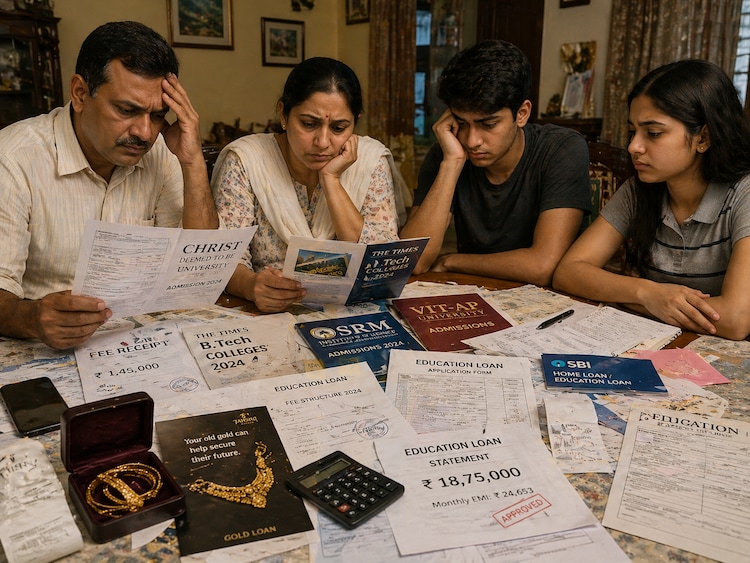
A 2025 Parliamentary Standing Committee review noted that active education loan accounts fell from around 23 lakh in 2014 to about 21 lakh in 2025, while the total loan amount rose sharply from Rs 52,327 crore to Rs 1.37 lakh crore. In simple terms, today we have fewer accounts but larger education loans.
Loans can be life-changing tools when used well. But when school, college and coaching fees rise faster than incomes, they can also become pressure points that creates a loop students and young employees are unable to escape.
WHY PARENTS PUSH ‘SAFE’ CAREERS
Many parents do not pressure children into joining one course or another out of cruelty. They do it out of fear – what if my child is unable to get a job and earn a living?
They know job insecurity. They know inflation. They know what unpaid bills can do to a household.
So they often push children toward careers seen as stable: medicine, engineering, management, government jobs.
But fear can harden into control.
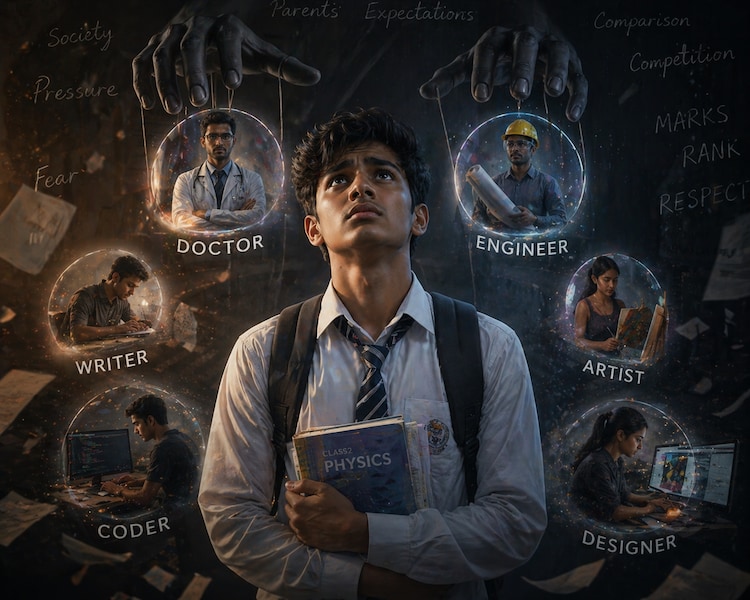
A student who loves design may be pushed into engineering. Someone interested in psychology may be told to choose medicine. A teenager who enjoys writing may hear, “What future is there in that?”
And once lakhs are spent, changing direction feels almost impossible.
Now the student is not choosing freely. They are carrying a family investment. And most often than not, this will trap them in a vicious loop where they have no choice other than to continue on their predestined path – decided by their parents – along with an education loan neatly tied with a bow.
THE HIDDEN GUILT STUDENTS CARRY
Financial pressure often creates a private emotional burden.
If marks fall, students may feel they wasted money.
If they dislike the course, they may feel ungrateful.
If they want to quit, they may feel selfish.
If placements fail, they may feel like a burden.
That guilt can become chronic stress.
Mental health concerns among students are like a ticking time bomb in India, one that few know how to defuse while others turn a deaf ear to.
India’s National Crime Records Bureau (NCRB) data has repeatedly shown thousands of student suicides annually in recent years, drawing attention to academic pressure, uncertainty and distress — 13,892 student suicides were recorded in India in 2023, the highest in a decade. That was up from 13,044 in 2022 and 10,335 in 2019.
WHO estimates one in seven adolescents aged 10 to 19 globally lives with a mental disorder, with anxiety and depression among the leading conditions. Indian school and college surveys have repeatedly flagged exam stress, sleep issues and anxiety as common concerns.
Not every case is linked to money or studies alone. But financial strain, exam pressure and fear of failure can deepen vulnerability.
FROM DEGREE TO EMI LIFE
The promise behind costly education is simple — study now, earn later.
Many graduates take the first available job not because they love it, but because repayment has started. India’s graduate unemployment rate has often remained higher than overall unemployment, showing that a degree alone does not guarantee the expected return.
Then begins rent, family responsibilities rise, maybe a home loan appears later.
Years pass. The hamster keeps running on their wheel inside their little cage.
Some professionals realise they never truly chose their path. They simply responded to the next bill. But now their kids are going to school, and it’s too late to make a big shift.
This is one reason burnout feels so common among young workers.

WHY THE LOOP REPEATS
Parents who struggled financially often want children to be secure. So they end up taking decisions that may end up pressurising their kids.
These children raised under pressure may later repeat the same model with their own kids: Take the safe route, earn first, and think later.
Over time, fear becomes family tradition. And because society respects salary faster than satisfaction, the cycle survives.
WHAT COULD CHANGE
Not every expensive degree leads to success. And not every affordable path leads to failure.
The world of work is changing faster than many families realise. Skills, apprenticeships, digital careers, creator businesses, vocational training and niche professions are opening doors that did not exist a generation ago.
Students need more than exam coaching. They need honest career guidance that helps them understand strengths, interests, earning potential and the reality of different industries.
Families also need open conversations. Not every child is built for the same path, and not every high-fee course delivers the return people imagine.
Banks and policymakers have a role too. If talent exists, it should not be blocked simply because a family cannot afford the starting cost.
And as a society, we need to stop acting as if only a handful of careers deserve respect. Success looks different for different people.
Education should widen choices, not shrink them. Work should give dignity, instead of becoming a lifetime repayment plan.
But when the journey starts with debt and ends in burnout, something needs to be questioned.