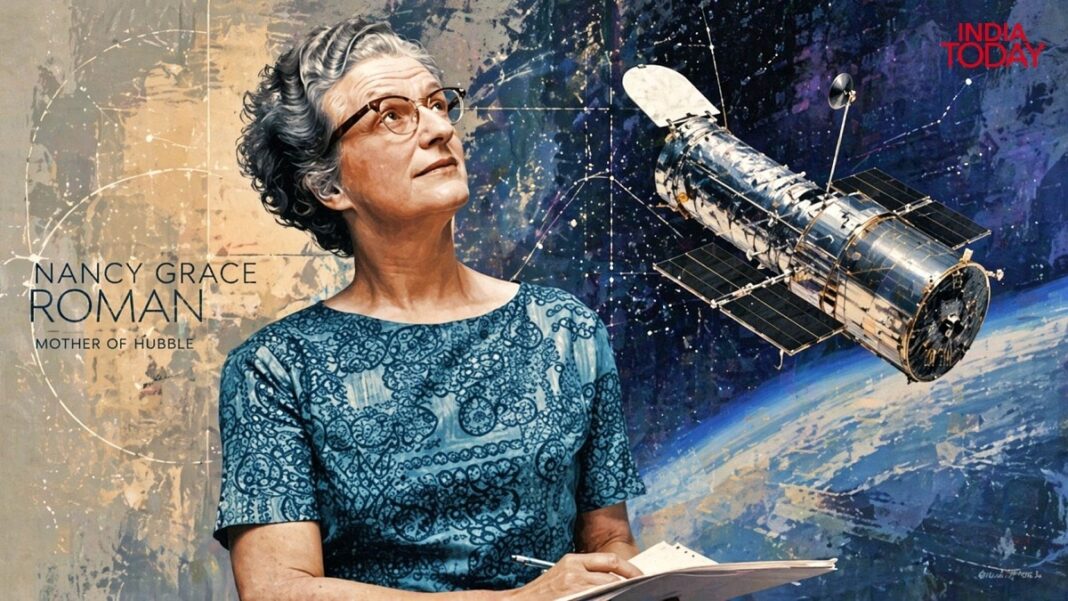
There is a particular kind of genius that does not announce itself loudly. It does not wear a spacesuit or float in zero gravity.
It sits in boardrooms, fights for funding, argues with Congressmen, and quietly changes the course of human history.
That was Nancy Grace Roman, and if you have ever been moved by a Hubble photograph, you owe her something.

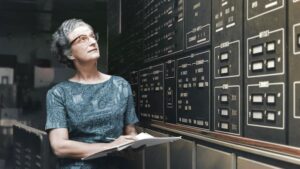
Nancy Grace was Nasa’s first Chief of Astronomy, the first woman to hold an executive position at the agency, and is known to many as the Mother of Hubble for her foundational role in planning the Hubble Space Telescope.
She held this title not because it was handed to her, but because she fought for it at every stage.
WHO WAS NANCY GRACE ROMAN?
Born on May 16, 1925, in Nashville, Tennessee, Roman knew by the seventh grade that she wanted to be an astronomer.
This was not a minor ambition for a girl in mid-20th century America.
The head of Swarthmore College’s physics department told her he usually dissuaded girls from majoring in physics, but that she might make it.
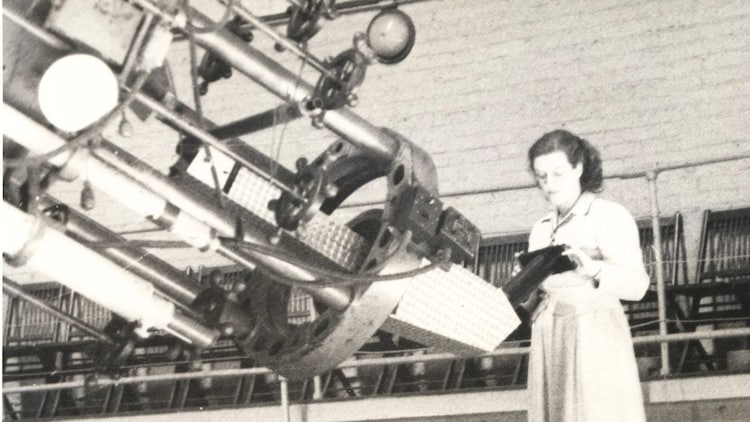
She took that backhanded compliment and ran with it, earning her doctorate from the University of Chicago in 1949.
Yerkes Observatory refused to grant a woman a permanent position, so in 1954 Roman moved to the Naval Research Laboratory in Washington DC to work in the emerging field of radio astronomy, the study of space using radio waves rather than visible light.
In 1959, she joined Nasa, a then-brand-new agency, and became the first woman to hold an executive office there.
WHY IS SHE CALLED THE MOTHER OF HUBBLE SPACE TELESCOPE?
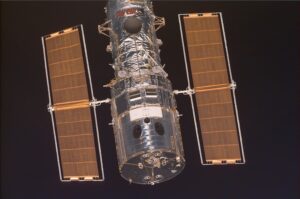
After three decades in orbit and thousands of discoveries, it is hard to believe that the Hubble Space Telescope was ever a contentious idea.
However, in the mid-20th century, a budget-starved Nasa and a post-World War II government were hesitant to follow the ambitious ideal of a giant new telescope.
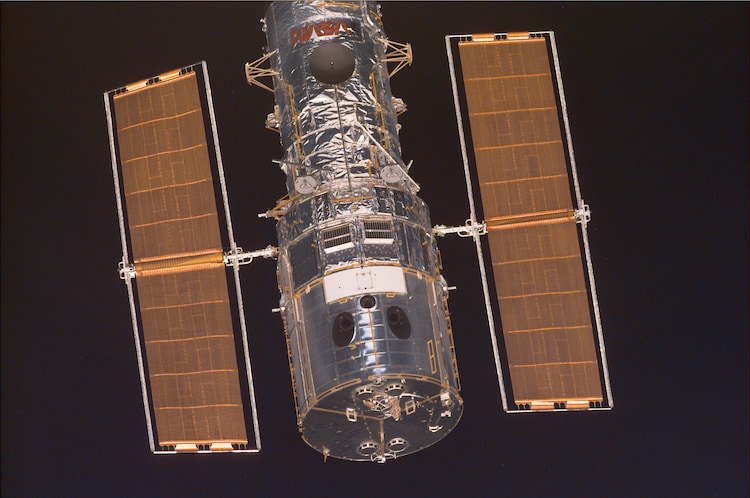
Roman understood something fundamental: Earth’s atmosphere blurs starlight the way frosted glass blurs a face. To truly see the universe, you had to get above it.
Through her leadership, Nasa launched four Orbiting Astronomical Observatories between 1966 and 1972, demonstrating the value of space-based astrophysics. These were Hubble’s direct predecessors.
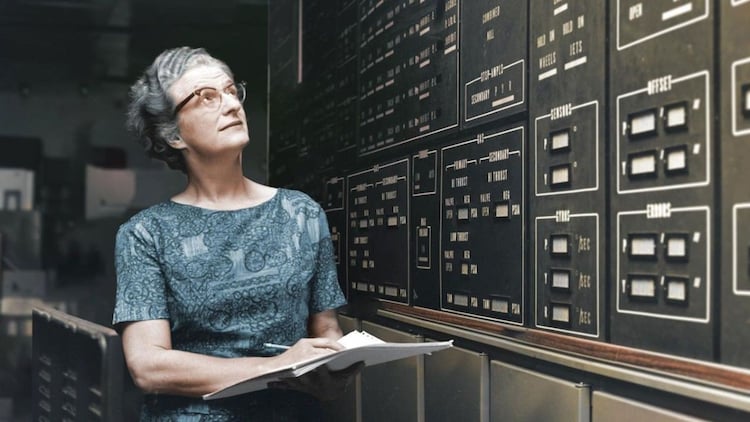
One of Roman’s most significant accomplishments was getting charge-coupled devices, or CCDs, installed as Hubble’s image sensors.
These are light-sensitive chips, similar in principle to those in your smartphone camera, but vastly more precise. They went on to become the gold standard for astronomical imaging.
She also met with scientists to define Hubble’s scientific goals and created a set of minimum specifications she used as her bottom line when speaking to Congress.
WHAT IS THE NANCY GRACE ROMAN SPACE TELESCOPE?
Roman retired from Nasa in 1979 and passed away on December 25, 2018, aged 93. She never saw the full fruits of her legacy. But the universe had one more honour in store.
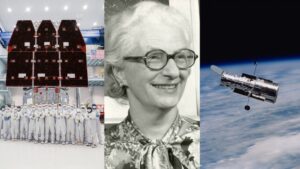
Nasa’s Nancy Grace Roman Space Telescope team is now targeting as early as September 2026 for launch, ahead of the agency’s commitment to fly no later than May 2027.
Roman’s primary mirror measures about 2.4 metres wide, similar to Hubble’s.
However, it has the ability to take images that capture a patch of the sky at least 100 times larger than Hubble can, with surveying capabilities over 1,000 times faster.
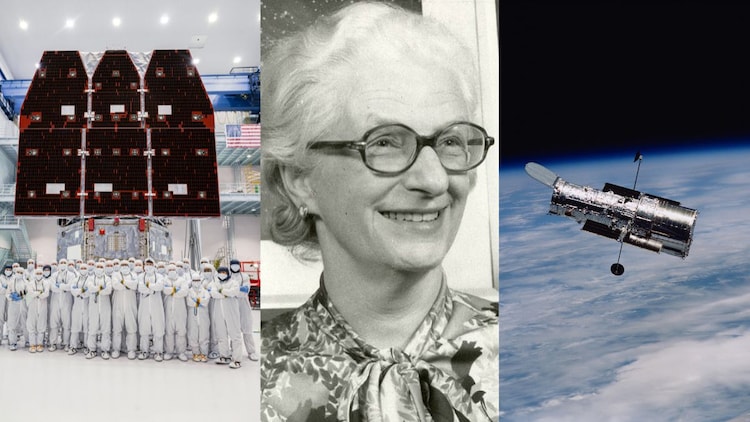
In its first five years, it is expected to unveil more than 1,00,000 distant worlds, hundreds of millions of stars, and billions of galaxies.
It will help scientists probe dark energy, the mysterious force accelerating the expansion of the universe, and search for planets that could harbour life.
Nancy Roman was told, repeatedly, that she could not be a scientist.
She responded by building the infrastructure that lets humanity see 13 billion years into the past.
A telescope bearing her name is now about to be launched into the cosmos.
Some people reach for the stars. She made sure the stars could be seen.