
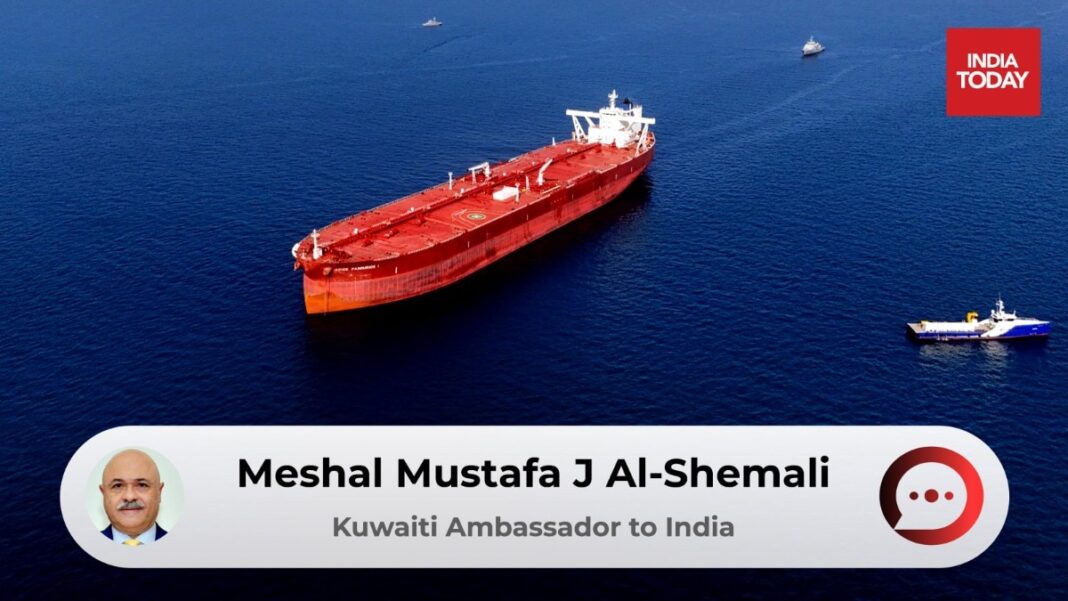
The Strait of Hormuz is one of the most critical maritime chokepoints in the world. For the State of Kuwait, it is not merely a passageway—it is a strategic artery essential to national economic stability and global energy security.
Approximately 20 million barrels of oil and petroleum products transit through the Strait daily, representing nearly 20 per cent of global energy flows. For Kuwait, whose economy is deeply integrated into global energy markets, the uninterrupted flow through this corridor is vital for sustaining exports, maintaining market stability, and ensuring predictable revenues.
REGIONAL INSTABILITY AND GLOBAL REPERCUSSIONS
The persistent tensions and recurring conflicts in the Gulf region have heightened concerns over the security of maritime navigation in the Strait. Any threat—explicit or implicit—to disrupt shipping routes has immediate and far-reaching consequences.
From a Kuwaiti perspective, such disruptions:
- Undermine global energy market stability
- Increase volatility in oil and petrochemical prices
- Disrupt international trade flows
- Elevate shipping and insurance costs
These effects extend beyond energy markets. Interruptions in supply chains impact critical sectors, including agriculture and pharmaceuticals. Delays in the delivery of petrochemical-based inputs affect fertiliser production and medical supplies, ultimately raising the cost of living and straining essential services worldwide.
IMPACT ON GLOBAL LIVELIHOODS
The consequences of instability in the Strait are not confined to markets—they directly affect people’s daily lives. Rising fuel costs disproportionately impact middle- and low-income populations globally, limiting access to essential resources such as cooking gas and transportation.
Similarly, disruptions in fertiliser supply chains threaten agricultural productivity in import-dependent countries, raising the risk of food insecurity and price inflation. The pharmaceutical sector has also experienced delays due to supply chain disruptions, affecting the availability of critical medicines and delaying medical procedures.
KUWAIT’S POSITION ON FREEDOM OF NAVIGATION
The State of Kuwait maintains a clear and consistent stance:
The Strait of Hormuz must remain an open and secure international waterway.
Kuwait firmly upholds the principles enshrined in the United Nations Convention on the Law of the Sea (UNCLOS), which guarantees the right of safe and unimpeded passage through international straits.
Accordingly, Kuwait:
- Rejects any unilateral measures that restrict navigation
- Opposes attempts to alter the legal status of the Strait
- Calls for full adherence to international maritime law
- Call for diplomacy and international responsibility
Kuwait emphasises the urgent need to intensify diplomatic efforts to safeguard maritime security in the Gulf. Stability in the Strait of Hormuz cannot be ensured through unilateral actions or coercive measures, but through dialogue, cooperation, and respect for international norms.
In this context, Kuwait calls on all regional actors, including Iran, to fully comply with international obligations and uphold the principles of freedom of navigation.
From Kuwait’s perspective, the Strait of Hormuz is far more than a geographic passage—it is a cornerstone of the global economy and a lifeline for energy security.
Any disruption to this vital corridor threatens not only regional stability but the broader fabric of global economic and human security.
Ensuring its safety is therefore a shared international responsibility—one that requires coordinated action, sustained diplomacy, and a collective commitment to peace and stability in the Gulf region.
Meshal Mustafa J Al-Shemali is the Ambassador of the State of Kuwait to New Delhi
(Views expressed in this opinion piece are those of the author)


