
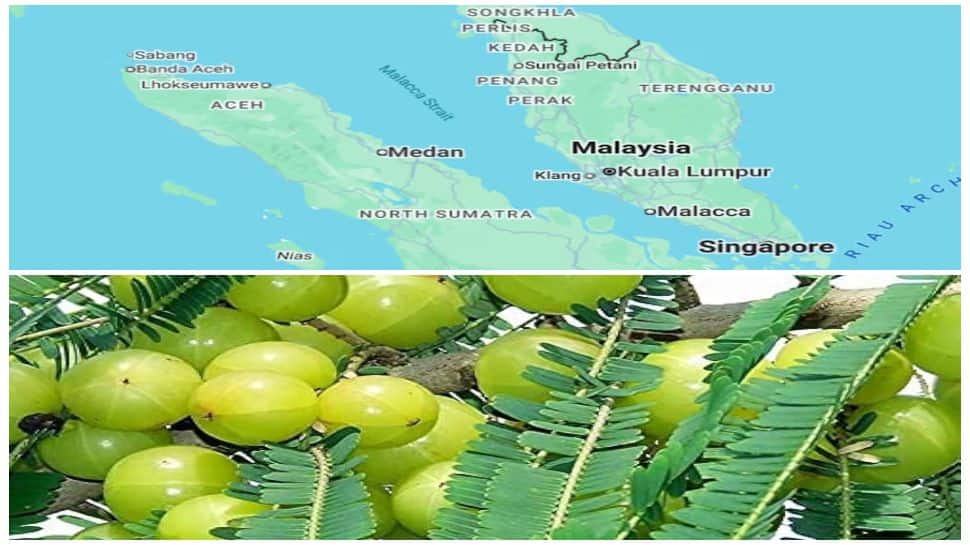
New Delhi: The Strait of Malacca is back in discourse as attention moves again to important maritime chokepoints across the world. This narrow stretch of water in Southeast Asia lies between the Indian Ocean and the Pacific Ocean and handles a large share of world trade. It connects Asia with the Middle East, Africa and Europe, and tankers, container ships and bulk carriers pass through it every day. Oil moves through it, but so do electronics, machinery, coal, palm oil and everyday goods that keep supply chains running across continents.
Its geography makes it difficult to bypass. Ships either pass through it or take longer detours through other routes, which add time and cost. For countries such as China, Japan, South Korea and India, this corridor plays an important role in maritime movement. India’s position near its western approaches, which are close to the Andaman and Nicobar Islands, also gives it a close watch on the passage.
But long before it became part of modern strategic planning, the strait had a name connected to a tree that grows across the Indian subcontinent.
A narrow sea route that connects two oceans
The Strait of Malacca stretches for about 900 kilometres between the Malay Peninsula and the island of Sumatra in Indonesia. At its narrowest point, it is just a few kilometres wide, which naturally affects how ships move through it.
It connects the Andaman Sea (part of the Indian Ocean system) with the South China Sea, which opens into the Pacific. This position makes it the shortest sea route between East Asia and the western world, which is why it has a heavy shipping traffic.
The strait handles tens of thousands of vessels every year and ranks among the most used sea lanes in the world. The narrow waters also limit the size of ships that can pass safely. And therefore, certain vessels are built specifically for these dimensions.
This heavy movement has also put the strait at the centre of trade security conversations around the world. Countries closely track any developments here since any disruption can affect supply chains across multiple regions.
A prince, a hunt and a settlement under a tree
The story of how the strait got its name goes back to the late 1300s or early 1400s, involving a Sumatran prince named Parameswara. He was associated with the royal line of Palembang, which had connections with the declining power of the Srivijaya Empire.
After facing political pressure from the rising Majapahit Empire, he moved across regions, including Temasek, which is present-day Singapore, before settling on the Malay Peninsula.
Malay historical accounts describe a moment that later defined the identity of the place. While resting during a hunting trip near a river, Parameswara noticed a mouse deer cornered by hunting dogs. The small animal turned around and kicked one of the dogs into the water. He took this unusual moment as a sign to start fresh.
He decided to build a settlement there and named it “Melaka”.
The tree behind the name
Local tradition links the name Melaka to the tree under which the prince was resting at that time. That tree is identified as the amla tree, which is also known in India as amalaka and scientifically as Phyllanthus emblica.
This tree is native to the Indian subcontinent and has long been part of Ayurveda, food traditions and cultural practices. Its fruit is known for its high vitamin C content and is commonly used in health and dietary preparations across India.
The naming of a settlement after this tree points to the cultural exchanges between South Asia and Southeast Asia at the time. Traders, monks and travellers from India regularly moved across the Indian Ocean through monsoon winds with goods, ideas and agricultural knowledge.
Over time, the settlement of Melaka expanded from a small port into an important trading hub, and its name eventually extended to the surrounding waterway.
A port that grew into a trading centre
Melaka developed into the centre of the Malacca Sultanate in the 15th century. Its location made it a natural stop for ships moving between India and China.
Merchant ships carrying spices, cloth, ceramics, metals and other goods used to dock there. The rulers of the Sultanate managed trade flows, offered protection to ships and built diplomatic relations, including ties with the Ming court in China.
This brought both wealth and influence. Earlier, the Srivijaya Empire had held similar control over regional trade routes. Later, Melaka became a prize for expanding European powers.
In 1511, the Portuguese took control of the corridor, followed by the Dutch and later the British Empire. Each administration recognised the importance of this waterway for international maritime trade.
Why the strait still draws attention today
Modern shipping through the Strait of Malacca is dense and tightly packed. Ships move through narrow channels, and maritime rules regulate size and movement to prevent congestion.
The high traffic also brings risks. Piracy incidents have reduced compared to earlier decades, but still appear from time to time. Accidents and oil spills are part of the safety concerns that come with such heavy use.
At the same time, the strait is at the centre of maritime planning across the world. The United States, China and regional powers keep an eye on the activities here because any disruption would affect trade across Asia and beyond. The nearby Andaman and Nicobar Islands place it within easy reach of one of the world’s busiest sea lanes.
A question that still lingers
How did a small tree in a forested corner of Southeast Asia end up giving its name to a major shipping route?
The answer lies in the mix of travel, trade and cultural exchange across the Indian Ocean long before modern borders existed. The amla tree, the settlement of Melaka and the sea route that bears its name are all part of that long movement of people and ideas across the region.


