
Pakistan Army Chief Asim Munir’s unexpected visit to Tehran on Wednesday fuelled speculation that a second round of talks between the US and Iran is imminent. Donald Trump appears to have tasked his favourite Field Marshal to coax Iran to discuss a revised deal to end the war. But either side refusing to blink raises questions about the likelihood of a quick deal working out.
TRUMP’S WAY IS WRONG
The recent peace talks in Islamabad failed due to a lack of trust between the two sides. Trump appears to believe that military pressure can force Iran to agree to a deal, despite its resistance during 38 days of relentless bombardment, heavy losses to its military and civilian infrastructure, and the killing of its top leadership.
All other American presidents in the past four decades rejected Israeli Prime Minister Benjamin Netanyahu’s repeated pleas to invade Iran. They heeded Iran experts’ advice against such a dangerous adventure.
But Trump appears to have listened only to Bibi, who convinced him that Iran would collapse in a few days and would bring the US a quick victory. He ignored the advice of his Gulf allies, his military commanders, and his vice president. He even forgot his own speeches from previous years, where he argued against taking the US into another foreign war.
In his book, “War of Necessity, War of Choice: A Memoir of Two Iraq Wars”, veteran US diplomat Richard Haas argues that you must not go to war against a country you do not understand.
Had he consulted any Iran expert, Trump would have been told about Iran’s experience of sustaining an eight-year war against Iraq and the nature of the Islamic regime, which has survived multiple attempts to threaten its existence in the last five decades. It has also been preparing to fight a war against Israel and the US for decades.
ART OF THE DEAL
US Vice President JD Vance, who led the US delegation to Islamabad last weekend, said on Tuesday that Trump wants to achieve a “grand bargain” that offers Iran economic prosperity if Iranians commit not to develop nuclear weapons — and not a “smaller agreement.” This again suggests a lack of understanding of Iran.
What Iran want is respect — and its assets unfrozen and sanctions lifted in return for a compromise on the nuclear issue and the reopening of the Strait of Hormuz. Washington needs to understand that, since the war began, the Islamic regime has become more assertive and uncompromising. Iran is therefore unlikely to now accept a deal that it would have accepted before the war.
Disagreement over nuclear enrichment was the main hurdle in Islamabad, according to Vance. The US is insisting on zero enrichment for at least 20 years — though Trump has said he doesn’t want Iran to have any enrichment on its soil ever.
In the 2015 international agreement, which Trump unilaterally cancelled in 2018 despite Iran complying with its terms, Iran was permitted to enrich uranium to up to 3.6 per cent for 15 years. Since then, Iran decided to increase enrichment levels, which reached 60 per cent a year ago, according to the UN nuclear watchdog.
More than 400 kilos of such enriched uranium are believed to be buried in the debris of nuclear facilities in Isfahan since the US attacks last year. Israel fears Iran could retrieve it and enrich it to 90 per cent to make 11 nuclear weapons. Tehran is prepared to negotiate this issue, but wants to retain its right to enrichment.
ISRAEL AND LEBANON
Trump also needs to assure Iran that he is serious about the ceasefire announced on April 7. Before the second round of talks, a ceasefire in Lebanon would go a long way towards gaining Iran’s trust.
Israel continued bombing Lebanon, even as the US and Iran met in Pakistan. Trump needs to tell Netanyahu to stop the attacks, which have killed more than 2,100 people, most of them civilians, over the past six weeks.
Netanyahu ordered a dramatic bombardment of Lebanon hours after Trump announced the ceasefire, killing more than 300 people within minutes. That prompted Iran to keep the Strait of Hormuz closed. America’s allies have asked Israel to pause its operations in Lebanon, but Netanyahu has ignored those pleas. He will only listen to Trump.
Last week, Trump asked Netanyahu to scale back the attacks, but to no avail. Netanyahu and his close allies in Israel may be the only people who would like the conflicts in Iran and Lebanon to continue. He has been accused in Israel of keeping the country in a state of perpetual war for his own political interests.
Israelis have genuine security fears. But they also feel that wars have not made them any safer. They are also concerned about their country’s worsening international image, particularly since the military operation in Gaza that has led to the deaths of more than 72,000 Palestinians.
WIDER IMPLICATIONS
Trump joined Netanyahu in the war without clearly defining its objectives or giving any thought to an exit strategy. His decision has wreaked havoc on the global economy. Tuesday’s IMF report warned that the war will lead to higher inflation and could even trigger a recession. It has cut the US GDP forecast to 2.3 per cent, down from the government’s estimate of 3.5 per cent. Gulf countries will suffer more.
But the worst impact of the Iran conflict is the deepening crisis in the energy market. Every day, “we are losing 13 million barrels per day, and tomorrow it may be bigger,” warns Fatih Birol, the head of the International Energy Agency.
In Europe, a barrel of oil is trading at up to $150. In the US, the average retail price for a gallon of petrol is now $4.12. Before the war, the price was $3 per gallon.
For Trump, it has already become a political issue. If he is unable to reach a deal with Iran to end the conflict, the petrol prices will go even higher. If Iranians play hardball and drag out the conflict until the US mid-term elections, petrol prices could double from current levels. That will almost certainly defeat Trump’s Republican Party, lose his control over Congress, and make him a lame-duck president.
ELEPHANT IN THE ROOM IS CHINA
Trump wants to end the war soon. He has already postponed his scheduled trip to China once. He is due to meet President Xi Jinping in mid-May and needs a deal in place before then. Xi is keen for the Strait of Hormuz to reopen, as 40 per cent of China’s energy passes through it. He has given his blessing to Pakistan to facilitate a deal between Tehran and Washington.
On Tuesday, Xi condemned Trump (without naming him) for what he called the law of the jungle. He is unhappy with Trump’s decision to impose a blockade at the Strait of Hormuz. There are fears of a confrontation between China and the US if one of the Chinese tankers is hit by the US Navy. But Trump claimed on Wednesday that China is “very happy” with him as he is “permanently opening the Strait of Hormuz.” As often happens, Trump didn’t elaborate.
US intelligence reports recently said China had been sending arms to Iran. Tehran’s ballistic missile programme has been sustained over the years through dual-use equipment sales from China, but US reports mentioned some recent deliveries of missiles.
Beijing denied the reports, and Trump also said that China had agreed not to provide any weapons to Tehran. Beijing, being the main rival of the United States, would be happy for Iran to gain the upper hand in the conflict, as it keeps the US engaged in the Middle East, away from the Indo-Pacific.
SELF DECEPTION
The second round of talks between the US and Iran will be welcomed by most of the world. Trump’s desperation suggests he has realised that what he called “a little excursion” in the early days of the war has proved too costly for him and the US.
But he needs to make an effort to understand Iran and to fight self-deception. Rather than rushing into a quick agreement, Trump should give his team time to build confidence with their Iranian counterparts. The 2015 Iran nuclear deal took nearly two years of effort and painful negotiations by the Obama administration before it was signed.
Iran’s leaders should also recognise that continuing the conflict will only inflict further pain on its people. Iran’s military and civilian infrastructure have been severely damaged, and thousands have been killed. It should be clear to Tehran and Washington that they would suffer even more if the war escalated rather than ended. That should be a sound reason to make progress in talks.
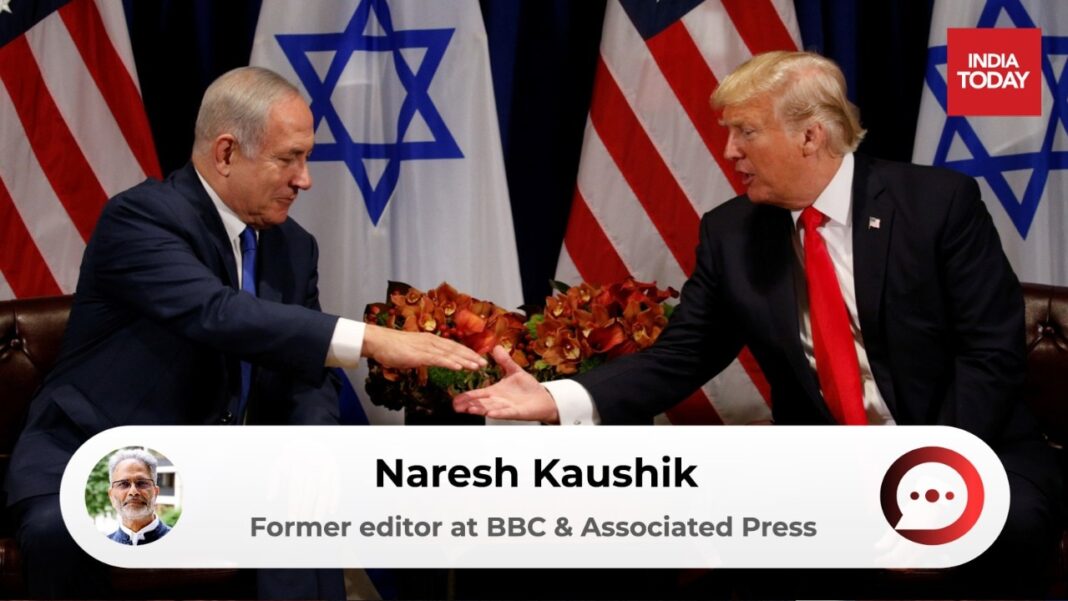
(Naresh Kaushik is a former editor at the BBC and Associated Press. He is based in London.)
(Views expressed in this opinion piece are those of the author)


