

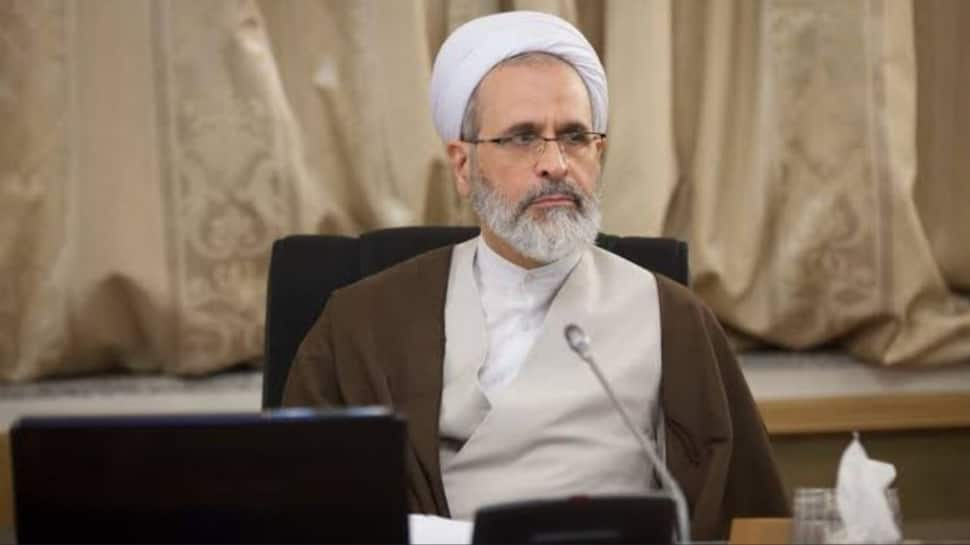
Iran has entered a critical transition after senior cleric Ayatollah Alireza Arafi was appointed interim Supreme Leader following the killing of Ayatollah Ali Khamenei in a joint US-Israeli airstrike on Tehran. The state-linked Islamic Students News Agency (ISNA) reported that Arafi has been designated as the jurist member of an interim leadership council tasked with exercising the Supreme Leader’s constitutional powers until a permanent successor is selected.
Constitutional transition mechanism
Under Iran’s constitutional framework, the temporary council comprises President Masoud Pezeshkian, Chief Justice Gholam-Hossein Mohseni-Eje’i, and a cleric drawn from the Guardian Council. Together, they will oversee state affairs during the transition period triggered by Khamenei’s death.
The move comes as the country confronts both external military pressure and internal uncertainty over succession in one of the Islamic Republic’s most powerful offices.
IRGC leadership reshuffle
Iran’s Islamic Revolutionary Guard Corps (IRGC) also confirmed a change at the top of its command structure. Its commander-in-chief, Mohammad Pakpour, was killed in Saturday’s strikes. State media said Ahmad Vahidi has been appointed as the new head of the force.
The IRGC wields extensive military, political, and economic influence in Iran and operates independently from the country’s regular armed forces, making the leadership shift particularly significant.
Khamenei killed in large-scale strike
Khamenei, 86, had led Iran since 1989 and was the country’s highest political and religious authority. He was killed in what officials described as a large-scale US-Israeli military operation targeting key military installations, government facilities, and senior leadership sites in Tehran. Among the locations struck were sites linked to Defence Minister Amir Naserzadeh and senior IRGC leadership.
US President Donald Trump and Israeli Prime Minister Benjamin Netanyahu were among the first to publicly confirm Khamenei’s death. Posting on X, Trump wrote, “Khamenei, one of the most evil people in History, is dead. This is not only Justice for the people of Iran, but for all Great Americans, and those people from many Countries throughout the World, that have been killed or mutilated by Khamenei and his gang of bloodthirsty thugs.”
Iran initially rejected reports of the Supreme Leader’s death but confirmed the news on Sunday morning (IST).
The country now faces a pivotal moment, balancing the fallout from foreign military action with the complex process of selecting a new Supreme Leader, a decision that will shape Iran’s political and strategic direction for years to come.


