When the U.S. military’s top general laid out the risks to President Trump of launching a major and extended attack on Iran, one of the issues he flagged was America’s stockpile of munitions.
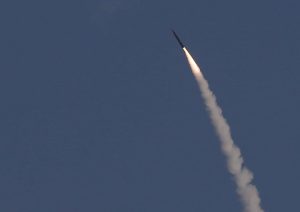
Now that is being put to the test, as the U.S. races to destroy Iran’s missile and drone force before it runs out of interceptors to fend off Tehran’s retaliation, current and former officials and analysts say.
The precise size of the U.S. stock of air-defense interceptors—what the Pentagon calls magazine depth—is classified. But repeated conflicts with Iran and its proxies in the Middle East have been eating into the supply of air defenses in the region.
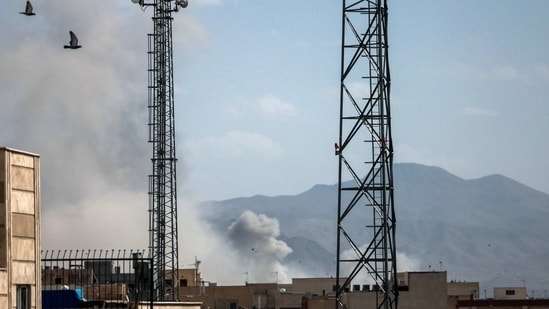
Since Saturday morning Tehran time, the U.S. and its allies in the region have pounded an array of leadership and military targets in the country, including Iran’s missile launchers, drones and airfields. One reason the U.S. and Israel struck first, a senior official said Saturday, was to blunt Iran’s ability to retaliate with its missiles and drones.
It isn’t yet clear how long the strikes will need to last. “The heavy and pinpoint bombing, however, will continue, uninterrupted throughout the week or, as long as necessary to achieve our objective of PEACE THROUGHOUT THE MIDDLE EAST AND, INDEED, THE WORLD!” Trump posted on social media on Saturday.
Iran’s retaliation on Saturday has been more ragged than in the 12-day war when it fired more than 500 missiles and many more attack drones. Israel’s announcement that Iran’s supreme leader, Ayatollah Ali Khamenei, was killed in an airstrike could also hasten an end to the conflict, though it is far from clear who might succeed him.
Still, U.S. Central Command said Saturday that its force has already mounted a largely successful defense against hundreds of Iranian missile and drone attacks, though some have managed to hit their targets, especially in Arab Gulf states that are close to Iran. The conflict isn’t over, and there are still more U.S., Israeli and Iranian strikes to come.
“One of the challenges is you can deplete these really quickly,” said Kelly Grieco, a senior fellow at the Stimson Center think tank who used to teach at the Air Command and Staff College. “We’re using them faster than we can replace them.”
The Thaad antimissile system was deployed to Israel in 2024, along with the U.S. Army troops to operate it, as the Biden administration sought to protect the country against Iran. A Thaad has also been deployed to Jordan, where many U.S. combat aircraft are now deployed. A major concern for the Pentagon is to maintain a sufficient stock of interceptors for the Thaad, which U.S. forces also operate in South Korea and Guam, to deter North Korea and China.
The Pentagon is also racing to replenish stocks of Patriot and Standard Missile interceptors, which also take out aerial threats and are being used to defend against Iranian missiles and drones. Patriots take out lower-flying threats, while SM-3s can intercept ballistic missiles above the Earth’s atmosphere.
Air-defense interceptors aren’t the only munitions that are in short supply. The U.S. is also expending sea-launched Tomahawk cruise missiles, widely known as TLAMs, and aircraft-launched weapons against Iranian targets. This comes on the heels of Operation Rough Rider, the U.S. campaign last year when the U.S. used long-range precision weapons against Yemen-based Houthi militants.
“The Trump administration has fired TLAMS at an extraordinary rate in operations around the globe, in the Middle East against Iran and the Houthis as well as in Nigeria on Christmas Day,” said Becca Wasser, a senior fellow at the Center for a New American Security.
Those weapons are well-suited for striking infrastructure and would be in high demand in the early weeks of a potential conflict with China.
“When we wargame, TLAMS are some of the first munitions to go within that first week of a U.S.-China conflict,” Wasser said. To compensate for the shortfall, she added, the Pentagon would need to double down on procurement and production.
The continuing air campaign against Iran doesn’t appear to have featured U.S. long-range antiship missiles, which the U.S. would also need if there was a conflict with China.
One development that will ease the strain on the American supply of offensive munitions is the involvement of Israel’s military, which it said carried out the strikes against Iran’s military leadership.

But Israel has concerns about its munitions supply as well. It is still low on Arrow 3 air-defense interceptors, another U.S. official says. Israel is also low on air-launched ballistic missiles, a weapon it used to take out Iranian missile launchers this summer and to attack Hamas leaders in Qatar last year, the official said.
Jonathan Conricus, a former spokesman for the Israel Defense Forces who is a senior fellow at the Foundation for Defense of Democracies, said he was “underwhelmed so far by the amount of missiles that the Iranians have been able to fire.”
“Eventually it boils down to numbers,” he added. “How many interceptors will we have versus how much launchers will they be able to field and fire.”
The U.S. moved a large supply of missiles and interceptors to the regions, including from partners that have interceptors. If the war drags on and more interceptors are needed, the Pentagon would need to decide whether to access stockpiles in the Pacific, a U.S. official said.
Write to Michael R. Gordon at michael.gordon@wsj.com and Shelby Holliday at shelby.holliday@wsj.com