
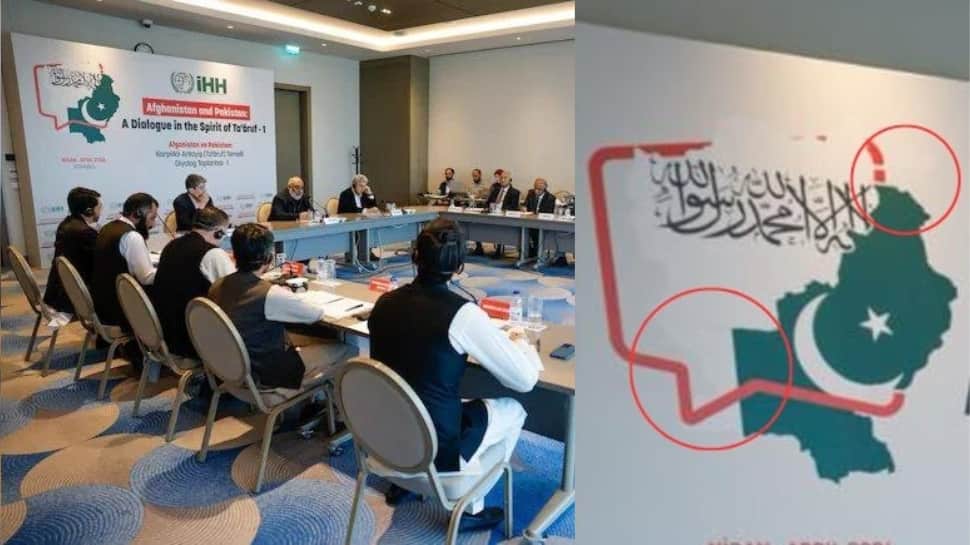
In yet another diplomatic embarrassment for Pakistan, a map displayed during informal peace talks with Afghanistan in Istanbul omitted significant portions of its own territory, including key regions of Khyber Pakhtunkhwa and Balochistan.
The incident occurred at a Track 1.5 dialogue titled “Afghanistan and Pakistan: A dialogue in the spirit of Ta’aruf – 1”, held in Istanbul earlier this week.
The meeting, facilitated by Turkey and Qatar, aimed to reduce military tensions and improve relations between Islamabad and Kabul following recent border clashes.
Meanwhile, the map was shown during the discussions, which brought together former officials, lawmakers, journalists, and policy experts from both sides.
Reportedly, the Pakistani delegation included former Special Envoy for Afghanistan Asif Durrani, lawmaker Sitara Ayaz, former senator Mushahid Hussain Sayed, and senior journalist Hamid Mir.
The Afghan side was represented by former diplomats Atif Mashal, Obaidullah Bahir, Jafar Mahdavi, and Ghuncha Gul.
Peace talks turned into a diplomatic embarrassment
The error quickly triggered a storm on social media, with many Pakistanis expressing shock and disappointment. Several users questioned how such a map was used in an important diplomatic engagement.
Some Pakistani news outlets that initially carried images of the faulty map later deleted the posts from their websites and social media accounts, reported NDTV.
While the lower-left portion of the map appeared distorted due to design choices, the upper-right section clearly showed inaccuracies by omitting substantial Pakistani territory.
Organised by a Turkish humanitarian organisation, the talks were part of ongoing efforts to address core issues between the two neighbours and explore pathways to lasting peace.
However, the map controversy has overshadowed the substantive discussions.
Relations between Pakistan and Afghanistan have been strained since Islamabad conducted strikes inside Afghan territory in February.
The Track 1.5 format allows informal dialogue without formal diplomatic commitments, making such meetings important for building trust.
The incident has drawn considerable online attention, turning what was intended as a confidence-building exercise into a subject of widespread ridicule and criticism within Pakistan.


