

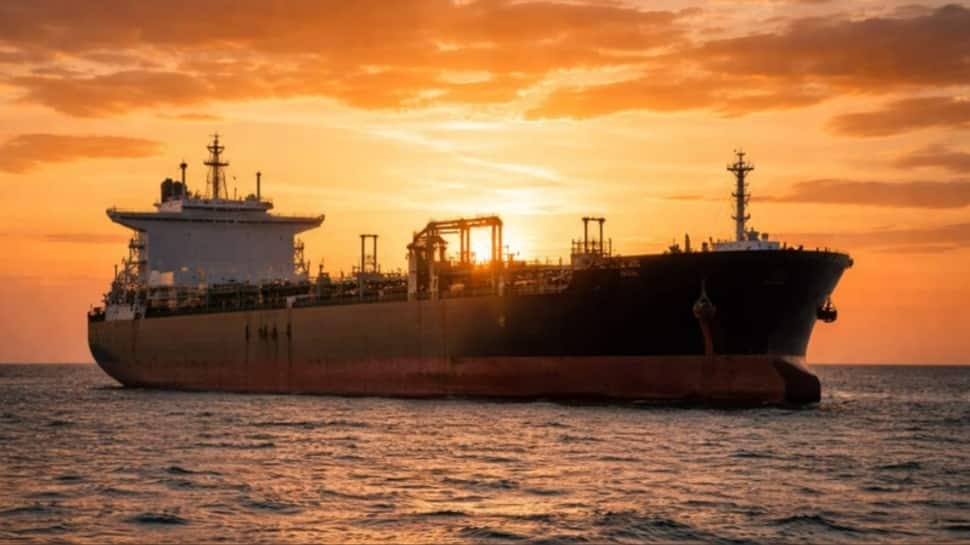
A Palau-flagged oil tanker carrying 15 Indian nationals was struck off the coast of Oman on Sunday, injuring four crew members, as escalating hostilities between Israel and Iran spread across the Gulf, according to Gulf News.
The vessel, Skylight, was targeted in waters off Musandam Governorate, marking what authorities described as the first time during the current escalation that a site in or near Oman has been hit.
In a statement posted on X, the Oman Maritime Security Centre said the tanker was struck approximately “5 nautical miles north of Musandam’s Khasab Port”. A coordinated emergency response was launched immediately to safeguard the crew.
“All 20 crew members were evacuated, including 15 Indian nationals and five Iranian nationals,” the centre said.
Preliminary reports indicated that four crew members suffered injuries “of varying severity” and were transferred for medical treatment. Omani officials have not disclosed the type of weapon used or the extent of the damage sustained by the tanker.
Escalation after high-profile killings in Iran
The maritime incident comes against the backdrop of dramatic developments inside Iran following joint Israeli-US strikes.
Iranian Army Chief of Staff Abdul Rahim Mousavi and Defence Minister Aziz Nasirzadeh were killed in the attacks, Al Jazeera reported, citing Iran’s state-run Islamic Republic News Agency (IRNA). The agency added that several other senior armed forces commanders had also been killed, with their names to be announced later.
Earlier on Sunday, the Israeli Air Force confirmed that its fighter jets had conducted strikes on military targets across Iran, reportedly killing seven senior defence officials, including Ali Shamkhani and Mohammad Pakpour.
In a post on X, the Israeli Air Force stated, “IAF fighter jets precisely struck military targets across Iran, eliminating 7 senior officials of the Iranian Defense Leadership: Ali Shamkhani, Mohammad Pakpour, Saleh Asadi, Mohammad Shirazi, Aziz Nasirzadeh, Hossein Jabal Amelian, Reza Mozaffari-Nia. The world is a better place without them.”
The broader operation, referred to by the Israel Defense Forces as “Operation Roaring Lion”, followed months of joint planning with the US Armed Forces, according to IDF Lt Col Nadav Shoshani in a video statement.
The strikes also resulted in the death of Iran’s Supreme Leader, Ayatollah Ali Khamenei, a development that has dramatically altered the region’s political landscape.
Iran retaliates across the Gulf
As tensions mounted, Iran launched coordinated attacks on US-linked targets in several Gulf Arab states, Al Jazeera reported. Tehran described the strikes as retaliation for what it called a large-scale joint assault on its territory by the United States and Israel.
Iranian authorities confirmed that multiple locations had been targeted, according to the Fars news agency. Reported sites included facilities in Bahrain, Kuwait, Qatar and the United Arab Emirates, all countries hosting US military bases and air installations.
In a statement, the Islamic Revolutionary Guard Corps (IRGC) said Israeli and US military facilities in the Middle East had been hit by “powerful Iranian missile strikes”, warning that operations would continue.
“This operation will persist without interruption until the enemy is decisively defeated,” the IRGC said, adding that all US assets in the region were now considered legitimate targets.
Diplomatic concern grows
The widening confrontation has prompted India to initiate diplomatic outreach, while regional and international leaders have expressed concern over the rapidly deteriorating security environment.
With commercial shipping now directly affected and senior military figures killed on both sides, fears are growing that the crisis could escalate into a broader regional conflict, threatening vital energy routes and global trade flows through the Gulf.
(With ANI inputs)