
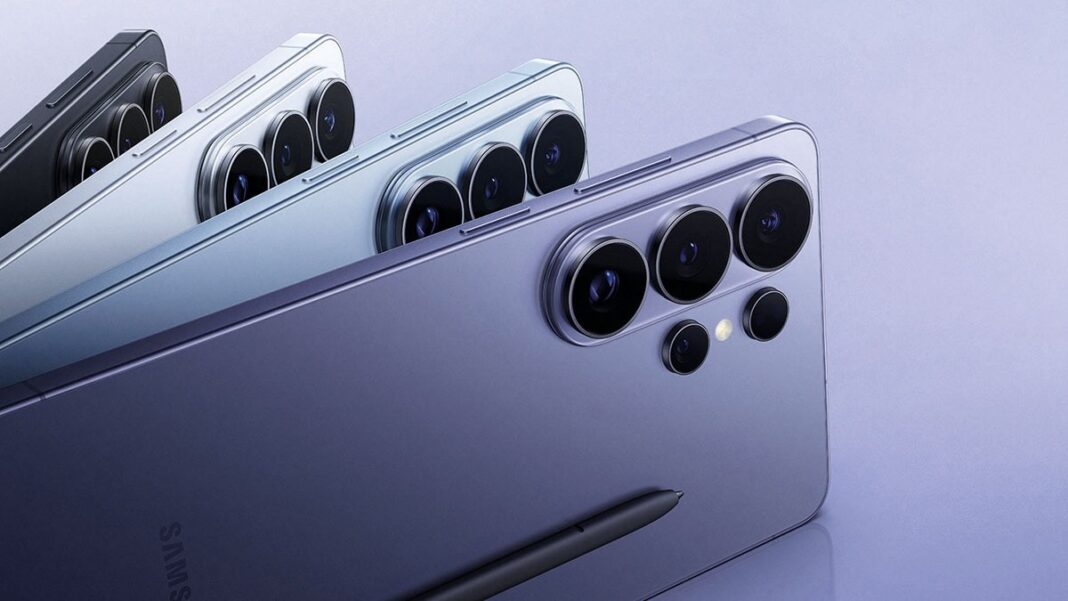
Samsung has long relied on conventional graphite-based lithium-ion batteries—similar to those used in Apple’s iPhone lineup—even as the industry began shifting toward silicon-carbon battery technology. From the Samsung Galaxy S21 Ultra to the latest Samsung Galaxy S26 series, the company has largely stuck with a 5,000mAh battery capacity. However, a new report suggests the South Korean tech giant may finally transition to silicon-carbon-based cells.
According to Schrdinger Intel, Samsung SDI documents point that the company is testing a high-capacity silicon-carbon battery, which includes 12,000mAh, 18,000mAh, and 20,000mAh prototypes. These designs are reportedly using advanced stacking techniques to accommodate higher capacities within similar physical dimensions as current batteries. Samsung’s move could increase its battery capacity without increasing device thickness. And silicon-carbon batteries hold more energy than traditional graphite-based lithium-ion cells.
The report indicates that Samsung’s current prototypes have yet to meet the company’s commercial targets for battery longevity. The units tested reportedly achieve around 960 charge cycles, falling short of Samsung’s goal of approximately 1,500 cycles before broader adoption.
Samsung’s upcoming flagship lineup, the Galaxy S27 series, is expected to include four models, according to tipster Ice Universe. The lineup could introduce a new Pro variant, expanding it to the Galaxy S27, S27+, S27 Pro, and S27 Ultra. Notably, the Ultra model is rumoured to drop support for the S Pen. Samsung has followed a consistent three-tier flagship strategy—Standard, Plus, and Ultra—since launching the Galaxy S20 series in 2020. If this rumour proves accurate, it would mark a significant shift from the company’s long-standing lineup structure.
Samsung may equip its upcoming Galaxy S27 series with its latest M16 OLED panels. Reports suggest these are the same displays the company supplies to other tech giants like Apple and Google for their flagship devices. The M16 OLED panels are also expected to feature in the upcoming iPhone 18 Pro models and the Pixel 11 series.
The new M16 panels are expected to deliver improvements in brightness, colour, and overall lifespan. However, for most users, the difference in display quality may be subtle, as the existing M14 panels already offer excellent colour accuracy and brightness. Where the M16 panels are likely to make a noticeable impact is in power efficiency. They are expected to consume less energy while freeing up resources for more demanding tasks, such as artificial intelligence.


