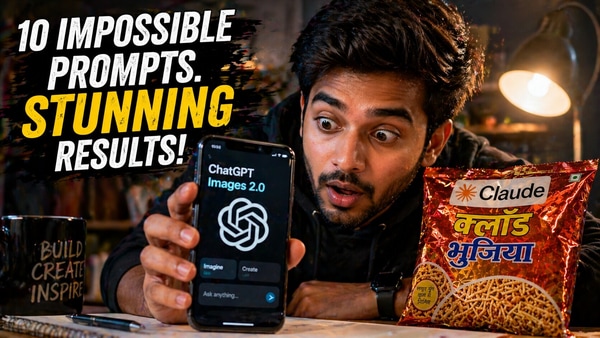
OpenAI released its latest image AI model, Image 2.0, this week, and while the model may have gone slightly under the radar among the plethora of AI launches, it is still among the best AI photo editing models available, taking on the likes of Gemini, Seedream, and Qwen.
I stress-tested ChatGPT Images 2 over the last few days using 10 prompts. Here’s how the model fared.
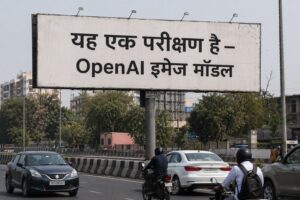
1) Real life billboard in Hindi:
Prompt: “A photorealistic roadside billboard in India on a busy highway, with clear and perfectly legible Hindi text that reads: ‘यह एक परीक्षण है – OpenAI इमेज मॉडल’, bold Devanagari font, natural lighting, realistic shadows, slight weathering on the billboard, cars and bikes passing by, shot on a DSLR, 50mm lens, high detail, no text distortion”

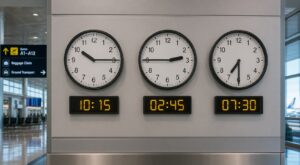
2) Time test:
“Three analog wall clocks side-by-side in a modern airport terminal. The left clock reads exactly 10:15, the middle clock reads exactly 02:45, and the right clock reads exactly 07:30. Below each clock is a digital LED sign showing the identical time as the analog clock above it.”

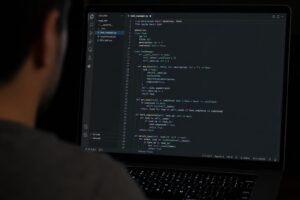
3) Real life image:
“A photograph taken over someone’s shoulder looking at a laptop screen in a dark room. The screen shows a code editor with perfectly legible Python code. The code must be structurally valid, properly indented, color-syntax highlighted, and contain zero gibberish characters or alien symbols.”

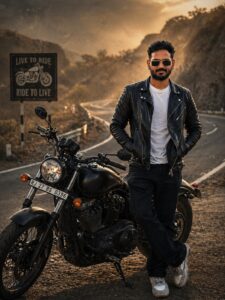
4) Biker photoshoot:
“Transform this upload image into a rugged biker photoshoot. Keep facial identity unchanged. Add a leather jacket, motorcycle, highway background, dramatic lighting, dust particles in air, cinematic look, photorealistic”

5) Claude bhujia:
“A photorealistic macro shot of a single packet of “Claude Bhujia” (क्लॉड भुजिया) placed inside a cluttered Indian kirana store rack. The packet is made of metallic foil with heavy crinkles, sharp folds, and realistic reflections and glare.
At the top of the packet, include the official Claude AI logo: a clean white rectangular label with rounded corners, featuring the orange starburst icon to the left and the word “Claude” in a modern black sans-serif font. The logo must be accurately rendered, sharp, and proportionally correct, printed naturally onto the crinkled foil surface without distortion.
Below the logo, bold Devanagari text “क्लॉड भुजिया” should be perfectly legible, following the folds and curves of the packaging naturally.”
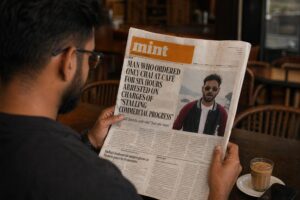
6) Realistic newspaper clipping:
“A candid photo of a person reading ‘(name of the paper)’ newspaper. The reader is looking intently at the front page. The front page features a photo of the subject ([Your Description/Uploaded Image Context]) looking surprised. The large, realistic headline reads: ‘MAN WHO ORDERED ONLY CHAI AT CAFÉ FOR SIX HOURS ARRESTED ON CHARGES OF “STALLING COMMERCIAL PROGRESS”‘. Below it, smaller subtext reads: ‘Staff claim he only said “Just one more”‘. Realistically rendered columns of print are below. The paper has slight creases.”

7) Viral tv clipping:
“Turn this upoad image into a screenshot from an Indian news channel broadcast. Use this face as the main subject. Add ticker text: ‘Breaking: Man claims he can survive only on chai and Parle-G’. Include channel logo, scrolling ticker, studio lighting, ultra-realistic.”
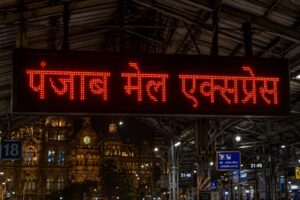
8) The train test
“Inside an Indian Railway station (e.g., CSMT) at night. A large, glowing red LED dot-matrix display board hangs from the roof. The board must display ‘पंजाब मेल एक्सप्रेस’ (Punjab Mail Express) in perfect Hindi text. The text must be rendered entirely out of individual, glowing red LED dots, not a smooth font.”

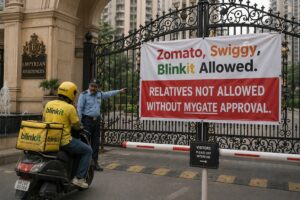
9) Indian society test:
“A lavish, towering residential society gate in NCR. A bewildered Blinkit delivery guy is sitting on his scooter at the barricade. The security guard is aggressively pointing to a massive, cheap flex banner tied to the iron gates. The banner clearly reads in bold Devanagari and English: “Zomato, Swiggy, Blinkit Allowed. RELATIVES NOT ALLOWED WITHOUT MYGATE APPROVAL.” The banner must have realistic folds and zip-ties holding it to the gate.”

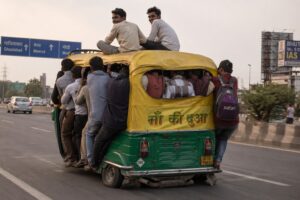
10) Indian road shot
“A cinematic shot on a busy Delhi NCR highway. A standard green and yellow Indian Bajaj auto-rickshaw is driving fast. It is physically carrying exactly 15 people. People are hanging off the sides, squished next to the driver, and two guys are sitting comfortably on the canvas roof. A perfectly painted phrase on the back of the auto reads “Maa Ki Dua” in stylized Hindi. The rear wheels and suspension of the auto must look visibly crushed and lowered under the extreme physical weight.”

Some thoughts on where the model lacks:
While OpenAI has made great strides with the speed and quality of Images 2, where it even feels ahead of Nano Banana on most tasks, one area where the model still seems to struggle is making precise edits to images, something where Alibaba’s Qwen shines bright.
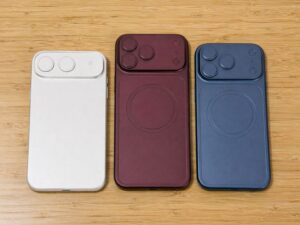
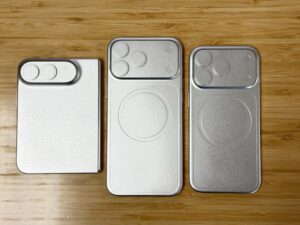
So, I recently gave ChatGPT a leaked image of the dummy phones of the iPhone 18 Pro series and iPhone Ultra (Apple foldable), and asked it to colour them in Apple style. While the chatbot managed to give perfect colours to the iPhone 18 Pro and Pro Max without changing their design, it completely altered the design of the iPhone Ultra, turning it into a normal candybar phone.


When asked about this, ChatGPT said, “I can’t literally copy-paste or surgically edit your exact uploaded image while preserving every pixel. The image tool I’m using regenerates the scene each time.”
Similarly, while generating these images, I noticed that ChatGPT maintained great facial consistency when asked to transform an image of a person across various scenarios, much better than Gemini. However, once you ask ChatGPT to make edits two or three times within the same chat, it quickly starts to lose control, often messing up facial features.