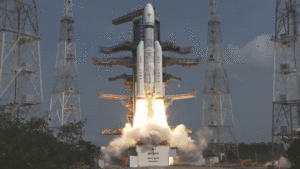
India’s space ambitions may receive a significant boost as the Indian Space Research Organisation (Isro) advances discussions with Russia’s Roscosmos for the procurement of semi-cryogenic rocket engines.
According to Isro’s Annual Report 2025-26, senior officials recently travelled to Moscow for detailed technical deliberations, with a draft contract for engine delivery currently under approval.
The semi-cryogenic engine is considered a critical technology for India’s next-generation heavy-lift launch vehicles.
Unlike traditional systems, it uses a combination of refined kerosene and liquid oxygen, offering higher thrust and efficiency while relying on relatively safer and non-toxic propellants. Isro has been developing this capability domestically, but collaboration with Russia could accelerate timelines and help bridge key technological gaps.
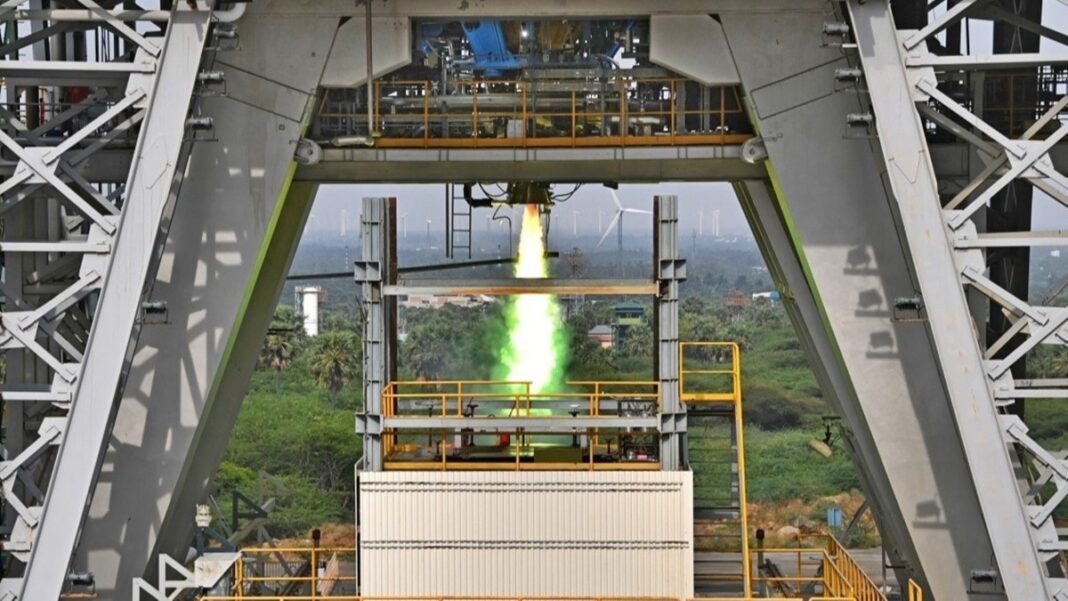
Congratulations to #ISRO on the successful sea-level hot test of the CE20 Cryogenic Engine at 22-tonne thrust at the ISRO Propulsion Complex, Mahendragiri, Tamil Nadu.
The successful test featuring the nozzle protection system and multi-element igniter marks another important pic.twitter.com/ee75Pkc6Na— Dr Jitendra Singh (@DrJitendraSingh) March 14, 2026
The report notes that discussions between the two sides have progressed beyond initial stages, though no specific timeline has been provided for finalising the agreement or delivering the engines.
The move reflects Isro’s broader strategy of expanding international partnerships in advanced space technologies.
India has already made notable progress in its indigenous programme. On March 28, 2025, Isro successfully conducted the first hot test of the Engine Power Head Test Article (PHTA) at its propulsion complex in Mahendragiri, Tamil Nadu, a key milestone in the development of the semi-cryogenic engine.
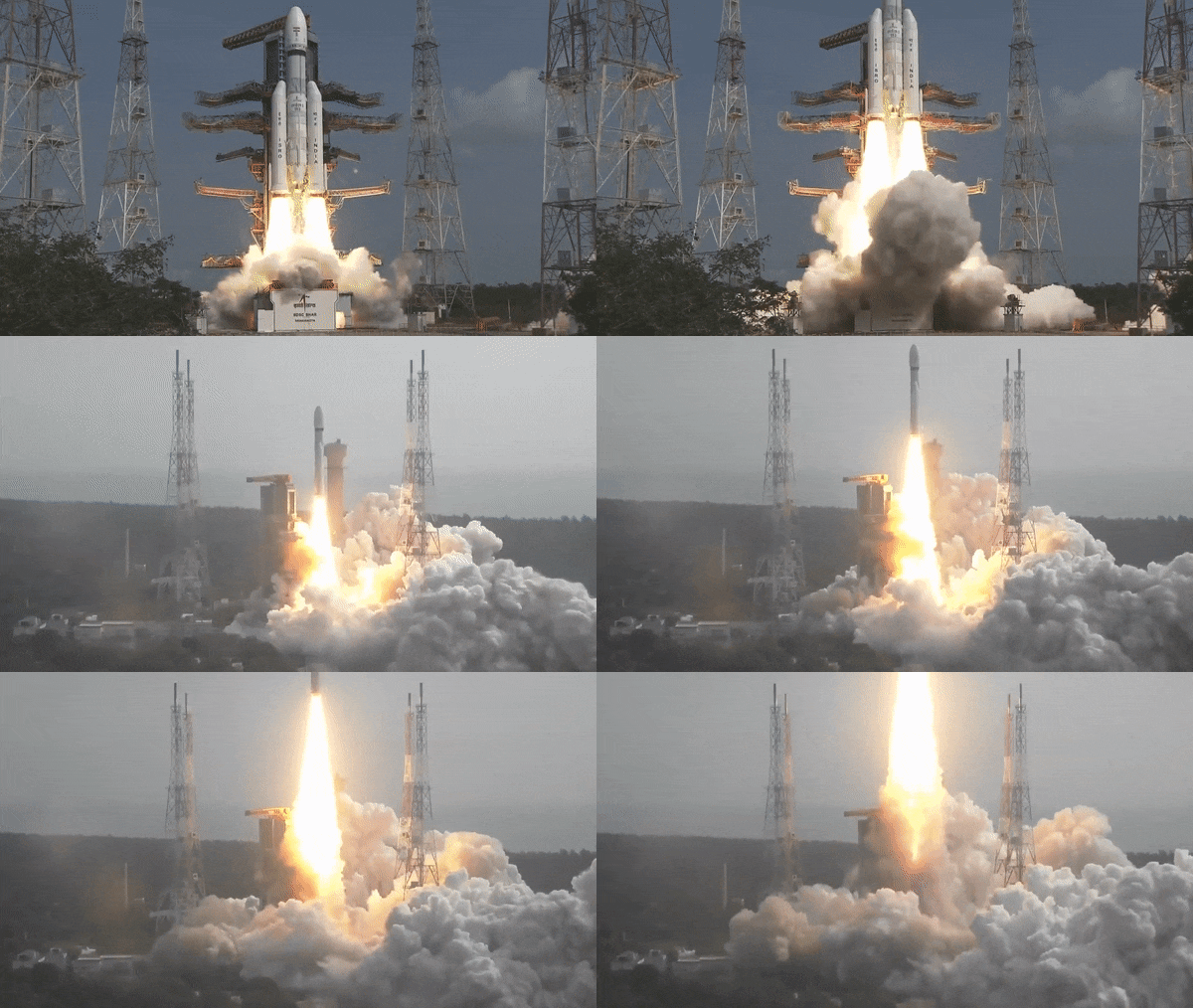
The engine, known as SE2000, is being developed by Isro’s Liquid Propulsion Systems Centre. It is designed to generate a thrust of 2000 kilonewtons and will power the SC120 stage, which is expected to replace the existing L110 liquid stage of the LVM3 launch vehicle.
This upgrade could significantly enhance payload capacity, from about 4 tonnes to 5 tonnes in geostationary transfer orbit.
Technologically, the SE2000 engine is highly sophisticated. It operates on an oxidiser-rich staged combustion cycle with chamber pressures reaching up to 180 bar and propellant feed systems delivering pressures as high as 600 bar.
With a specific impulse of 335 seconds, it promises improved performance over current systems. However, such high-thrust semi-cryogenic technology remains complex and is mastered by only a handful of nations.
Beyond propulsion, Isro’s engagement with Russia spans multiple domains. The Annual Report highlights ongoing collaboration in planetary exploration, including India’s planned Venus Orbiter Mission.
Russia’s Space Research Institute has been selected to provide a payload, with discussions underway for instruments such as the Venus Infrared Atmospheric Gases Linker (VIRAL).
As India pushes toward more ambitious missions, from heavier satellite launches to deep-space exploration, the semi-cryogenic engine programme is expected to play a pivotal role.
Further clarity on the Russia deal is likely once the contract receives formal approval.