
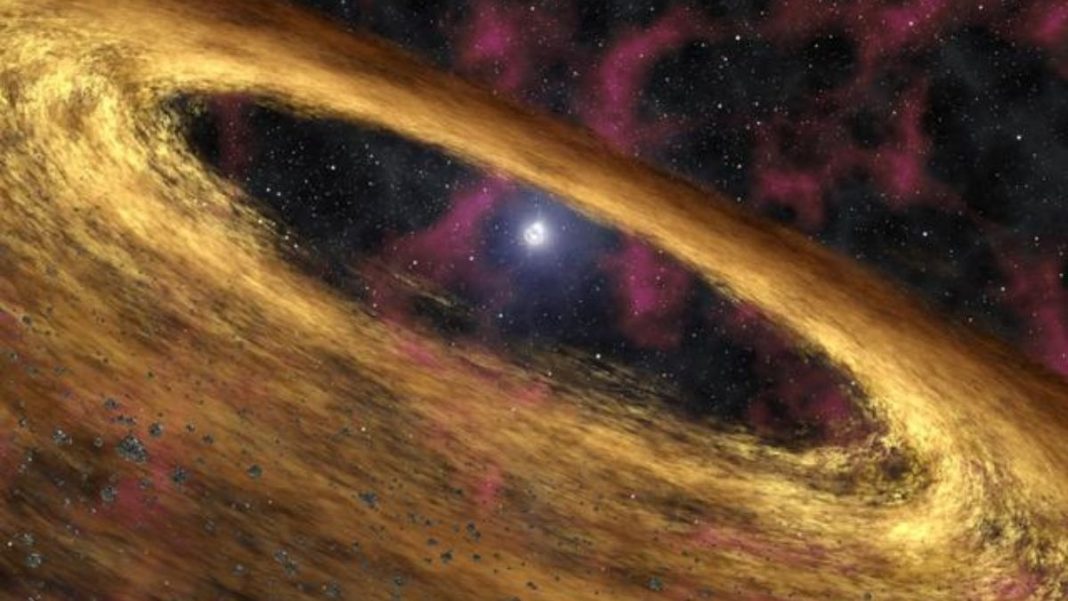
Indian astronomers devise clever method to find dead suns in deep space

Astrophysicists from IIT Kanpur and the National Centre for Radio Astrophysics (NCRA) Pune have discovered a powerful new way to measure the distance of pulsars, which are dead stars that act like cosmic lighthouses by spinning and emitting regular flashes of radio waves.

For decades, measuring how far these stars sit from Earth has been one of the toughest puzzles in astronomy. While we can see exactly where they are in the sky, calculating the depth of space between us is a different challenge altogether.

The research, published in the Monthly Notices of the Royal Astronomical Society, offers a clever solution.

HOW DID THE TEAM MEASURE PULSAR DISTANCES?

Instead of relying on old, often inaccurate models of the Milky Way Galaxy, the team used two specific effects that happen to radio waves as they travel through space: dispersion and scattering.

Dispersion occurs when radio waves from a pulsar are delayed by different amounts based on their wavelength as they pass through free electrons in space.

Scattering happens when these same signals hit clumps of turbulent gas, causing the radio waves to take slightly different paths and arrive at Earth as a smeared or broadened pulse.
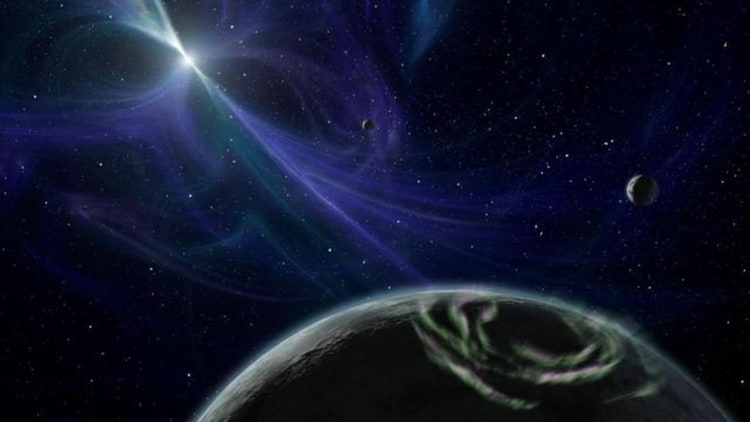
IIT Kanpur and NCRA Pune scientists find new way to measure pulsar distances. (Photo: Nasa)

IIT Kanpur and NCRA Pune scientists find new way to measure pulsar distances. (Photo: Nasa)

As a pulsar signal travels to Earth, it passes through a thin mist of particles called the interstellar medium.

This mist acts like a cosmic obstacle course. It delays the signal based on its wavelength and scatters the light, causing the pulses to smear out.

By measuring both these effects at once, the researchers can determine exactly how much material the signal passed through.

This allows them to calculate distance much more reliably than before.

The team tested their theory on the Gum Nebula, a massive cloud of gas in the southern sky.

Their results show that this method could be applied to hundreds of other pulsars already known to science. It might even help us understand Fast Radio Bursts, which are powerful flashes coming from far beyond our Milky Way.

This Indian breakthrough does more than just measure distance. It helps astronomers understand the true brightness and speed of these stars, providing a clearer map of our galactic neighbourhood.

By removing the guesswork from older models, the IIT Kanpur and NCRA Pune team has given the global scientific community a sharper lens to view the universe.

HOW DO PULSARS HELP US MAP THE MILKY WAY?

Pulsars act like cosmic lighthouses, sending out regular flashes that reveal the hidden particles floating between stars.

Space looks empty, but it is filled with electrons that distort light, making it difficult to tell if a star is faint or just very far away.
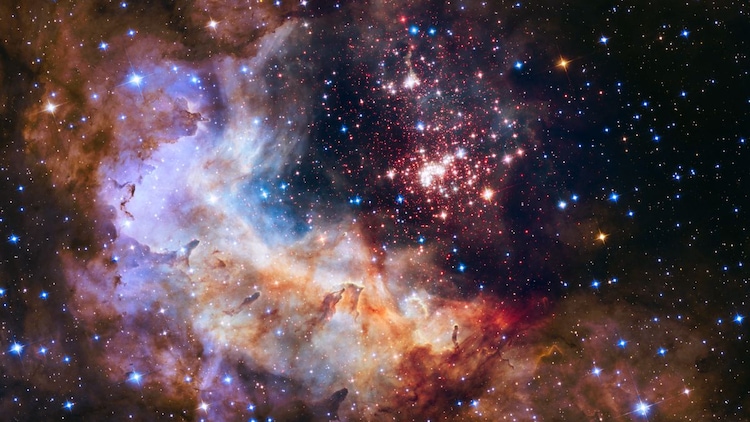
Star cluster in Gum Nebula (Photo: Nasa)

Star cluster in Gum Nebula (Photo: Nasa)

The massive gas structure serves as a perfect laboratory for Indian scientists to test how radio waves scatter over long distances.

By using the same logic applied to pulsars, researchers hope to pinpoint the origin of mysterious radio flashes from other galaxies.


Latest

Back on Earth, still in space: Astronaut’s brain takes months to readjust

Astronauts grip objects too tightly in space because their brains are still anticipating Earth's gravity, a new study has found. Researchers say the brain adapt

No relief: Heatwaves to get worse in North India, storms to hit the East on Friday

Temperatures across northwest and central India are likely to climb a further 2–3C before any relief arrives.

Nasa captures stunning pic of Moon and Earth from Mars. See the pale blue crescent

Nasa’s HiRISE camera aboard the Mars Reconnaissance Orbiter captured Earth and its Moon from 142 million kilometres away.

Indian startup to send giant balloon to edge of space. What will it do?

Red Balloon Aerospace will launch India's first indigenous Super Pressure Balloon from Andhra Pradesh in the coming weeks, targeting an altitude where satellite

Why India is betting on E85 instead of 100% ethanol: The science explained

India moves forward with ethanol blending regulations amid global oil tensions

Topics

America right now is a failed state, well almost

Donald Trump News: Economic might and robust internal security aside, Trump's America ticks enough boxes to qualify as a failed state in the political theatre o

THE Asia Rankings 2026: 128 Indian universities ranked, none in top 40; China rules

India continues to strengthen its position in global higher education, with more universities appearing in the latest Times Higher Education World University Ra

HCLTech, TCS, Infosys: Why are IT stocks falling again?

Fresh pressure on IT shares as demand concerns and foreign selling unsettle investors

Bhooth Bangla box office collection day 7: Akshay Kumar’s horror-comedy eyes Rs 100 cr in India, crosses Rs 135 cr worldwide

Bhooth Bangla brings back Bollywood’s iconic actor-director duo, Akshay Kumar and Priyadarshan, after 14 years.

Farewell Grandma: New Zealand great Suzie Bates to retire after Women’s T20 World Cup

New Zealand legend Suzie Bates has announced that she will retire from international cricket after the Women’s T20 World Cup in June and July, bringing an end

Trump rules out nuclear strike, says Iran ‘running out of time’

Addressing reporters at the White House, Trump said there was no justification for deploying nuclear arms. He maintained that Iran had already been “decimated

Healthy UK mother plans assisted dying in Switzerland, says she is unable to cope after son’s death

A 56-year-old woman from England has said she plans to undergo assisted dying in Switzerland following years of grief after her son’s death.

Do Shardul Thakur qualify as a concussion sub when Mitchell Santner didn’t get hit on head in MI vs CSK? Rules explained

Mumbai Indians' Shardul Thakur being named as a concussion replacement for Mitchell Santner has caused controversy in IPL 2026.
spot_img

Related Articles

Popular Categories

spot_imgspot_img

