Dead zone in Akashganga: The region where Milky Way galaxy stops making new suns

Scientists have finally found where our galaxy stops making stars, and the answer came from reading the ages of over 1,00,000 stars like a cosmic timestamp.

For decades, astronomers struggled to define where the Milky Way’s star-forming disc, the flat, spinning region where new stars are born from clouds of gas, actually ends.

Our galaxy does not have a clean, sharp edge. It fades out gradually, like ink bleeding into wet paper.

Now, an international team of researchers has cracked the mystery, and the findings, published in the journal Astronomy and Astrophysics, are reshaping how we understand our galactic home.

WHAT DID THE SCIENTISTS ACTUALLY FIND?

The team discovered a telltale pattern in stellar ages. Galaxies build themselves from the inside out, star formation begins near the centre and slowly spreads outward over billions of years.

So, naturally, stars get younger as you move further from the galactic centre.
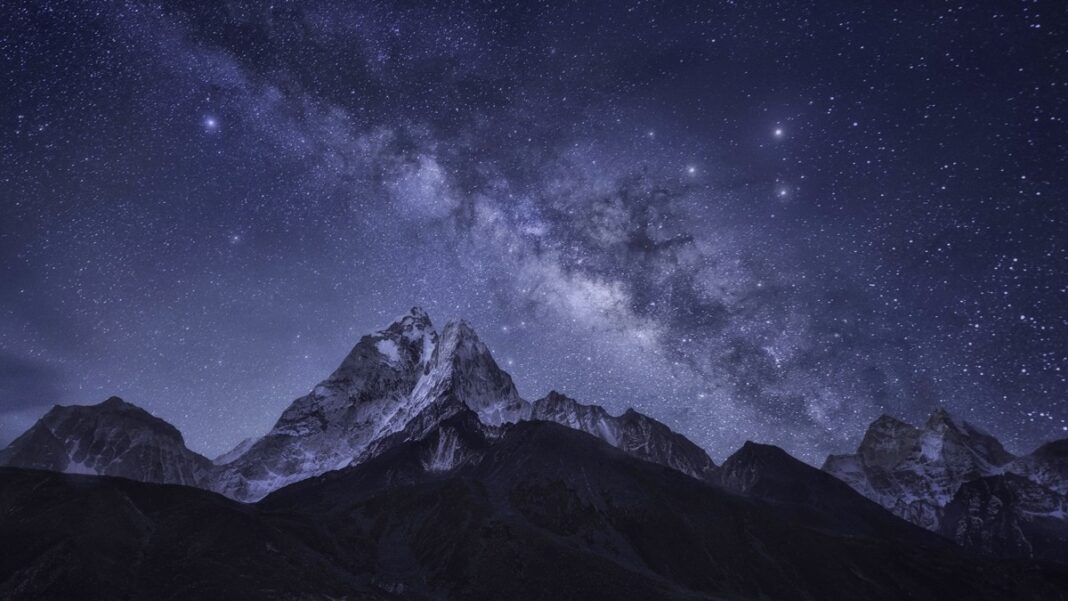
Stars in the outer disc of the Milky Way are not newborns. They drifted outward over billions of years by riding the galaxy's spiral gravitational waves, a process known as radial migration. (Photo: Nasa)

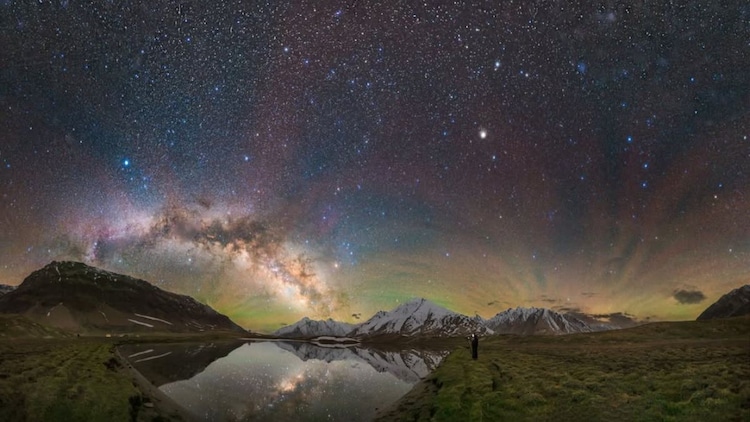
Stars in the outer disc of the Milky Way are not newborns. They drifted outward over billions of years by riding the galaxy’s spiral gravitational waves, a process known as radial migration. (Photo: Dorje Angchuk)

But at around 35,000 to 40,000 light-years (the distance travelled by light in vacuum in a year), something surprising happens: the stars start getting older again.

This creates a U-shaped age curve, and the bottom of that U marks the precise edge of the star-forming disc.

WHY ARE THERE STARS BEYOND THE EDGE?

If star formation stops at this boundary, why do stars exist beyond it at all? The answer lies in a process called radial migration.

Stars slowly drift outward by riding gravitational waves created by the galaxy’s spiral arms, much like a surfer catching a wave.
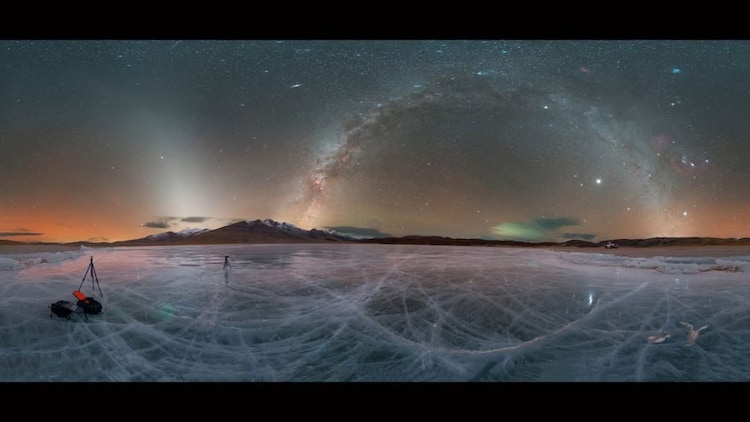
Data from the Gaia space satellite, combined with ground-based sky surveys LAMOST and APOGEE, helped scientists map stellar ages across more than 1,00,000 giant stars in the Milky Way. (Photo: Dorje Angchuk)

Data from the Gaia space satellite, combined with ground-based sky surveys LAMOST and APOGEE, helped scientists map stellar ages across more than 1,00,000 giant stars in the Milky Way. (Photo: Dorje Angchuk)

These stars were born inside the boundary and wandered out over billions of years.

Crucially, they move in calm, near-circular orbits, which tells scientists they were not violently flung outward by a collision with another galaxy.

HOW DID SCIENTISTS CONFIRM THIS?

Using data from the Lamost and Apogee sky surveys, combined with precise measurements from the European Space Agency’s Gaia satellite, researchers analysed over 1,00,000 giant stars.

They also ran advanced supercomputer simulations of galaxy evolution, which confirmed that the U-shaped age pattern consistently marks the point where star formation drops sharply.
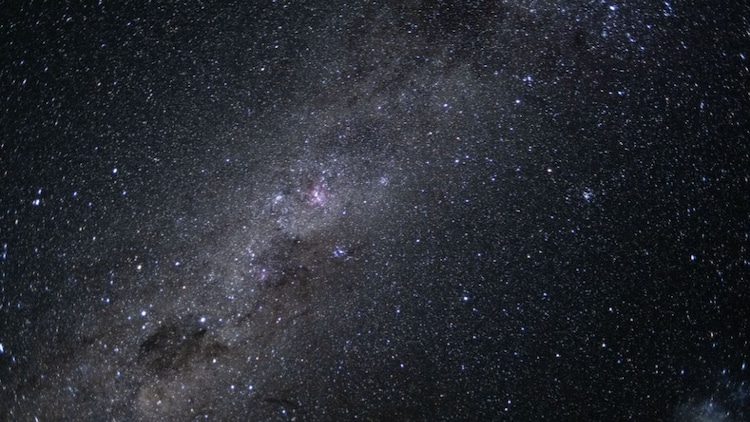
Scientists have finally found the edge of the Milky Way's star-forming disc, and it is closer than expected. Over 1,00,000 stars were studied to crack this decades-old cosmic mystery. (Photo: Nasa)

Scientists have finally found the edge of the Milky Way’s star-forming disc, and it is closer than expected. Over 1,00,000 stars were studied to crack this decades-old cosmic mystery. (Photo: Nasa)

The edge sits at roughly 11 to 12 kiloparsecs, a unit astronomers use for vast distances, where one kiloparsec equals about 3,260 light-years, from the galactic centre.

As for why star formation stops there, scientists suspect it could be the gravitational pull of the Milky Way’s central bar, a warp in the outer disc, or simply gas becoming too warm and stable to collapse into new stars.

The exact answer remains an open question.

Latest

North to sizzle in heatwave, northeast to experience thunderous Wednesday

Temperatures across northwest and central India are expected to climb by another 3–5C before finally dipping towards the end of the month. But before that, he

Plants not just feel, they can hear the rain too, confirms new research

MIT scientists have discovered that rice seeds can sense the sound of rain and germinate up to 40 per cent faster as a result. The study reveals how sound waves

2026 could see a super El Nino and record-breaking global temperatures

La Niño is one of the phases of the El Niño–Southern Oscillation (ENSO) – a natural climate phenomenon. It usually occurs in the Pacific Ocean, influencin

Astronaut on Space Station captures rare comet flying over Earth. See pic

Nasa astronaut Chris Williams was photographing the Lyrid meteor shower from the Cupola aboard the International Space Station when he accidentally spotted a be

Earth Day: We finally know why some people care about climate change, others don’t

As the world faces worsening impacts of climate change, understanding what moves people could be the difference between a movement that grows and one that remai

Topics

Russian oil waiver decision followed requests from vulnerable countries: Bessent

The US extended a Russian oil waiver after requests from over 10 vulnerable nations, keeping supplies flowing to India where imports remain near record highs, h

Data war next? Iran-linked report flags cable cut risk in Strait of Hormuz

Iran-linked Tasnim report warns undersea cable damage in Strait of Hormuz could trigger major internet outages across Gulf, highlighting growing risks to critic

Legal immigration drops faster than illegal entries under Trump, H-1B visas down 25%

Legal immigration to the US has dropped far more than illegal crossings under Trump, with H-1B visas, students and families hardest hit, according to Cato’s D

Why Elon Musk can’t stop talking about the country he fled at 17

Elon Musk claims South Africa has more race-based laws now than under apartheid. Is it a "shameful disgrace" or part of necessary reform? A deep dive into the d

I don’t want to tell you jack sh*t: Ilhan Omar hits back at reporter over finances

Ilhan Omar snapped at a reporter over financial disclosure discrepancies after revising her net worth from millions to thousands, as Republicans demand scrutiny

Is Denmark using Iran’s LEGO videos as quiet revenge for Trump’s Greenland threats?

Exploring Denmark's strategic use of LEGO in international diplomacy

Oil Servicer Weatherford Sees War Impacts Deepening This Quarter

Weatherford International Plc., one of the world’s largest oilfield-service providers, is warning that a hit to earnings in the wake of the Iran war will get

Exclusive-Thoma Bravo nears agreement to turn software firm Medallia over to creditors, source says

THOMABRAVO-MEDALLIA:Exclusive-Thoma Bravo nears agreement to turn software firm Medallia over to creditors, source says
spot_img

Related Articles

Popular Categories

spot_imgspot_img