
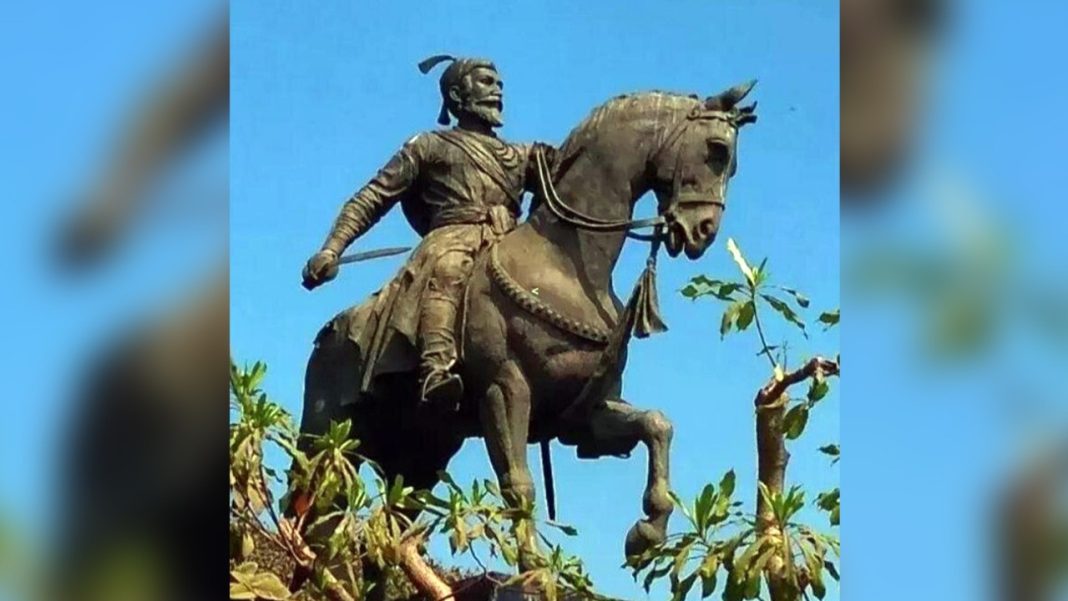
The Mughal court had made its decision. The jizya was back. News moved slowly in the seventeenth century, but it moved surely carried by officials, traders, and whispers. When it reached Shivaji’s court, the response was not a battle plan. It was a letter.
In April 1679, Emperor Aurangzeb reinstated the jizya, a tax levied on non-Muslim subjects. The order marked a clear ideological turn in Mughal policy. Across the empire, it signalled a sharpening of religious lines.
In the Deccan, Chhatrapati Shivaji Maharaj chose to respond not with immediate war, but with argument.
AN IMPERIAL DECREE, A REGIONAL RESPONSE
Shivaji’s letter to Aurangzeb questioned the wisdom of imposing a tax based on faith. Rather than framing it as outright defiance, he positioned it as counsel. A ruler, he argued, derived legitimacy from protecting all subjects, not privileging some over others.
The episode is most authoritatively discussed by historian Jadunath Sarkar in Shivaji and His Times. Drawing from Persian records and archival material, Sarkar translated and analysed the correspondence, presenting it as a significant political intervention rather than a legend.
THE ETHICS OF TAXATION
The jizya had historical precedent in Islamic governance, but its reimposition after a period of relative accommodation carried political implications. Shivaji’s objection, as rendered in Sarkar’s work, centred not only on religion but on governance. Differential taxation, he suggested, risked alienating loyal subjects and destabilising rule.
It was not a theological rebuttal. It was a political one.
The broader context of Aurangzeb’s policy appears in Maasir-i-Alamgiri, the Mughal chronicle written by Saqi Mustaid Khan. Though composed of the imperial perspective, it documents the reinstatement of the jizya and situates it within the emperor’s administrative decisions.
Together, these sources anchor the exchange in documented history.
BEYOND THE BATTLEFIELD IMAGE
Popular memory often foregrounds Shivaji’s military exploits, fort seizures, cavalry raids, and strategic escapes. Yet this letter reveals another dimension: a ruler attentive to moral authority.
Marathi chronicles such as the Sabhasad Bakhar, while blending narrative and memory, consistently portray Shivaji as a protector of his people’s welfare. The 1679 correspondence aligns with that portrayal of a sovereign concerned with justice as much as expansion.
The letter did not reverse imperial policy. The jizya remained. But the act of writing it signalled that opposition could take the form of reasoned dissent.
INK AS POLITICAL STRATEGY
In choosing dialogue over immediate confrontation, Shivaji demonstrated a sophisticated understanding of power. War was one instrument. Legitimacy was another.
His message implied that empires endure not merely through force, but through the consent or at least the accommodation of diverse populations. Taxation, when seen as discriminatory, could erode that foundation.
The argument was measured. The implication was sharp.
WHY THE LETTER STILL MATTERS
Centuries later, Shivaji is commemorated primarily as a warrior-king. Yet this episode offers a quieter insight into his statecraft. It shows him engaging with the Mughal emperor at the level of principle, challenging a policy without theatrics, appealing to the responsibilities of rule.
History often remembers the clash of swords. Less often does it remember the exchange of letters.
But in 1679, in the midst of imperial power and regional resistance, one letter stands as evidence that governance was contested not only on battlefields, but on paper.


