
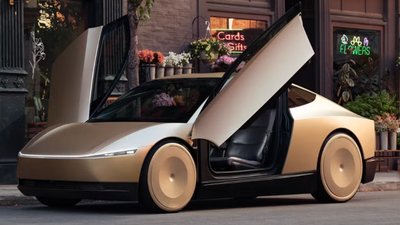
For more than a year, Elon Musk has said Tesla is months away from launching a driverless robotaxi service in California, pending regulatory approval. However, state Department of Motor Vehicles records show the company took no steps in 2025 to advance that process and logged zero miles of autonomous test driving on public roads for the sixth consecutive year.
Under California’s framework, companies must record test miles and secure a series of permits before operating driverless ride-hailing services, as Alphabet’s Waymo has done. Tesla currently holds only an entry-level DMV permit that allows testing with a human safety driver in the vehicle. A DMV spokesperson said the company has not applied for additional permits. Proposed rules would require at least 50,000 miles of supervised autonomous testing before seeking approval for driverless testing. Tesla has not reported any miles since 2019 and has logged 562 miles in total since 2016.
Much of Tesla’s $1.5 trillion valuation is tied to expectations that it will deploy large-scale robotaxi services and expand sales of autonomous-driving software. California, the largest U.S. auto market, is central to those plans. Bryant Walker Smith, a University of South Carolina law professor who has advised the DMV, said Tesla’s messaging suggests regulators are the obstacle, while in reality “regulators are ready, and they are not.
”
Tesla did not respond to requests for comment. On an October earnings call, Musk said the company takes a cautious approach to safety and market entry. Tesla currently operates a limited pilot robotaxi service in Austin, Texas. In the San Francisco Bay Area, it launched what it described as a robotaxi service in July, but it functions as a chauffeur service with human drivers using its “Full Self-Driving” driver-assistance system, which is not fully autonomous.
Waymo, by contrast, logged more than 13 million test miles and secured seven regulatory approvals between 2014 and 2023, when it was cleared to charge passengers for driverless rides. It is one of three companies with California permits to commercially operate driverless vehicles and the only one running a robotaxi fleet at scale.
Tesla has criticised proposed California rules, questioning minimum mileage requirements and reporting obligations. Musk has also cited the state’s lengthy approval process as a hurdle, saying in October 2024 that he would be “shocked” if Tesla did not receive approval the following year, though the outcome is not entirely within the company’s control


