
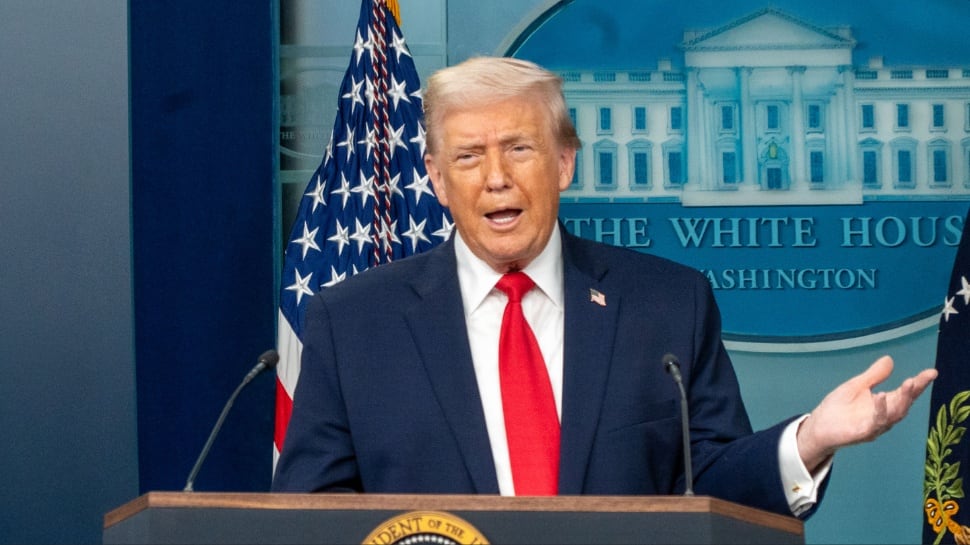
In a bold move aimed at ensuring the financial future of the next generation, President Donald Trump has officially announced the ‘Trump Account’ initiative. Under this policy, the U.S. government will open a tax-free investment account for every eligible newborn in the country, starting with an initial $1,000 deposit from the federal government.
The initiative shifts the idea of starting life from debt to starting life with an asset. Government officials say that through long-term growth and additional contributions, this small start could turn into a significant financial resource by the time the child becomes an adult.
How the ‘Trump Account’ works
The ‘Trump Account’ is set up as a long-term, tax-advantaged investment option. After the initial $1,000 federal deposit, the account can grow in several ways:
Initial seed: $1,000 deposited by the government at birth.
Additional contributions: Parents, family members, employers, or state governments can add money to the account.
Deposit limits: Reports indicate a maximum annual contribution limit of $5,000.
Market growth: The funds will be invested in market-based options to take advantage of growth.
The financial goal: The U.S. government estimates that with regular contributions, a child could have at least $50,000 by age 18. These funds are meant for significant life events like higher education, a down payment on a first home, or starting a business.
Eligibility criteria: Who qualifies?
To make sure the program benefits the right people, the following eligibility rules have been set:
Birth window: The child must be born between January 1, 2025, and December 31, 2028.
Citizenship: The child must be a U.S. citizen at birth.
Documentation: A valid Social Security Number (SSN) is required.
Activation: Parents or legal guardians must complete the necessary steps to activate and manage the account.
Who is excluded from the scheme?
The government has stated that certain groups will not qualify for the ‘Trump Account’:
- Children born before 2025 or after 2028.
- Children who are not U.S. citizens.
- Children without a valid Social Security Number.
- Cases where parents do not complete the needed forms or provide incorrect information.
Rules for Indian parents residing in the US
One common question is whether children of Indian expats or Green Card holders can benefit.
The verdict: Yes, as long as the child is born in the U.S. According to the principle of birthright citizenship, a child born in the United States usually becomes a U.S. citizen automatically.
Eligibility for Indian parents: If an Indian couple lives in the U.S. and their child is born there during the eligibility period, the child is a U.S. citizen and qualifies for the $1,000 Trump Account.
Requirement: The parents must ensure they apply for the child’s Social Security number quickly and complete the necessary activation process required by the federal government.


