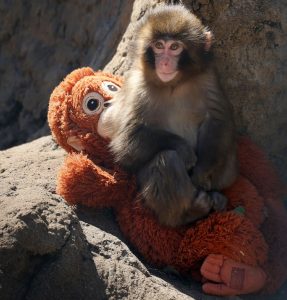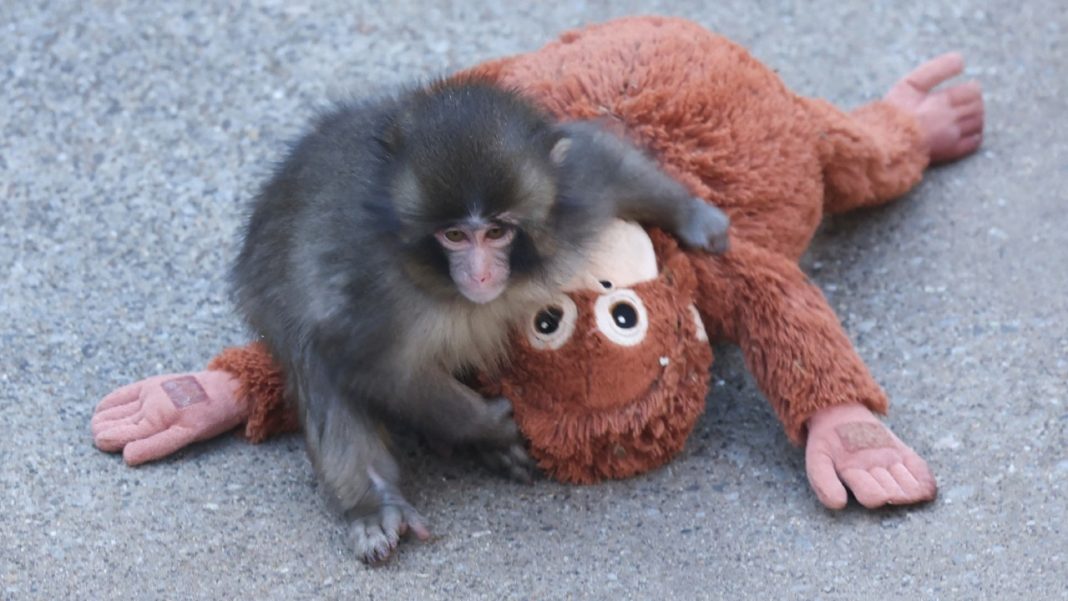
It is easy to dismiss it at first. It’s just a monkey. Just another animal video. Just another fleeting moment of internet cuteness. But Punch’s story has proven to be much more than that. The world has formed an unexpected emotional connection with Punch, the baby monkey at Japan’s Ichikawa Zoo, who was abandoned by its mother and later found comfort in a stuffed orangutan placed beside it.
The internet collectively softened while watching Punch wrap the plush toy’s arms around itself for reassurance, felt a pang when other monkeys rejected it, and melted when it clung to the caretaker for safety. Each moment struck a nerve, turning quiet observation into shared emotion.
What makes this reaction interesting is that abandonment is not unusual in the animal kingdom. It happens often and instinctively. Yet Punch’s story feels deeply personal to many. People aren’t just watching an animal; they’re resonating with a feeling. And that reaction has far less to do with wildlife behaviour and far more to do with human psychology, our instinct to connect with vulnerability, seek comfort, and recognise our own fears reflected in another being.
The instant connection
Dr Anitha Chandra, consultant psychiatrist at Aster CMI Hospital, Bengaluru, tells India Today that people are feeling a deep sense of connection with Punch because humans are naturally wired to empathise with babies, especially those that appear small, helpless, and similar to human infants.
This response, she explains, reflects how human psychology is shaped by emotional bonding, parental instinct, and the tendency to humanise animals.
To this, Dr Munia Bhattacharya, senior consultant, clinical psychologist at Marengo Asia Hospital, Gurugram, adds that what really stayed with people was seeing vulnerability so clearly.
“When humans see a young being that looks lost or confused, it hits something emotional very quickly. Most people don’t sit and analyse why they feel moved. They just feel it. In a quiet way, Punch reminded people of moments when they themselves felt left out, unsupported, or emotionally alone. That’s why the reaction became so strong.”
Baby animals often spark stronger emotions because they send out the same cues as human infants: small size, big eyes, soft features, and a sense of helplessness. These signals instantly trigger our protective instincts, even before logic kicks in.
We don’t stop to think about the species; we simply respond to vulnerability, because that’s how the human brain is wired.
Having a safety net
In the many videos circulating online, what left people in awe was the way Punch dragged the plush toy everywhere, wrapping its arms around it for comfort and even clinging to the caretaker the moment it saw him.
It instantly conveyed a simple truth: even if the world feels against you, having that one safety net can help you sail through.
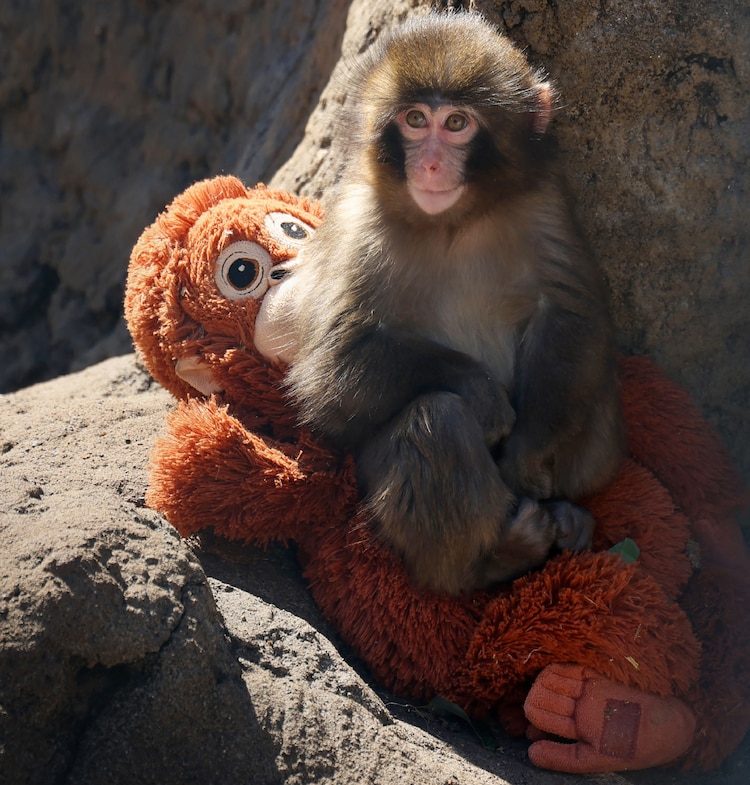
“Safety nets are very important in moments of rejection because they give comfort, reduce fear, and help a person or even an animal feel secure during emotional pain, and Punch’s comfort toy resonates strongly with human experiences because many people also hold on to objects, memories, or loved ones for emotional support when they feel lonely or hurt,” says Dr Chandra.
This shows that the need for reassurance, attachment, and a sense of safety is universal, and that even something as simple as a soft toy can come to symbolise hope, stability, and healing in difficult moments.
But the thing with us humans is that we often need something to fixate on, be it Labubu, bag charms, or the latest internet trend that offers a brief sense of comfort and distraction. While Punch’s story struck a deep emotional chord, it was the plush toy he clung to that unexpectedly became the next object of collective obsession. The orangutan soft toy, seen as Punch’s source of comfort, quickly captured the public imagination, turning from a background detail into a symbol of emotional safety.
In fact, the orangutan plush from IKEA seems to have shot up in popularity, earning a “top seller” badge on the brand’s India website.
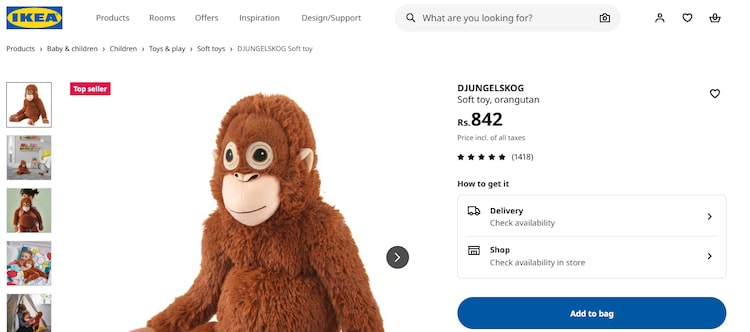
Doesn’t this say a lot about how we process emotions today? We don’t just empathise with the story; we latch on to a tangible object connected to it. Owning the same toy becomes a way to feel closer to the emotion, to participate in the moment, and perhaps even to recreate that sense of comfort in our own lives.
Fear of rejection
Punch seeking love and attachment moves people not just because it is emotional, but because, as experts point out, it mirrors a deeply familiar human experience.
The image of a baby monkey looking for comfort reflects feelings many associate with moments of emotional vulnerability, times when support felt uncertain or absent. That response is immediate and instinctive.
There is no story to decode or dialogue to follow, just a clear need for connection. That simplicity makes the moment easy to relate to and difficult to look away from.
What does it tell about us humans?
Empathy plays a big role here, and it is what pulls people closer. Dr Bhattacharya mentions that Punch’s vulnerability doesn’t push people away; it draws them in.
“The story quietly reminds us that humans connect most deeply when someone’s fragility is visible. Strength can be admired, but vulnerability is what creates emotional closeness.”
While rooting for Punch, many have found a way to restore emotional balance in an increasingly uncertain world.
Caring for a small, vulnerable baby monkey offers a simple, hopeful focus, one where kindness and protection still feel meaningful. In the middle of stress, conflict, and unpredictability, supporting Punch gives people a sense of connection and emotional purpose, reminding them that compassion matters even when much of life feels out of their control.
In the end, Punch’s story is less about a baby monkey and more about what it stirs within us. It reveals how deeply humans are drawn to vulnerability, how instinctively we reach for moments of care and reassurance when the world feels unstable.
And, in choosing to care for Punch, people aren’t just following an internet moment; they’re responding to a shared emotional need to protect, to connect, and to believe that kindness still holds power.
Sometimes, it takes a small, silent story to remind us of the comfort we all seek and the compassion we are capable of offering.