
Key Takeaways
- China launched emergency rescue mission Shenzhou-22 to retrieve three stranded astronauts
- Shenzhou-20 spacecraft was damaged by orbital debris, leaving crew without return vehicle
- Mission demonstrates China’s rapid response capability for space emergencies
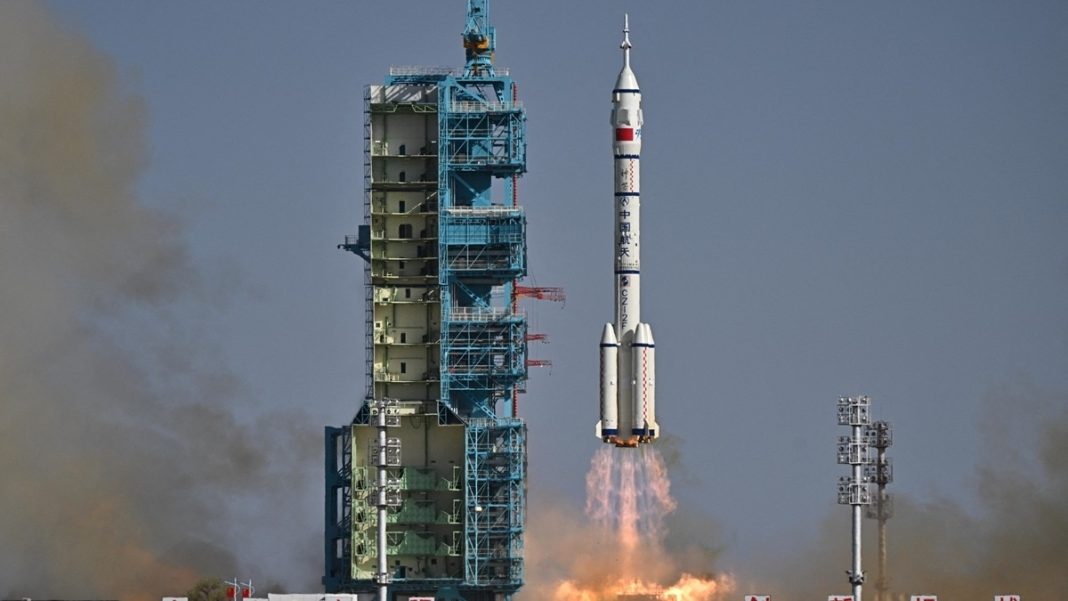
China has launched the Shenzhou-22 spacecraft on an emergency rescue mission to retrieve three astronauts stranded at the Tiangong space station. The urgent launch addresses critical safety concerns after another spacecraft was damaged in orbit.
The Shenzhou-22 lifted off from Jiuquan Satellite Launch Center at 12:11 p.m. (0411 GMT) on Tuesday, as confirmed by state broadcaster CCTV’s live coverage. The mission will reach China’s permanently crewed Tiangong station, where three astronauts have been living without a functional return vehicle.
Spacecraft Damage Triggers Emergency Response
On November 5, the Shenzhou-20 spacecraft was declared unfit for flight after sustaining suspected debris damage while docked at Tiangong. The vessel was originally scheduled to bring three Chinese astronauts back to Earth.
This emergency forced space authorities to deploy their only remaining flightworthy vessel – the Shenzhou-21, which had just arrived at the station in late October. With Shenzhou-21’s departure six months ahead of schedule, the Tiangong crew was left completely without a spacecraft until Shenzhou-22’s arrival.
Contrasting International Space Responses
China’s methodical handling of this crisis differs from NASA’s experience when two astronauts were stuck aboard the International Space Station for nine months due to propulsion system issues.
Both space powers are now closely analyzing each other’s operational protocols and technologies as they compete to achieve crewed moon landings before 2030.


