
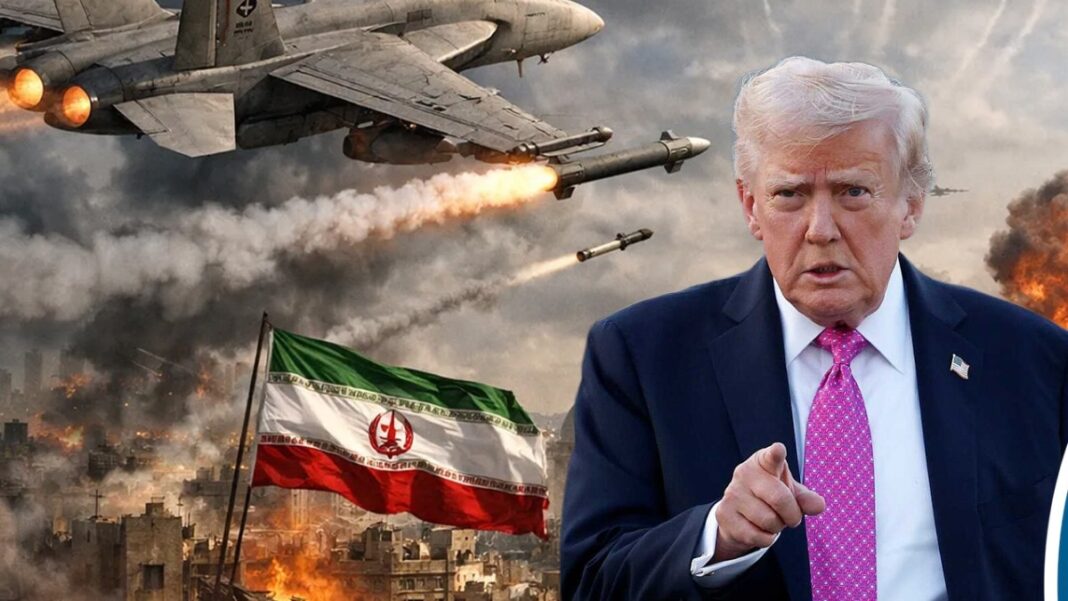
In an exclusive interview with India Today Global’s Executive Editor Geeta Mohan, Professor Seyed Mohammad Marandi presents a forceful and highly contentious interpretation of the ongoing Iran-US confrontation, arguing that Washington is facing strategic and political setbacks while Tehran maintains the upper hand.
With negotiations stalled and no clear diplomatic breakthrough in sight, Marandi says both sides have hardened their positions, leaving what he describes as “no workable solution” currently on the table. According to him, Iran believes it has already withstood sustained pressure across multiple phases of conflict, while the United States and its regional allies are struggling to impose their objectives.
Claims of battlefield and diplomatic reversal
Marandi argues that during what he refers to as the “12-day war” and a subsequent longer phase of fighting, Iran not only absorbed significant pressure but ultimately forced a shift in US behaviour. He claims that Washington, after initial expectations of a swift outcome, moved towards seeking a ceasefire and later engaging with Iranian proposals for a negotiated framework.
He further asserts that Iran presented a structured 10-point plan which was eventually accepted as the basis for discussions, describing this as evidence of a shifting balance in negotiations.
Uranium remains inside Iran
A central claim in the interview is that Iran’s enriched uranium stockpile remains within the country and will not be removed under any agreement.
Marandi rejects suggestions of external transfer or handover, stating firmly that “nothing is leaving the country,” even under diplomatic pressure. This aligns with broader Iranian official positions that enriched uranium remains under national control, despite international demands for restrictions or relocation as part of any nuclear settlement.
Recent reporting and official statements have similarly indicated that large quantities of highly enriched uranium remain in Iran, with estimates suggesting around 400 kilograms of material enriched up to 60% still in the country, much of it buried or stored at known nuclear sites following military strikes earlier in the year.
Nuclear talks and shifting priorities
Marandi claims that nuclear discussions are not the core issue in negotiations, arguing instead that the dispute centres on sovereignty, regional influence, and geopolitical control.
He states that Iranian negotiators refused to engage on nuclear limits during certain talks, insisting instead on addressing ceasefire conditions and broader political frameworks. Western officials, by contrast, have repeatedly maintained that uranium enrichment levels remain a central concern in any future agreement.
Allegations of US internal coordination with Israel
One of the most controversial assertions in the interview concerns US–Israeli coordination during diplomatic discussions.
Marandi claims that US Vice President J.D. Vance was in regular contact with external actors, including Israeli Prime Minister Benjamin Netanyahu, during negotiations. He alleges that Vance made multiple phone calls throughout the day while engaged in talks and, at one point, effectively “reported” outcomes to Netanyahu.
He further suggests that US negotiators were not acting with full autonomy, describing them as operating alongside individuals with close political and strategic alignment with Israel.
There is no publicly verified evidence provided for these specific claims.
Strait of Hormuz and regional escalation
The interview also revisits tensions surrounding the Strait of Hormuz, a critical global energy corridor.
Marandi rejects claims that Iran has sought to close the waterway, stating that it has historically remained open even during periods of heightened tension. However, he argues that Iran will no longer accept what he describes as its militarisation by hostile powers or neighbouring states hosting US forces.
He warns that regional bases and infrastructure used by US forces could be considered part of a wider conflict architecture, suggesting that escalation risks remain if tensions continue.
Economic consequences and global pressure
A significant portion of the interview focuses on the global economic impact of the conflict.
Marandi claims that rising oil prices, supply chain disruptions, and industrial slowdowns are early indicators of a broader crisis. He argues that these effects will intensify over time, placing increasing pressure on Washington and its allies.
He describes the current situation as a “symptom phase”, suggesting that deeper disruptions to global production and trade networks are still to come.
US political cohesion questioned
Marandi also challenges the idea of US strategic coherence, pointing to political divisions, resignations, and shifting messaging within Washington.
He contrasts this with Iran’s constitutional and institutional structure, arguing that decision-making in Tehran is centralised and stable. He claims that despite wartime pressure, Iran’s political system remains intact and functional.
No uranium transfer, no compromise on enrichment
On nuclear sovereignty, Marandi is unequivocal: Iran will continue enrichment and will not transfer enriched uranium abroad under any agreement.
This position aligns with long-standing Iranian policy asserting the right to peaceful nuclear enrichment within national borders. International negotiators, however, have repeatedly sought restrictions or monitoring mechanisms to limit enrichment levels due to proliferation concerns.
Outlook: prolonged confrontation
Marandi concludes that Iran’s strategy is one of endurance, arguing that time is not on the side of the United States if the conflict continues. He maintains that Iran can sustain prolonged pressure, while economic and political consequences will accumulate internationally.
He frames the broader struggle as one not limited to Iran and the US, but as part of a wider global realignment shaped by energy markets, military posture, and shifting alliances.


