
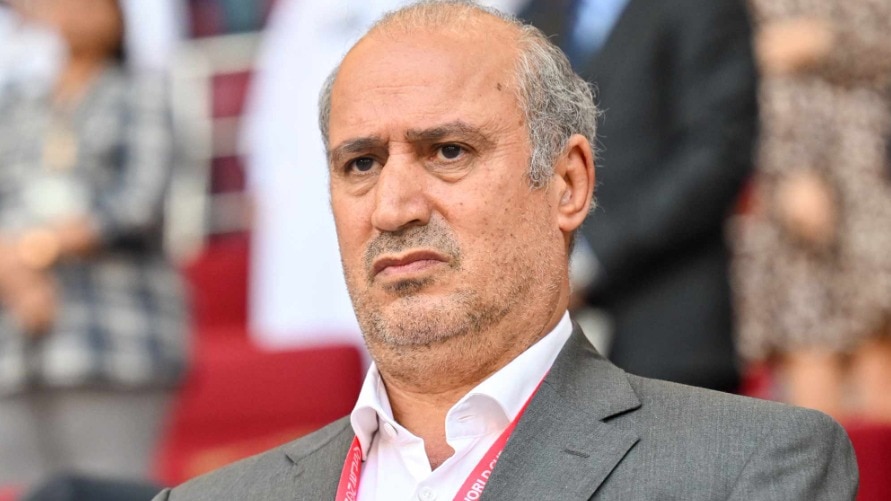
Mehdi Taj, the IRGC-linked president of Iran’s football federation, was sent back from Canada just hours after arriving for this week’s FIFA Congress, in a case that reignited scrutiny over Ottawa’s hardline stance on Iranian regime-linked figures.
Taj, a former commander in the Islamic Revolutionary Guard Corps (IRGC), landed in Canada, but departed at 10:05 pm on Tuesday along with two accompanying individuals after being questioned by authorities, according to Iran International. The 66-year-old was expected to attend the FIFA Congress at the Vancouver Convention Centre on Thursday (April 30), where Iranian-Canadian groups had planned demonstrations against his presence.
Taj’s brief stay came despite Iranian government sources saying he had been granted a Temporary Resident Permit (TRP), a special authorisation that can override inadmissibility under Canadian immigration law and would have allowed him to attend the FIFA Congress in Vancouver ahead of the 2026 FIFA World Cup.
Taj’s expected participation had triggered backlash from lawmakers and Iranian diaspora groups, particularly because Canada designated the IRGC as a terrorist organisation in 2024, a move that enables authorities to freeze assets and restrict entry for individuals linked to the group.
Canada has also classified senior Iranian regime officials as inadmissible under immigration laws tied to terrorism and human rights concerns.
Canadian Senator Leo Housakos questioned how Taj was permitted entry despite Ottawa’s own terrorism-related restrictions.
“Your government can’t seem to show the IRGC the door, but it can find a way to roll out the welcome mat and receive him. Leader, why is your government still unable or unwilling to enforce Canada’s terrorism-related inadmissibility rules? What’s the point of listing the IRGC if you’re not serious about throwing him out of our country,” Housakos said.
Canada’s immigration authorities later reiterated their position, saying IRGC-linked officials are not welcome in the country, Iran International reported.
“The government has been clear and consistent: IRGC officials are inadmissible to Canada and have no place in our country,” officials said, while declining to discuss Taj’s specific case because of privacy rules.
Taj began his career as an intelligence commander in the IRGC in Isfahan following Iran’s 1979 revolution, before rising through the ranks of Iranian football administration. His abrupt departure raised fresh questions about how he was initially granted permission to enter Canada despite longstanding restrictions on figures tied to the Iranian regime.
The controversy unfolded against the backdrop of heightened tensions over the two-month-old war, now on pause, involving Iran, Israel and the US, and the instability around the Strait of Hormuz. The strait is a vital global shipping route that has faced repeated disruptions to shipping routes during the ongoing conflict.
Canada has condemned Iranian military actions and support for proxy groups while simultaneously pushing for diplomatic de-escalation to avoid wider regional spillover. It has maintained some of the toughest Western measures against Tehran, including sanctions targeting Iranian officials and companies linked to drone production, weapons transfers and regional destabilisation.
Ottawa has repeatedly said it supports preventing Iran from obtaining nuclear weapons, while advocating diplomacy and coordinated international pressure rather than direct military participation.


