
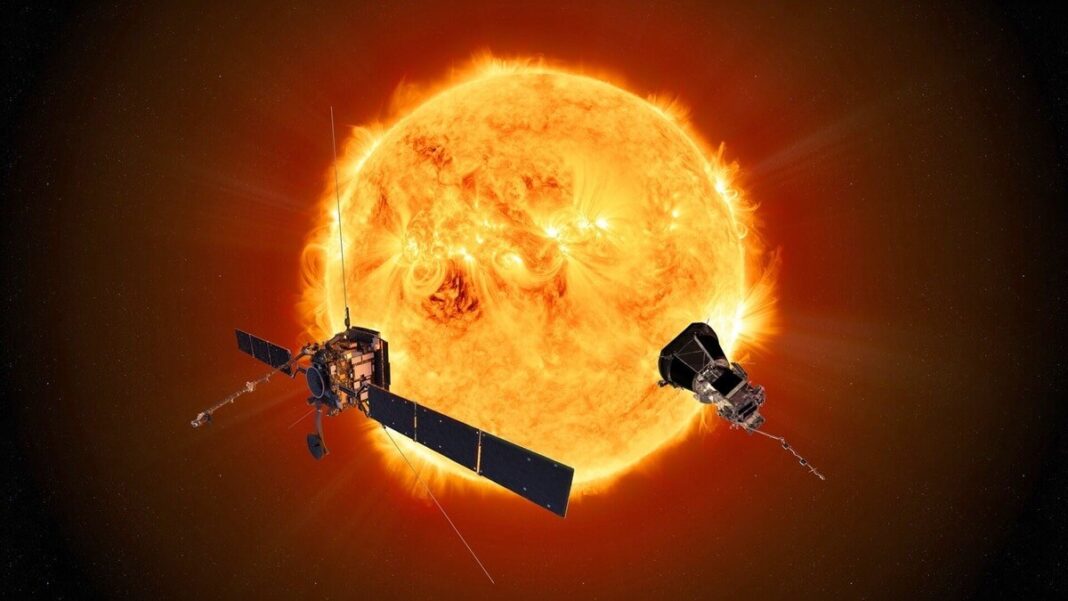
Powerful solar storm causes radio blackout across half the Earth. Should you worry?

The Sun threw a tantrum today, and Earth felt it almost instantly.

An X-class solar flare, the most powerful category of solar eruption on the books, fired off from the Sun’s surface and sent a furious wave of electromagnetic radiation hurtling toward Earth at the speed of light. The result: a strong radio blackout across the sunlit side of our planet.

WHAT IS AN X-CLASS SOLAR FLARE?

Think of the Sun as a pressure cooker. Now and then, tangled magnetic fields near dark patches on its surface, called sunspots, snap and release enormous bursts of energy. These are solar flares.

Scientists classify them from weakest to strongest: A, B, C, M, and X. Each step up the ladder is 10 times more powerful than the one before it. An X-class flare sits right at the top.

WHY DID THE RADIO GO SILENT?

Here is where it gets fascinating. The Sun’s flare did not just release light, it blasted out X-rays and extreme ultraviolet radiation, which travelled to Earth in roughly eight minutes.

When they arrived, they slammed into a specific layer of Earth’s upper atmosphere called the ionosphere, which is a vast shell of electrically charged particles that wraps around the planet between 60 and 1,000 kilometres above the surface.

Normally, high-frequency radio waves bounce off the ionosphere’s upper layers and travel great distances, much like how you can skip a stone across water.

This is how pilots, sailors, emergency services, and amateur radio operators communicate over vast stretches of the globe.

But during an X-class flare, something goes wrong. The radiation supercharges a lower, denser portion of the ionosphere called the D-layer.

Electrons in this layer begin colliding so frequently and violently that any radio wave passing through simply loses all its energy.

The signal does not bounce but gets swallowed. The result is a blackout.

HOW LONG DOES THE BLACKOUT LAST?

Typically anywhere from minutes to an hour, depending on the flare’s intensity. Only the sunlit side of Earth is affected, since the D-layer is charged by sunlight.

X-class flares sometimes also launch a coronal mass ejection, or CME, which is a colossal bubble of magnetised plasma that travels through space more slowly, arriving at Earth one to three days after the flare.
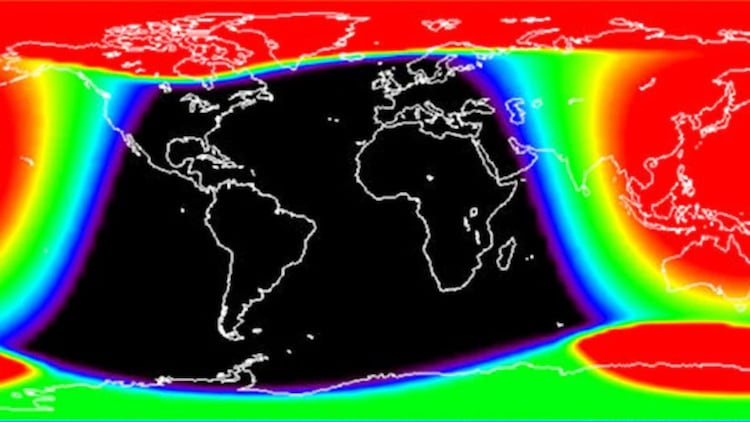
When X-ray radiation from a solar flare hits Earth's ionosphere, it overcharges the D-layer, causing high-frequency radio waves to lose energy and disappear instead of bouncing across the globe. (Photo: NOAA)

When X-ray radiation from a solar flare hits Earth’s ionosphere, it overcharges the D-layer, causing high-frequency radio waves to lose energy and disappear instead of bouncing across the globe. (Photo: NOAA)

If one is on its way, geomagnetic storms could follow, potentially disrupting satellites, GPS systems, and even power grids.

For now, the lights are on, but your shortwave radio may have taken a brief, spectacular hit from the nearest star.

Latest

Early monsoon alert: Weather systems signal ahead-of-time arrival likely in India

In 2025, there were similar forecasts of rain arriving early in Kerala, with rains projected around May 27–29. But the monsoon arrived even earlier

Back on Earth, still in space: Astronaut’s brain takes months to readjust

Astronauts grip objects too tightly in space because their brains are still anticipating Earth's gravity, a new study has found. Researchers say the brain adapt

No relief: Heatwaves to get worse in North India, storms to hit the East on Friday

Temperatures across northwest and central India are likely to climb a further 2–3C before any relief arrives.

Nasa captures stunning pic of Moon and Earth from Mars. See the pale blue crescent

Nasa’s HiRISE camera aboard the Mars Reconnaissance Orbiter captured Earth and its Moon from 142 million kilometres away.

Indian startup to send giant balloon to edge of space. What will it do?

Red Balloon Aerospace will launch India's first indigenous Super Pressure Balloon from Andhra Pradesh in the coming weeks, targeting an altitude where satellite

Topics

Selfless Virat Kohli praises Devdutt Padikkal as real hero of RCB’s win over GT

Virat Kohli credited Devdutt Padikkal after Royal Challengers Bengaluru chased down 206 against Gujarat Titans. Their partnership shaped the chase and kept RCB

UK mother, 56, dies at assisted dying clinic in Switzerland after son’s death

A 56-year-old woman from the UK has died at an assisted dying clinic in Switzerland, according to news report. She had earlier spoken about struggling with grie

Michael Box Office Collection: Jaafar Jackson film breaks records with $12.6M US previews despite poor reviews

Lionsgate's Michael Jackson biopic 'Michael' is heading for a record-breaking opening weekend with $12.6 million in US previews and $18.5 million internationall

Grieving UK mother ends life at Swiss clinic after paying £10,000

A grieving British mother, Wendy Duffy, died by assisted suicide in Switzerland after losing her son, sparking debate over suicide tourism, legality, and ethica

Khal Nayak is back: Sanjay Dutt unveils teaser, revives iconic role in new Jio Studios film

Sanjay Dutt and Aksha Kamboj have acquired rights to the 1993 film Khal Nayak, with Jio Studios set to produce a new project. The move signals a revival of the

AI smart glasses will help visually impaired runners take on the London Marathon

AI smart glasses will help visually impaired runners take on the London Marathon

Iran’s FM Abbas Araghchi to visit Pakistan, confirms Iranian state media

The US logistics and security team have already reached Islamabad, Reuters reported citing government sources.

Explained: Why Iran is not ready to compromise with US despite pressure

US-Iran conflict: Tensions between Washington and Tehran remain on edge as diplomatic efforts to secure a truce show no signs of progress. Earlier this week,
spot_img

Related Articles

Popular Categories

spot_imgspot_img
