
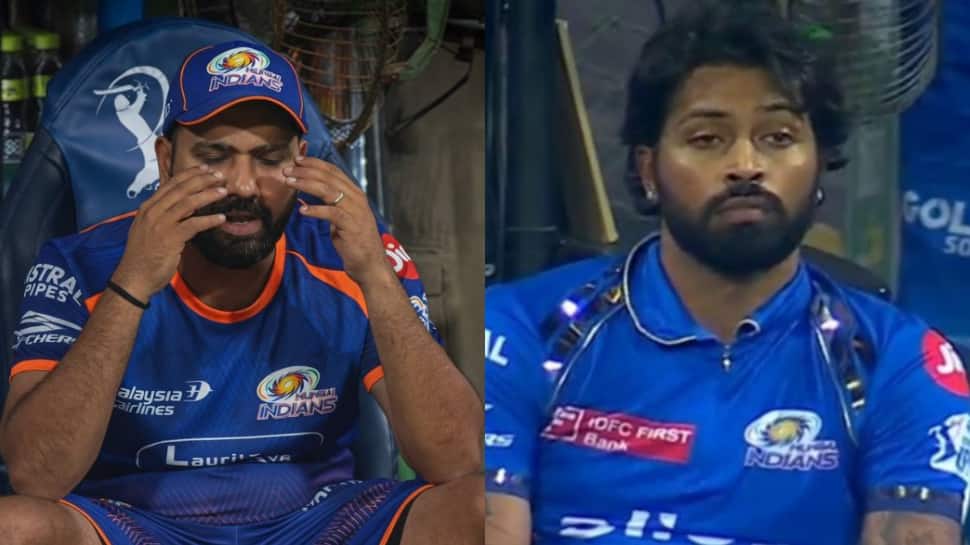
When the Mumbai Indians (MI) management orchestrated the high-profile return of Hardik Pandya in late 2023, the narrative was centered on a seamless succession. The logic appeared sound: Hardik had just steered the Gujarat Titans to a title and a final in consecutive years, while the legendary Rohit Sharma was navigating a lean patch with the bat. However, as the 2026 IPL season unfolds, that “succession plan” has morphed into a survival struggle. While Hardik’s bowling has occasionally sparked, his primary identity as a premier finisher has vanished under the weight of the captaincy arm-band, leaving a gaping hole in the MI middle order.
A Steep Decline in Batting Efficacy
The most alarming aspect of Hardik’s tenure as MI captain is the erosion of his batting consistency. In his non-captaincy years, Hardik was the ultimate “X-factor,” capable of turning games in a single over. Since taking the helm in 2024, the numbers tell a story of a player struggling to balance individual brilliance with leadership responsibility.
In the disastrous 2024 season, where MI finished rock bottom, Hardik managed only 216 runs at a dismal average of 18.00. While he showed signs of recovery in 2025, reaching the playoffs with an average of 24.89, he has never regained the “invincibility” of his early years. The current 2026 season has seen him struggle early on, managing just 72 runs in his first four outings. Although his strike rate remains respectable (~158), he is failing to provide the substantial, match-winning knocks MI desperately needs.
Bowling Highlights vs. Leadership Lows
Paradoxically, Hardik the bowler has often outshone Hardik the batter during this period. In 2025, he etched his name in the record books by becoming the first IPL captain to take a five-wicket haul (5/36 vs LSG). Over his 32–35+ matches as MI captain, he has claimed nearly 30 wickets.
However, a captain-allrounder is valued for the balance they provide. With a win percentage of only 43-44% the lowest among major MI captains it is clear that tactical bowling changes cannot compensate for a lack of runs. MI’s identity was built on power-hitting, and when the captain fails to lead the charge with the bat, the pressure cascades down to the likes of Suryakumar Yadav and Tilak Varma.
The Breakdown of the Succession Plan
The decision to “poach” Hardik from Gujarat was a calculated risk that has yet to pay dividends. MI erred by not retaining him in 2022, and their attempt to rectify that mistake has resulted in an era defined by inconsistency. The team’s freefall in 2024 and their current struggles in 2026 suggest that the leadership transition was perhaps too abrupt or lacked the necessary cultural alignment.
Following the recent crushing defeat to the Punjab Kings MI’s fourth straight loss Hardik’s frustration was palpable. He noted:
“We really need to see, do we need to make some difficult calls, or do we need to keep continuing and hope that we’ll turn things around. These are some hard questions which eventually we need to answer, and yeah, ownership has to be taken.”
Hardik Pandya is running out of time and ideas. Accountability is a two-way street; while he calls for “hard decisions,” the hardest decision may involve his own role. If he cannot rediscover the batting form that made him a global superstar, his legacy as MI captain will be remembered not for the trophies he promised, but for the “injustice” many fans feel was done to the Rohit Sharma era. For MI to climb from the bottom of the table, they don’t just need a captain they need the Hardik Pandya who bats without fear.


