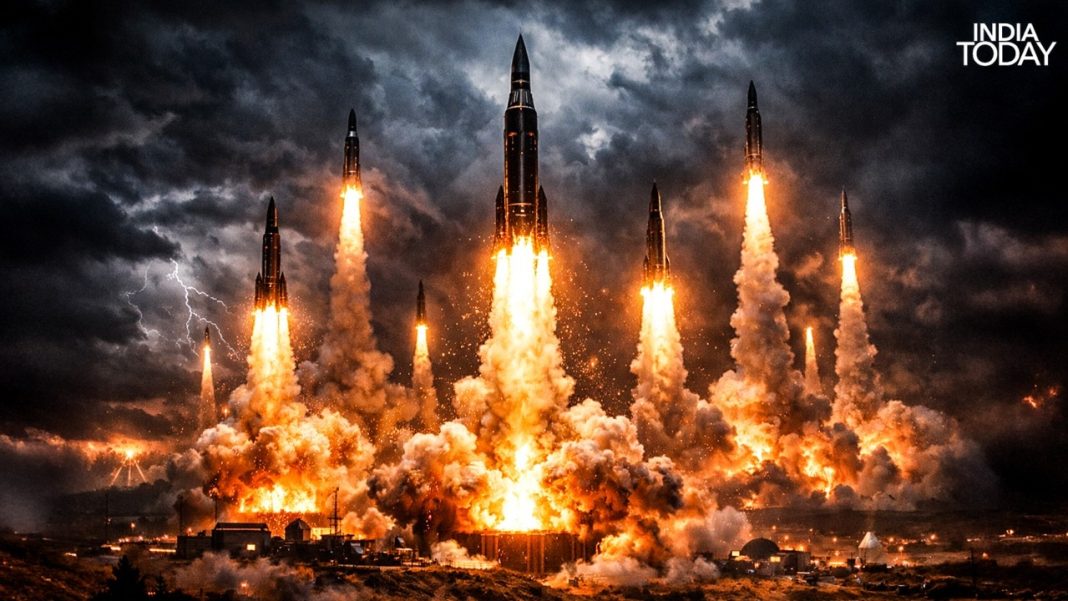
The United States Air Force has test-fired one of its most powerful nuclear-capable missiles, even as its forces remain engaged in a conflict against Iran.
The weapon, called the Minuteman III, and nicknamed ‘doomsday’ missile, is an intercontinental ballistic missile. This means it is designed to carry nuclear warheads across entire continents and strike targets thousands of kilometres away in under 30 minutes.
It was launched from Vandenberg Space Force Base in California in March, and travelled over 6,700 kilometres before hitting its target in the Marshall Islands.
So what exactly is this missile? Developed by Boeing in the 1950s to bolster American homeland protection, the Minuteman III is stored and launched from a silo, a fortified underground bunker designed to protect the missile from enemy attacks.
It is primarily controlled from an underground centre, with firing overseen by two personnel.
Think of it like a loaded gun kept locked in a vault underground, with two people required to turn their keys simultaneously before it can fire. Neither person can launch it alone.
It reaches a top speed of Mach 23, or roughly 28,400 kilometres per hour, and can travel over 9,600 kilometres.
The US Air Force currently keeps around 400 of these missiles on active alert, loaded and ready to fire at a moment’s notice, in silos spread across Montana, Wyoming, and North Dakota. Each carries a nuclear warhead, which is the explosive tip of the missile that contains the nuclear device.
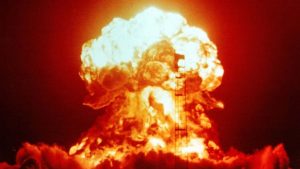
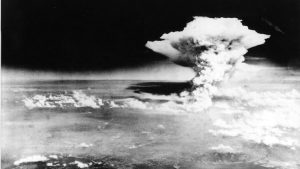
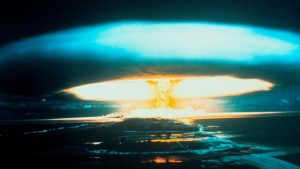
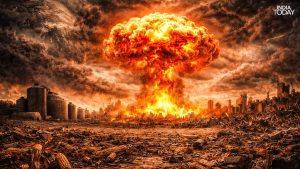
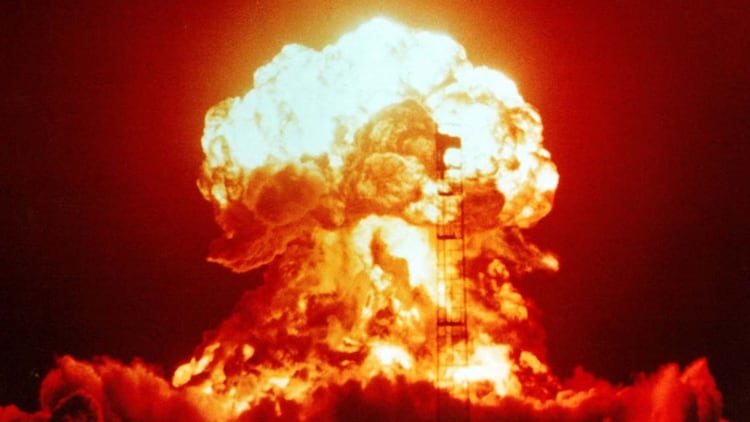
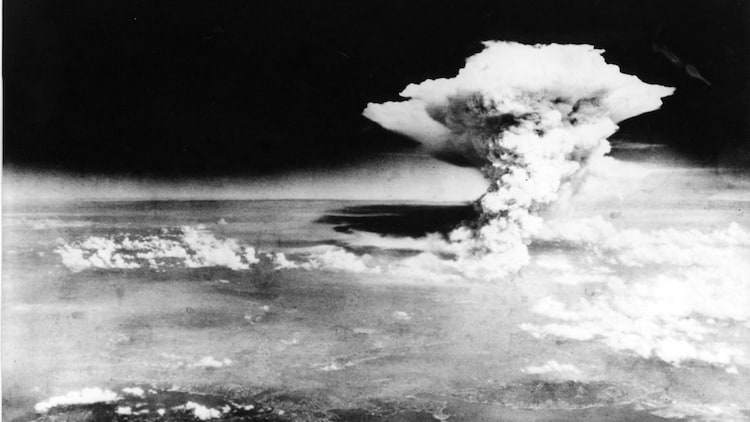
When it detonates, it does not just cause a conventional explosion. It releases an enormous burst of energy capable of flattening an entire city in seconds.
Notably, a Minuteman III has never been fired in actual combat. Every launch so far has been a test, making the weapon one of the most powerful things on Earth that has never actually been used in war.
WHY IS IT CALLED A ‘DOOMSDAY’ MISSILE?
The nickname comes not from the missile itself but from how it is launched. During the recent test, operators aboard a US Navy E-6B, widely known as the doomsday plane, triggered the missile launch and sent it on its journey toward the Marshall Islands.
The E-6B is a flying command centre. If a nuclear war broke out and ground communications were destroyed, this aircraft would still be airborne, allowing US leadership to send the launch order. It is the last resort button in the sky.
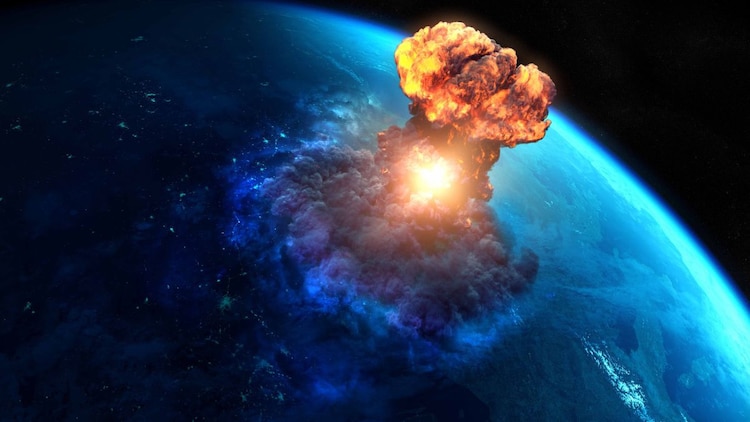
It forms the basis of the US nuclear deterrence strategy, the idea that if a country knows it will face a devastating nuclear response, it will think twice before launching an attack in the first place.
In other words, the threat of total destruction is meant to keep the peace. It is designed to ensure that American leadership can maintain secure communications with nuclear forces even during the most severe crises, including nuclear conflict.
HOW DOES A ‘DOOMSDAY’ MISSILE WORK?
Once the launch order is given, the Minuteman III blasts out of its underground silo using a solid-fuel rocket engine, climbing steeply into the upper atmosphere within minutes. It then separates into stages, shedding parts of itself as it accelerates, much like a rocket dropping its fuel tanks once they are empty.
At its peak, the missile travels outside the Earth’s atmosphere entirely, racing through space before re-entering at tremendous speed. This is why it is called a ballistic missile. Like a ball thrown in the air, it follows a curved path governed by gravity, not engines, for most of its journey.
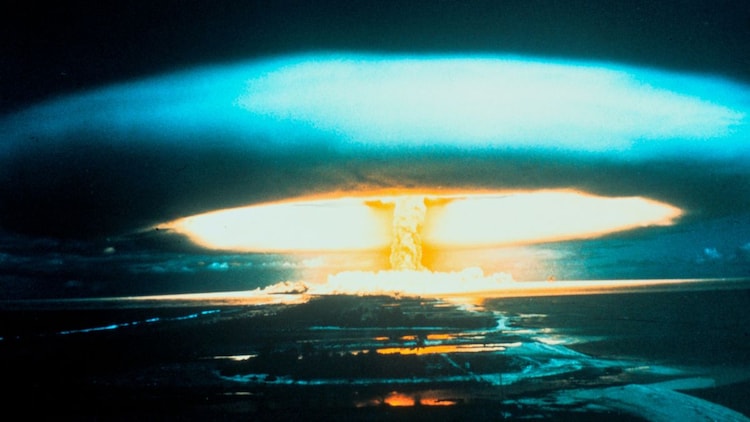
The warhead, housed in what is called a re-entry vehicle, then plunges back into the atmosphere at speeds of up to Mach 23, generating intense heat as it does so.
It is designed to survive this re-entry and detonate at a precise target. The entire journey, from launch to impact, can take as little as 30 minutes, offering virtually no time for the target country to respond.
COULD THIS LEAD TO A NUCLEAR WINTER?
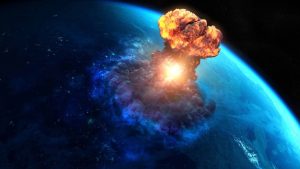
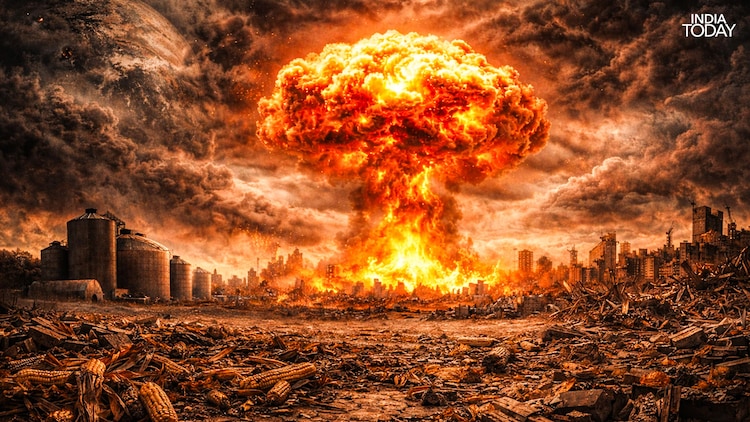
This is the question that haunts physicists. A nuclear winter is not caused by the blast itself but by what follows. Large-scale nuclear detonations would hurl enormous quantities of soot and smoke into the upper atmosphere, blocking sunlight, collapsing agriculture, and potentially killing billions through famine.
Scientists estimate that even a limited nuclear exchange involving a fraction of the world’s warheads could trigger this effect.
The Minuteman III test is part of a decades-old programme to validate the performance of the weapon system, which has been in service since the late 1970s.
The Minuteman III was originally supposed to be replaced in the 2030s, but delays with the new Sentinel ICBM have led officials to consider keeping it in service potentially until 2050.
For now, this was a test, not a threat. But in a world already on edge, even routine rocket launches carry an outsized weight.