
New Delhi: Spain has stepped into the global spotlight after rejecting the United States’ military campaign against Iran. The move prompted a furious response from President Donald Trump, along with a threat to sever trade ties with the European nation.
The diplomatic rift burst into the open after Madrid declined to allow American forces to use its military bases for operations against Iran. Within hours, Trump lashed out during a meeting in Washington, describing Spain as having behaved terribly and declaring that the United States would cut off all trade and distance itself completely from the country.
The warning reverberated across European capitals, while in Spain it appeared to strengthen resolve instead of prompting retreat.
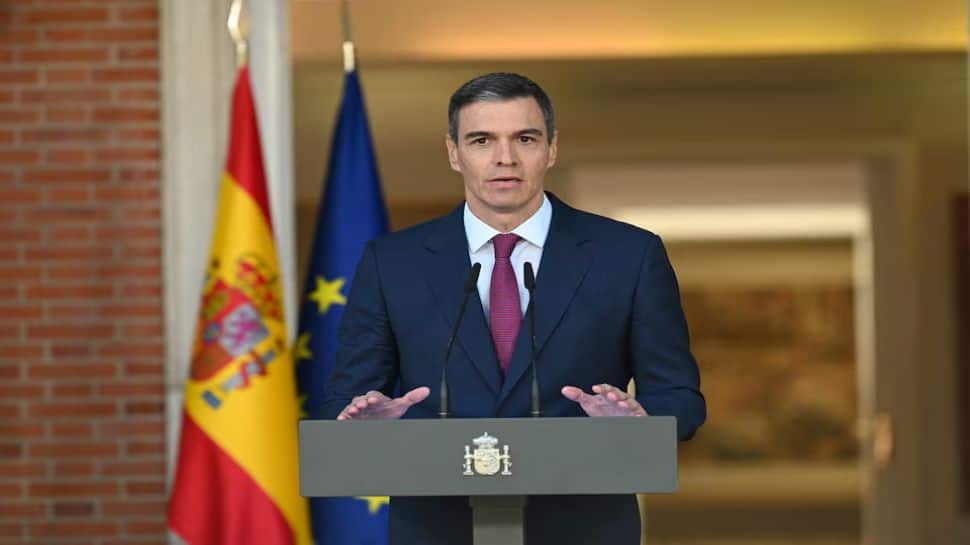
In a televised national address, Prime Minister Pedro Sánchez made clear that Spain would not support the ongoing US-Israel military campaign against Tehran. He described the assault on Iran as unjustifiable and dangerous and argued that wars begin with rhetoric and escalation. Adding that global crises cannot be solved with bombs, he told citizens that Spain’s position was firmly against the war.
The stand taken by him strengthens Spain’s role in Europe. Madrid has often criticised Israel’s war in Gaza and was one of the first European countries to recognise a Palestinian state in 2024, along with Ireland, Slovenia and Norway. That move had already set Spain apart from several of its European partners. Now, by refusing to support US military operations against Iran, the country has increased that distance even further.
Public sentiment in Madrid appears to lean in Sánchez’s favour. Recent polling suggests that a majority of Spaniards disapprove of Trump’s foreign policy. A February survey found that more than half of respondents opposed the US president’s policies, placing Spaniards among the most critical nationalities in Europe.
Another poll earlier in the year showed widespread disagreement with a US operation targeting Venezuela’s former President Nicolás Maduro. Across the continent, nearly half of Europeans surveyed described Trump as an enemy of Europe, while only a small minority saw him as an ally.
Despite the heated rhetoric from Washington, trade experts doubt that the White House can easily carry out its threat. Spain’s membership in the European Union (EU) means any major commercial rupture would have to contend with EU trade rules.
Analysts say a move to single out Spain would require Washington to justify extraordinary measures on national emergency grounds, a step viewed as unlikely. Many in Madrid interpret the warning as political theatre rather than an imminent economic break.
The immediate spark for the confrontation came after the United States relocated 15 aircraft, including refuelling tankers, from the Rota and Morón bases in southern Spain. The socialist government had made clear those facilities could not be used for missions tied to attacking Iran.
Trump has also criticised Spain for resisting calls to raise NATO defence spending to 5 percent of gross domestic product. He has complained that Spain offers little of value to the United States. This language further inflamed tensions.
Sánchez’s policy agenda has already drawn scrutiny in Washington. His government barred ships carrying weapons to Israel from docking in Spanish ports and has taken a vocal stance against Israel’s campaign in Gaza.
Spain has also explored tighter regulations on technology platforms, including proposals to restrict social media access for children under 16 and examine legal options concerning companies such as Instagram and TikTok.
For Sánchez, the confrontation comes less than a year before Spain heads into a general election. Observers say that Trump’s foreign policy is unpopular among Spanish voters, giving the prime minister room to adopt a defiant posture without domestic backlash.
Economically, Spain is less exposed to American pressure than some of its neighbours. The country exports olive oil, automotive components, steel and chemicals to the United States. US government data show that Washington recorded a trade surplus with Spain for the fourth consecutive year in 2025, with exports exceeding imports by several billion dollars.
The EU has said it expects present trade agreements to be honoured and has shown support for its member countries, making clear that any further action would be dealt with collectively by the bloc.
For now, Spain is holding its line. In a Europe largely cautious about confronting Washington directly, Madrid has chosen to challenge the White House head-on, turning a military dispute into a political clash that could change transatlantic relations.


