
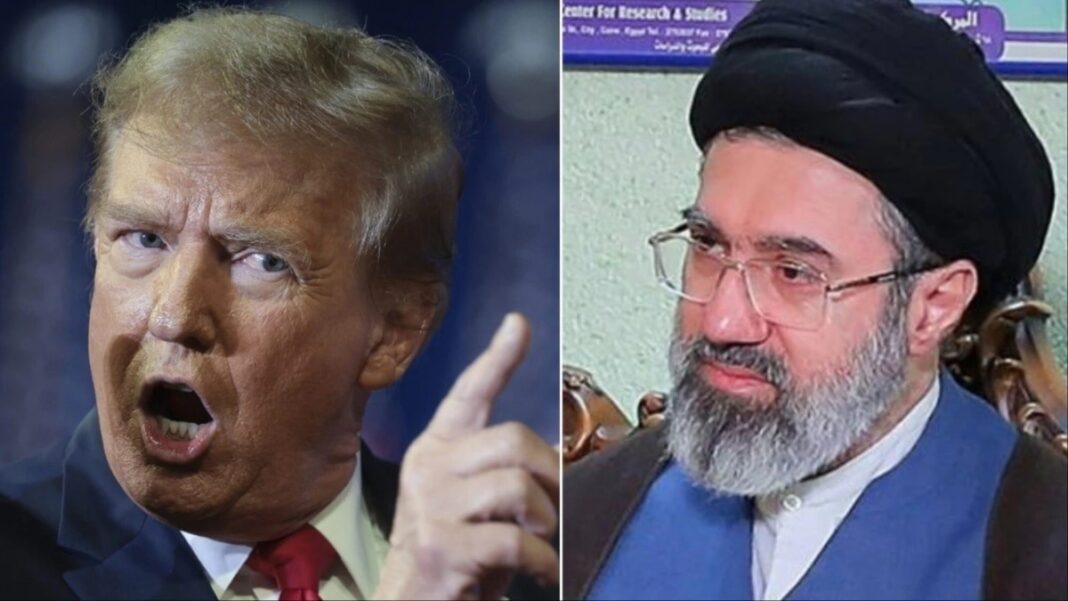
The Strait of Hormuz is twenty-one nautical miles wide at its narrowest point. One-fifth of the world’s traded oil moves through it. Right now, Iran controls it. Oil prices have crossed $100 a barrel. Global shipping is in chaos. And the United States, the country that started this war alongside Israel on 28 February, finds itself standing at the edge of that strait with no coalition, no clear plan, and no allies willing to show up.
President Donald Trump tried. He tried very hard. He went on Truth Social and called on China, France, Japan, South Korea and the United Kingdom to send warships. He extended the invitation to every country on earth that receives oil through Hormuz. He told reporters aboard Air Force One that he had personally demanded about seven countries join a naval coalition. He warned NATO members they faced a “very bad future” if they refused to help. He said he would remember who stood with America and who did not.
Nobody stood with America.
Britain said it was “intensively looking” at options but would not commit Royal Navy vessels. Instead, London offered mine hunting drones. Trump had asked for aircraft carriers and received robots. Prime Minister Keir Starmer reportedly told the White House that putting British warships into an active war zone was a step too far. Energy Secretary Ed Miliband went on the BBC and said the strait needed to reopen urgently, carefully adding that escalation had to be avoided. It was a masterclass in saying nothing while appearing to say something.
Japan gets nearly 70 percent of its oil through Hormuz. Seventy percent. That figure alone should have made Tokyo one of the first to sign on. Instead, Prime Minister Sanae Takaichi said any maritime security operation faced “extremely high” legal hurdles. Defence Minister Shinjiro Koizumi told parliament that Japan was not considering a deployment. A country that would be economically strangled by a permanent Hormuz closure still looked at Trump’s coalition and said no.
France said it might help eventually, once the fighting subsided. Australia said it had not been asked and was not sending a ship regardless. Germany’s foreign minister went on national television and answered the question of whether Berlin would become “an active part of this conflict” with a single word. No.
South Korea said it was “closely monitoring” the situation. That phrase has become the international community’s polite way of saying absolutely not. Every government reached into the same diplomatic bag and pulled out the same carefully worded non answer. The world had learned to speak fluent avoidance.
Why? Three reasons. First, trust was already gone. Several Gulf partners told US media they were not adequately warned about the scale of the initial strikes. They felt exposed to Iranian retaliation without guarantees of American protection. Second, Iran raised the cost of association. It struck airports, ports and hotels across Gulf states, targeting anyone who appeared to side with Washington. Dubai’s international airport shut temporarily after a drone hit a fuel tank. Tehran was sending a message and the message was received. Third, nobody could explain what winning looked like. Trump’s team described the operation as a military success while simultaneously admitting the war was not over. That gap between rhetoric and reality made formal coalition membership politically toxic.
There is a deeper problem underneath all of this. America First spent years telling the world that alliances were bad deals, that NATO partners were freeloaders, that foreign commitments were expensive mistakes. You cannot spend years dismantling the goodwill that holds coalitions together and then expect loyalty when a war goes sideways. Transactional in peace means abandoned in conflict. The world did not forget those years. It simply presented its invoice.
Trump predicted oil prices would “come tumbling down” once the war ended quickly. Iran said it remained stable, strong and ready. Somewhere between those two statements sits the actual situation, and it is not comfortable for Washington.
America First has an answer for everything except the moment when everyone else says first.


