
Fighter jets are key to winning any war. In times of conflict, many times jets are lost. The math behind a single jet purchase or manufacturing is excruciating. Billions of dollars are poured into projects to get one fighter jet with weapons ready to take on enemies. Then the nations also risk the lives of their best pilots during wars. To overcome this, the world nations have been working to develop unammned fighter jets just like unmanned drone aircraft.
A comparatively new company is now giving headaches to established fighter jet manufacturers like Lockheed Martin and Dassault Aviation. Reason? Design and manufacturing of a fighter jet that can operate solo – without pilot.
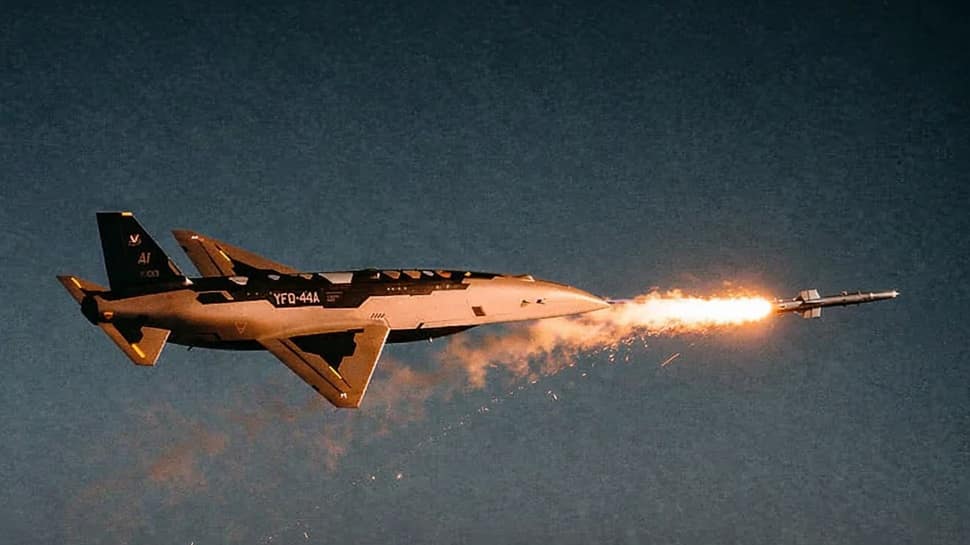
After Turkey showcased the Bayraktar Kizilelma, a stealthy unmanned combat aircraft, the United States of America is also set to acquire a pilotless fighter jet that can carry payloads and hit targets with missiles. The YFQ-44A “Fury” – developed by Anduril Industries – is a jet-powered unmanned combat aircraft (UCAV) developed for the U.S. Air Force’s Collaborative Combat Aircraft (CCA) program. Notably, the US Air Force signed up Anduril just two years ago for the program and the company has managed to come out with working deployable jet in that short span of time.
It is built to function as a “loyal wingman,” operating in coordination with crewed fighter jets such as the F-35 Lightning II and the F-22 Raptor within future combat formations. The aircraft made its maiden flight on 31 October 2025, successfully completing a semi-autonomous mission in which it handled flight controls and throttle management without direct pilot intervention.
The platform is entirely uncrewed, with no pilot onboard. It is engineered to carry out pre-programmed missions independently or operate under high-level human oversight. Its intended missions include intelligence, surveillance, reconnaissance, electronic warfare, and combat operations, thereby enhancing the protection and operational range of crewed fighters.
The YFQ-44A represents an important development in military aviation. It is among the first aircraft to receive a “fighter” designation despite having no human pilot, signaling a transition toward autonomous and semi-autonomous systems integrated with manned aircraft in next-generation air combat.
During testing, the YFQ-44A has been observed carrying an inert AIM-120 AMRAAM beneath its wings as part of weapons integration and captive-carry trials. This indicates the aircraft’s ability to externally mount standard fighter-class air-to-air missiles for prospective combat roles. Current test configurations show weapons and other stores attached to underwing hardpoints, with no visible internal weapons bay.
Open-source information suggests the aircraft is expected to support a payload capacity of approximately 400–500 kilograms. This would allow it to carry multiple munitions or sensor systems. Concept designs and payload discussions also indicate a modular architecture capable of accommodating precision-guided munitions, small bombs, and other air-to-ground or multi-role weapons as development progresses.


