
From scholars to slaves: Decoding the 119 Articles of the Taliban’s new social hierarchy

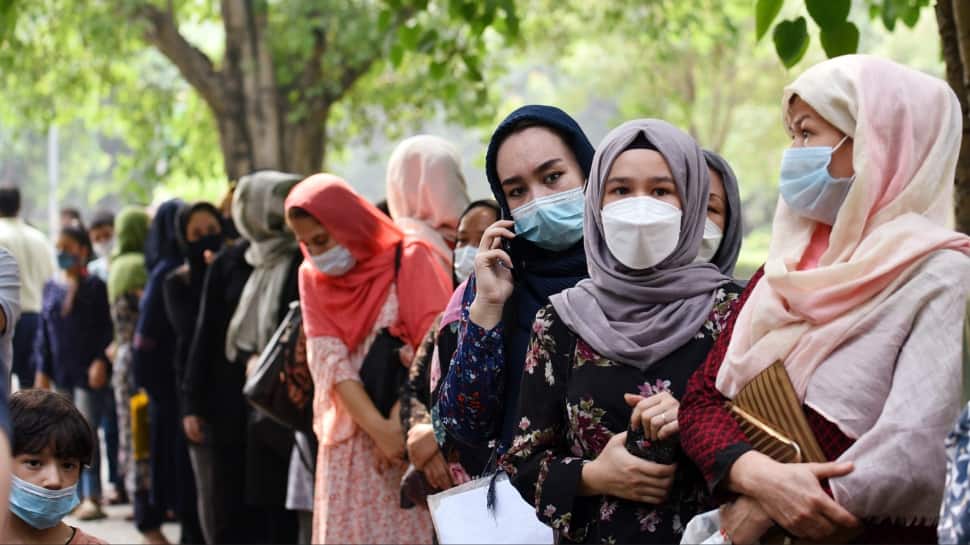
In a disturbing move against human rights, the Taliban regime has put into effect a new 119-article penal code that legalises domestic violence and establishes a strict social caste system. This 90-page document, titled De Mahakumu Jazaai Osulnama, was signed by Supreme Leader Hibatullah Akhundzada in January 2026. It has shocked the international community. Rights groups claim the code reduces women to the status of “property” and formalises a system of “gender apartheid.”

‘No broken bones’: The logic of state-sanctioned abuse

One of the most alarming parts of the new code allows husbands and “slave masters” to physically punish women and subordinates. The text states that these beatings are permissible as long as they do not lead to “broken bones” or “open wounds.”

Maximum 15-day sentence: Even if a “serious” beating results in visible fractures or injuries, the husband can face only a maximum of 15 days in prison.

The “justice” barrier: To seek help, a woman must show her injuries to a judge while remaining fully veiled and with a mahram (male guardian)—often the same abuser she is reporting.

Criminalising escape: Article 34 of the code states that a woman who frequently seeks shelter at her father’s house without her husband’s permission can be jailed for three months.

A four-tiered social caste system

The penal code clearly denies the principle of equality before the law, dividing Afghan society into four distinct classes. Punishments for the same crime now vary a lot based on a person’s social standing:

Religious Scholars (Ulema): They receive almost total immunity; punishments involve “advice” or a phone call.
Elites (Ashraf): They may get formal warnings or court summons.
Middle Class: They can be imprisoned for crimes.
Lower Class: They face the harshest penalties, including public flogging and corporal punishment.

The legalisation of slavery

In a step that human rights experts see as a return to “long-prohibited concepts,” the code repeatedly mentions the term “Ghulam” (slave) and distinguishes between the rights of “free” and “enslaved” people. By giving “masters” the power to impose discretionary punishment, the Taliban has effectively included slavery in the national legal system.

Global outrage and rights alarms

Human rights organizations, such as Rawadari and the Feminist Majority Foundation, have condemned the code as a “blueprint for governance through fear.” The new laws officially cancel the 2009 Elimination of Violence Against Women (EVAW) law, which had provided a decade of legal protection against forced marriage and gender-based abuse.

“By turning families into enforcers and women into legal dependents valued less than animals, the Taliban is not preserving culture—they are erasing it,” one rights defender stated.


Latest

Not going anywhere: Iran rejects Trump’s plan to transfer uranium to US

Iran denied any plan to transfer enriched uranium to the US, contradicting Trump’s claims, as both sides continue negotiations amid disagreements over nuclear

Mystery flights: Four Chinese aircraft switch off before landing in Iran

Reports claim four Chinese cargo planes switched off transponders mid-flight and landed in Iran within 48 hours, raising concerns over possible arms shipments,

Strait of Iran? Trump’s Hormuz remark sparks buzz after reopening move

Trump welcomed Iran reopening the Strait of Hormuz but mistakenly called it the Strait of Iran, sparking online debate over whether it was a simple slip or a si

Wow!: Iran hits back at AI Colonel claim with sarcasm and swagger

Iran mocks Israel’s claim that spokesperson Ebrahim Zolfaghari is AI, using a viral sarcastic video, as both sides escalate a propaganda war blending misinfor

Enough is enough: Trump says Israel prohibited from striking Lebanon

US President Donald Trump said that Israel has been barred from carrying out further strikes on Lebanon, a day after he announced a 10-day ceasefire between the

Topics

Who is Srinivas Narayanan? IIT Madras graduate behind ChatGPT growth exits OpenAI

OpenAI executive Srinivas Narayanan, an IIT Madras alumnus who helped scale ChatGPT and API products, has announced his exit after three years. He said he plans

Bhubaneswar boy scores perfect 100% in CBSE Class 10, now targets NEET

A Bhubaneswar student, Ayusman scored 100% in CBSE Class 10 board results. Starting the preparation from March-April, he says he focused on consistency, concept

KV schools are topping India’s boards. So why are bureaucrats opting out?

How Kendriya Vidyalayas' demographic shift reflects broader educational trends

MVA faces consensus challenge ahead of MLC polls, Mahayuti may secure majority

Can Thackeray's candidacy unify MVA for upcoming MLC elections?

Word of the day: What ‘alacrity’ means and how to use it right

The word of the Day for April 18 is: Alacrity. Learn what it means and how to use it in daily conversation. Add it to your vocabulary and impress everyone aroun

Quote of the day by Ratan Tata: I don’t believe in work-life balance. I believe in…

Powerful words by Ratan Tata inspire millions seeking success, happiness, and purpose in life. Discover his wisdom on work-life integration, leadership, persona

Not going anywhere: Iran rejects Trump’s plan to transfer uranium to US

Iran denied any plan to transfer enriched uranium to the US, contradicting Trump’s claims, as both sides continue negotiations amid disagreements over nuclear

Mystery flights: Four Chinese aircraft switch off before landing in Iran

Reports claim four Chinese cargo planes switched off transponders mid-flight and landed in Iran within 48 hours, raising concerns over possible arms shipments,
spot_img

Related Articles

Popular Categories

spot_imgspot_img