
As AI companies are scaling their technologies, demand for energy is surging. According to the International Energy Agency (IEA), electricity consumption from data centers is projected to more than double by 2030, reaching around 3 power cent of global electricity consumption. While the largest share of electricity generation comes from fossil fuels, AI companies are trying clean energy technologies to offset AI’s environmental cost. But as we all know, clean energy technologies have their own limitations: solar depends on sunlight, wind depends on weather, and the grid still needs more storage to make the most of both. This limitation presents scope for innovation, and Meta is trying to address these challenges from different angles.
The company has announced a new partnership to collect solar energy from space to power its data centers and AI infrastructure. In addition, it has also partnered with a company to store renewable energy for days.
Solar power from space
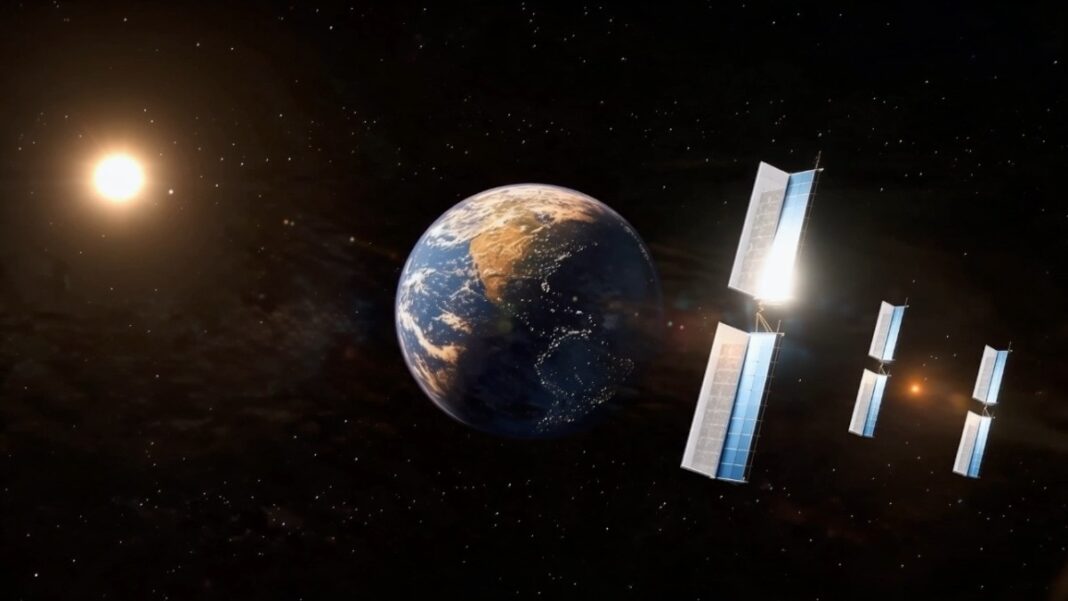
Currently, solar power generation facilities only generate power when the sun is shining, and they remain idle for the rest of the day. Meta has partnered with Overview Energy to power these solar generation systems during night or when the sun is not shining.
This will be made possible by satellites that will sit in geosynchronous orbit, roughly 22,000 miles above Earth’s equator. These satellites will collect sunlight and send it to Earth as low-intensity, near-infrared light, allowing around-the-clock power generation.
Google has also announced a similar approach, but it aims to send data centres directly into space, while Meta aims to send solar energy from space to Earth.
Long-duration storage push
Meta has also announced a partnership with Noon Energy to store clean energy for extended periods, which can be used as per demand. The company will use solid oxide fuel cells and carbon-based storage to power AI and cloud infrastructure, using storage to maximise energy availability.
Overview Energy’s orbital demonstration is planned for 2028—the first time the system is slated to beam energy wirelessly from space to a solar farm on Earth. Noon Energy’s demonstration project is also targeting 2028.


