The Indian Premier League (IPL) is considered to be the benchmark when it comes to how a franchise league needs to be run in terms of competition, sustainability, and unearthing the next big stars of the sport.
You had the likes of Jasprit Bumrah, Hardik Pandya, Rinku Singh, and Varun Chakravarthy, among others, just making their way through the ranks and becoming key players for India. This trend has continued in recent years in the IPL, with the spotlight being on domestic players.
Priyansh Arya made heads turn with his aggressive batting, while Digvesh Rathi’s nonchalant bowling and notebook celebration were the talk of the town. Prashant Veer and Kartik Sharma were talented enough to make Chennai Super Kings buck their usual trend of going for older and experienced players and invest Rs 14.2 crore each in these two young stars.
When you look closely at these talents mentioned above, they have all come through the ranks of various domestic T20 leagues in the country. India has more than 10 domestic competitions across different states and cities that are now acting as scouting destinations for IPL teams to find the next big star. The Delhi Premier League, Tamil Nadu Premier League, Karnataka Premier League and others have consistently provided talent not just for the IPL but for India as well.
Now, one may wonder if this is a model that can be used across various other sports. India is home to various franchise leagues across disciplines like kabaddi, table tennis, badminton, tennis and hockey, to name a few. Of these, the Pro Kabaddi League has been a success story of its own, being second only to the IPL in terms of sustainability alone.
The likes of Pardeep Narwal, Pawan Sehrawat and Naveen Kumar have become stars in their own right and have elevated the sport in the country. So can there be domestic leagues in various states that can act as academies just like their cricket counterparts?
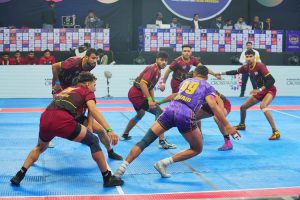
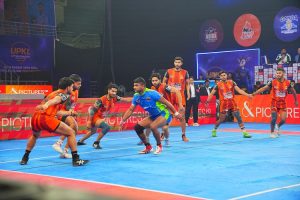
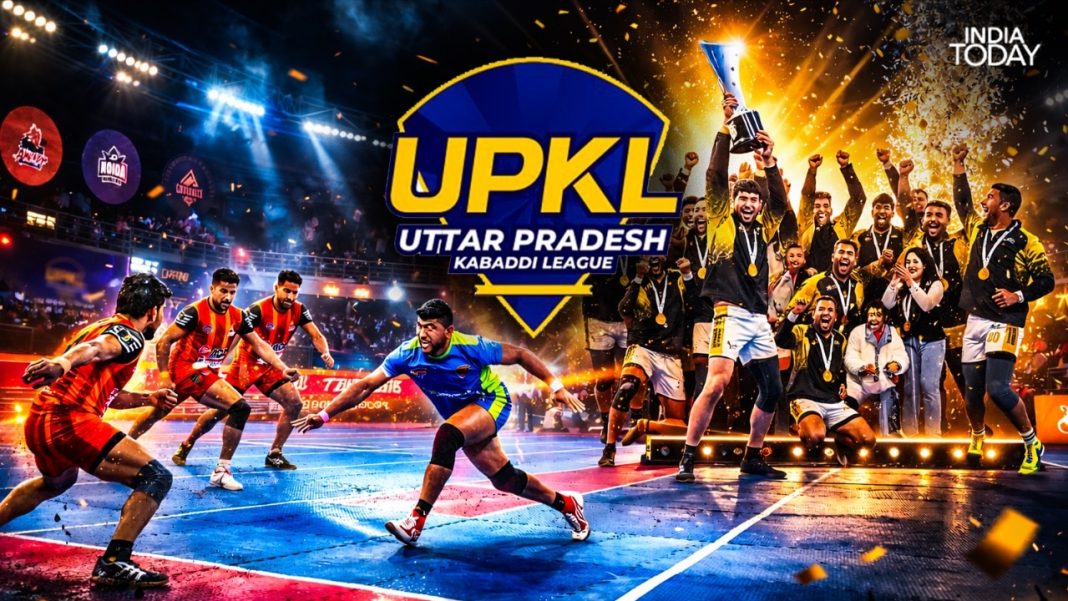
Well, this is where the Uttar Pradesh Kabaddi League (UPKL) stands out. Formed in 2024 by Sambhav Jain in association with the UP Kabaddi Association, the aim of the UPKL was to improve the grassroots-to-professional pathway for the sport in the country and bring in more talent.
The league started as an eight-team affair and by 2025, interest was such that four more sides made their way into the league. The number of matches went from 55 to 66, with viewership on the rise.
Awadh Ramdoot, Brij Stars, Ganga Kings of Mirzapur, JD Noida Ninjas, Kashi Kings, Lucknow Lions, Yamuna Yodhas, Sangam Challengers, Kanpur Warriors, Aligarh Tigers, Purvanchal Panthers and Gazab Gaziabad battled for the title in 2025. Kashi Kings emerged as the champions, with Lucknow Lions finishing second.
But in the end, it was Kabaddi that was the real winner.
WHY UPKL?
When India Today got the chance to talk with the owners of various teams and asked them why they decided to invest in UPKL, the answer was more or less similar, yet simple: the love for kabaddi and the belief in the potential of players from UP.
“Kabaddi has always been a sport I have been deeply connected with, not just emotionally but also in terms of its grassroots strength, especially in Uttar Pradesh. UP has historically produced some of the finest kabaddi talent in the country, and yet many players lacked a consistent, structured platform to showcase themselves at a professional level,” said Kulwant Baliyan, the owner of Kashi Kings.
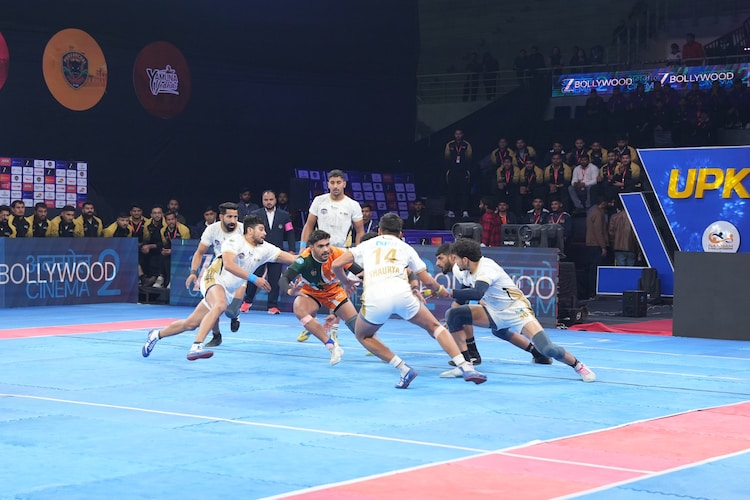
For Ranvijay Singh, who owns Awadh Ramdoots, the standout feature of the league was the clear intent it had around player development. Having worked in developing cricket leagues in the past, Singh felt that the sport needed an organised platform that was a step in the right direction for players.
“Kabaddi has deep roots in the state, and the raw talent available at the grassroots level is immense. What it needed was a consistent, organised platform that could provide exposure, competitive structure, and a pathway forward for players.”
“UPKL stood out because it was not positioned as a one-off event, but as a long-term league with clear intent around player development, team identity, and ecosystem growth. For someone who believes in building sustainable sports properties, investing in UPKL and Awadh Ramdoots felt like a natural extension of that vision,” said Ranvijay.
Vedica Trivedi, the President of Ganga Kings of Mirzapur, echoed the same sentiments as Singh, and she compared the journey of her side as one of the prime reasons for investing in the league.
After finishing at the bottom of the table in Season 1, 2025 offered a new chance for the Ganga Kings to right their wrongs, come back stronger and think long-term, something she believes the league truly stands for.
“UPKL allowed us to regroup, invest in the right players, improve systems, and come back stronger. Season 2 showed that progress, with the team performing far better and competing with greater confidence and clarity.”
“That evolution for teams as well as players is what makes UPKL meaningful. It is not just about immediate results, but about building over time. Being part of a league that allows such growth, encourages resilience, and rewards long-term thinking is what convinced me to put my weight behind UPKL,” said Trivedi.
CAN UPKL REPLICATE THE CRICKET LEAGUES?
While having a strong vision is great, can the league actually replicate what is being done by the domestic leagues in cricket and be a conveyor belt of talent?
Baliyan believes it is possible, as UPKL brings a layered structure to Kabaddi, much like cricket has today. He believes this has been the reason behind sustained fan interest and the production of world-class talent.
“If you look at how cricket has evolved in India, the strength of the ecosystem lies in its layered structure, district cricket, state cricket, domestic tournaments, and then the national and international stages. That model has consistently produced talent and sustained fan interest across generations.”
“Kabaddi is now moving in a similar direction, and UPKL is a very important step in that journey. State-level leagues like UPKL are not meant to replace national leagues; they are meant to strengthen them. They prepare players, coaches, and even support staff for higher levels by exposing them to pressure situations, professional environments, and structured competition early in their careers,” said Baliyan.
For Ranvijay, UPKL has created continuity — something that will ensure that players are not wasted and that they get a platform to perform.
“Players do not develop overnight—they need seasons of competitive play. State leagues like UPKL ensure that talent is not lost due to lack of opportunity. This model also strengthens national competitions, as players arrive better prepared, more confident, and match-hardened,” said Ranvijay.
PATHWAY TO INDIAN TEAM AND FINANCIAL STABILITY
The players are the reason behind the success of any league and for them to perform well, there are a few incentives that have to be guaranteed. Visibility and exposure are obviously factors that help talent grow, but apart from that, a key factor is always the financial stability that the league provides.
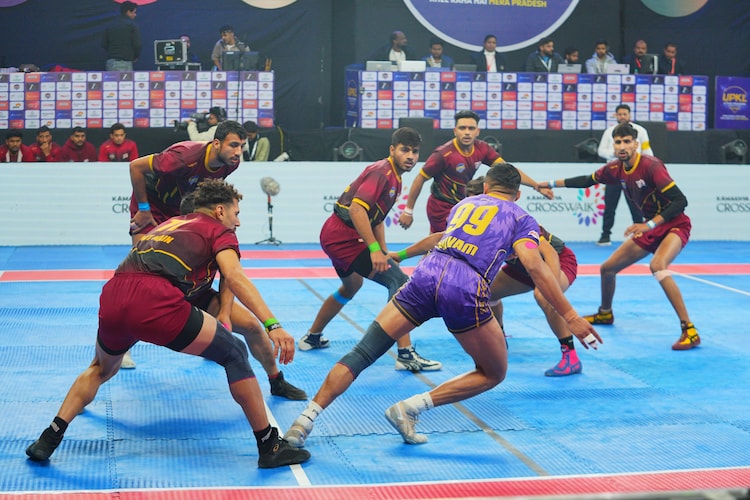
We often hear rags-to-riches stories in the IPL, where a player from a humble background goes on to excel, with the money being a motivating factor for them to go up a notch.
Naman Chaudhary, who plays for Awadh Ramdoots, believes that the UPKL has provided financial stability at a crucial point in his career.
“For many athletes coming from district or state-level backgrounds, the challenge is not talent but continuity—having enough opportunities to play, improve, and sustain oneself financially while doing so.”
“The league provides a structured environment where players are assured regular matches, professional training conditions, and financial compensation. That stability allows players to plan their seasons better and focus on improving specific aspects of their game, rather than worrying about the next opportunity,” said Chaudhary.
While the Ramdoots star believes that the league has helped him learn quicker with the level of competition, the financial stability helps him plan better and invest more in fitness and other aspects.
“Financial security, even at a modest level, also enables players to invest in fitness, recovery, and preparation, which is essential in a sport as demanding as kabaddi. Together, these factors make UPKL an important step in a player’s professional journey,” said Chaudhary.
Aligarh Tigers’ Vinay Tevathia feels that the league has allowed players to focus just on kabaddi and remove the uncertainty around the sport as a viable career option.
Leagues like UPKL make a very real difference in allowing players to focus entirely on kabaddi. When a player enters a professional league setup, there is clarity around contracts, match schedules, and financial compensation. That structure removes a major uncertainty that many athletes face early in their careers.
For Shivam Chaudhary, it has been all about the visibility he has got after a record-breaking second season. The Lucknow Lions raider created history by scoring 43 raid points in a single game, where his side defeated Gazab Gaziabad 87-36 at the Noida Indoor Stadium.
“UPKL has opened up new avenues by giving players a platform where performance truly matters and is consistently visible. When players are given the freedom to express themselves across multiple matches, it allows confidence to build naturally.”
“Such performances help players understand their own potential and also bring recognition beyond the league,” said Chaudhary.
So does this all foster the Indian national team dream?
Uday Dabas of Gazab Gaziabad feels that the players are put in situations that will build qualities like maturity and decision-making that are needed to succeed at the national level. This is exactly what scouts and national selectors look for in players, according to Dabas.
“When players succeed here, it builds belief—both for selectors watching and for the players themselves.”
“Beyond performance, UPKL teaches responsibility. Young athletes are placed in leadership roles, expected to deliver for their teams, and held accountable for results. That exposure accelerates maturity and prepares players for higher stages. For many of us, UPKL is not the final destination, but a crucial phase in shaping our long-term goals in kabaddi,” said Dabas.
SUSTAINABILITY IS KEY
While India may be home to many leagues across various disciplines, we also see many of them not withstand the test of time. Over time, interest from fans declines, leading to investment becoming low and eventually causing the league to collapse.
Is that something that UPKL needs to be wary of? Well, if you go by the viewership data, there are a lot of promising signs that the league can go to greater heights in the coming years.
As per BARC (Broadcast Audience Research Council India), UPKL Season 1 recorded a television reach exceeding 30 million viewers and generated 300 million digital impressions, with a notable surge in viewership from Tier 2 and Tier 3 markets. The league was broadcast across Sony Sports Network (Sports Ten 1 & Ten 3), DD Sports, and FanCode, ensuring a robust presence across multiple platforms.
The league currently has a three-year deal with Zee, and the start has been sensational. The viewership data shows exactly why the league is on the rise.
Season 2, with Zee Entertainment onboard as the exclusive broadcast partner, was telecast in both Hindi and English on Zee Anmol Cinema 2 and &Pictures HD, with matches held at the Noida Indoor Stadium.
The second edition registered a 120 percent growth, achieving a cumulative reach of 40 million viewers across India (2+). It recorded an Average Minute Audience (AMA) of 90.8 (2+), underlining the rising popularity. In comparison, Season 1 had garnered a cumulative reach of 18.2 million and an AMA of 49.
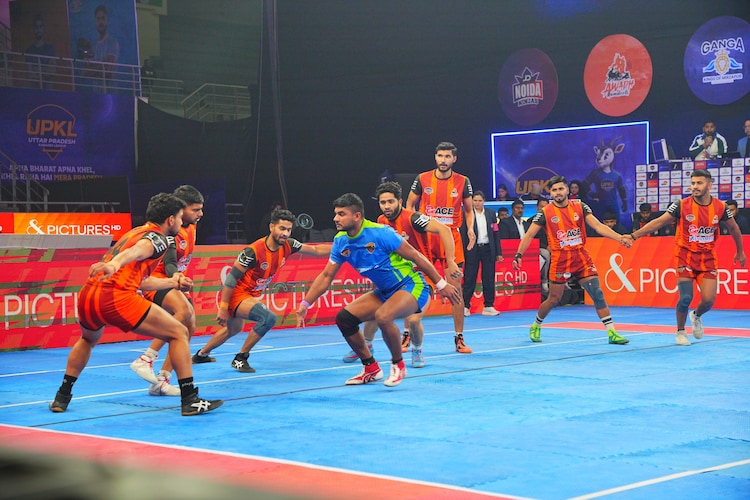
While these numbers are promising, true sustainability can only be achieved when there is continuity and a clear pathway for players to go to the next level, according to Baliyan.
“When young talent sees a clear pathway from local tournaments to a state league, and then potentially to national platforms, it keeps them invested in the sport. That continuity is essential not just for players, but for teams, fans, and sponsors as well. A growing pool of competitive players improves match quality, which in turn keeps audiences engaged and broadcasters interested,” said Baliyan.
“As long as the league continues to focus on grassroots talent, professional standards, and responsible expansion, it creates a win-win situation where players grow, teams grow, and the league grows organically.”
With the league expected to add one more team for the third season, Ranvijay feels that the sustainability of the league will come through with more talent coming in, leading to rising standards and the competition becoming stronger.
“This expansion is not just about numbers—it creates deeper competition, stronger local rivalries, and more opportunities for players to showcase themselves. As more teams come in, the talent pool widens, standards rise, and the league becomes more competitive and engaging year after year,” said Ranvijay.
So if you still ask why you should tune in to watch the UPKL, the founder and director of the league, Sambhav Jain, has the answer. While he admits some of the talent here may not be household names right now across the nation, they have all the skills to break through and make a name for themselves on bigger platforms.
“You should watch UPKL because it showcases the depth of kabaddi talent that Uttar Pradesh has to offer. Many players here are not household names yet, but they have the skill, physicality, and match awareness to compete at the highest level. When fans watch UPKL, they are seeing players who are either on the verge of breaking through or pushing themselves to the next level, which makes the competition intense and authentic,” said Jain.
With a fan base on the rise and talent focusing solely on the sport, the UPKL has established a model that can be adopted nationwide in various states to discover the next big stars in kabaddi.
Maybe in a few years’ time, it may not be a surprise if some of the big names in the PKL and the Indian team pulled off their first raid or super tackle in the UPKL.